

 The Home Growns
Problem #8: Overcrowding — When Your Garden Loves Itself Too Much
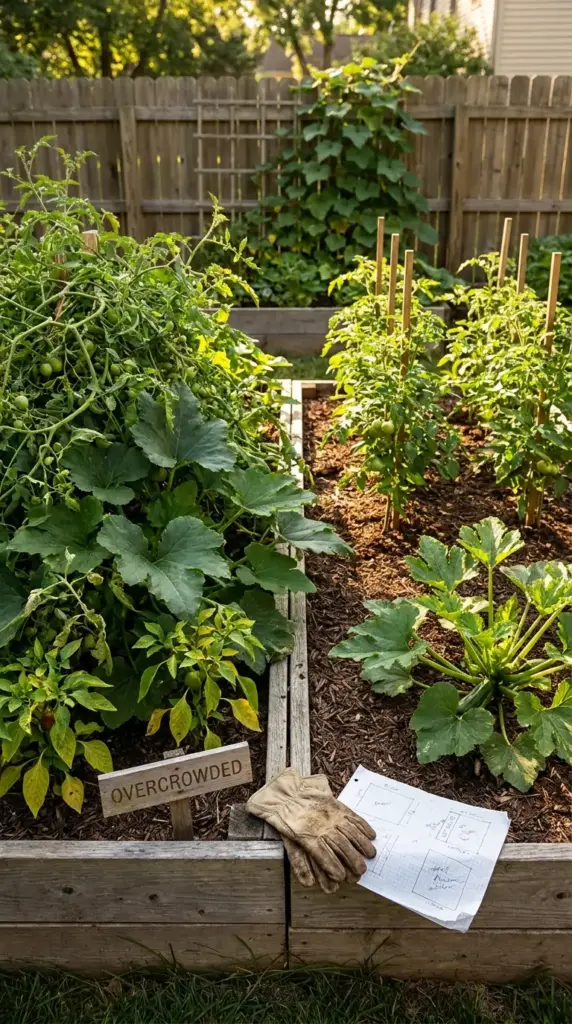
I once planted 14 tomato plants in a 4×8 raised bed.
Fourteen. In a space that should have held maybe five or six. 😬
Why Overcrowding Is the Most Overlooked Garden Mistake
Here’s the thing about overcrowding — it doesn’t look like a problem at first.
In fact, it looks amazing. A densely packed garden bed in early spring feels like abundance. Like success. Like you really went for it this year.
And then June hits. And everything starts going wrong at once.
Fungal disease spreads faster because air can’t circulate between plants. Pests multiply because dense foliage gives them endless places to hide. Root systems compete aggressively for the same water and nutrients — and everybody loses.
The plants that looked so lush in April start looking exhausted by July. Yields drop. Flowers thin out. And most gardeners have no idea overcrowding is the reason.
A 2019 study from the University of Florida Extension found that properly spaced vegetable plants produced up to 40% higher yields than overcrowded plants in identical soil and watering conditions.
Forty percent. Just from giving plants enough room to breathe.
The Real Reason We Overcrowd Our Gardens
Can I be honest for a second?
We overcrowd because seeds and seedlings are tiny and it’s genuinely hard to imagine them getting big.
You’re standing there with a packet of zucchini seeds, reading that you need 24-36 inches between plants, and thinking — that seems like way too much space for this tiny little seed.
Fast forward eight weeks and that “tiny little seed” is a zucchini plant the size of a small shrub that’s aggressively colonizing everything within three feet of it.
I’ve seen a single zucchini plant take over an entire 4×4 raised bed. It’s both impressive and deeply inconvenient.
The other reason we overcrowd? We don’t account for mature plant size when we’re designing our gardens. We plant for what things look like now instead of what they’ll look like in 60-90 days.
Proper Plant Spacing Guidelines for Every Garden Type
Let’s get specific — because vague advice like “give plants enough room” isn’t actually helpful.
Vegetable garden spacing:
- Tomatoes: 24-36 inches between plants, 36-48 inches between rows. Indeterminate varieties (like Cherokee Purple or Brandywine) need the larger end of that range
- Zucchini and summer squash: 24-36 inches between plants minimum — and honestly, one plant per 4×4 bed is plenty
- Peppers: 18-24 inches between plants — they’re more forgiving than tomatoes but still need airflow
- Cucumbers: 12 inches apart when trained vertically on a trellis, 24-36 inches if allowed to sprawl
- Lettuce and salad greens: 6-8 inches between plants — these are your most forgiving crops for tighter spacing
- Kale and chard: 12-18 inches between plants — they get surprisingly large and need room to develop full leaves
- Carrots: 2-3 inches between plants after thinning — this is where most gardeners dramatically under-thin
- Bush beans: 4-6 inches between plants, 18 inches between rows
Flower bed spacing:
- Roses: 3-5 feet between plants depending on variety — hybrid teas need more room than shrub roses
- Astilbe: 18-24 inches — they spread slowly but steadily over several seasons
- Hostas: 18 inches to 4 feet depending on variety — always check the mature size on the tag before planting
- Coneflowers (Echinacea): 18-24 inches — they self-seed prolifically so give them room to naturalize
- Marigolds: 8-10 inches for dwarf varieties, 12-18 inches for tall varieties
Container garden spacing:
The rule for containers is simpler: one thriller, one filler, one spiller per pot.
- Thriller: One tall, dramatic centerpiece plant
- Filler: Two or three medium plants that fill in around the thriller
- Spiller: One or two trailing plants that cascade over the pot edges
Resist the urge to add more. A well-composed container with three plants will always look better than a crowded one with seven.
Thinning Techniques That Actually Encourage Fuller Growth
Thinning is the garden task that feels the most wrong — and produces the most dramatic results.
There is something deeply counterintuitive about pulling out perfectly healthy seedlings to make room for others. Every gardening instinct you have screams that you’re wasting plants.
You’re not. You’re saving your garden.
For direct-sown seeds (carrots, beets, lettuce, radishes):
Thin in two stages for best results:
- First thinning: When seedlings are 1-2 inches tall, thin to double your target spacing. So if carrots need 3 inches apart, thin to 6 inches at this stage
- Second thinning: Two weeks later, thin to your final target spacing. You can actually eat these thinnings — baby carrot thinnings are delicious in salads
Always thin by snipping at soil level with scissors rather than pulling. Pulling disturbs the roots of neighboring seedlings. Snipping is cleaner, faster, and kinder to the plants you’re keeping.
For transplanted seedlings:
If you’ve already planted too close together — which, again, we’ve all done — here’s how to fix it without losing everything:
- Wait until plants are actively growing and the weather is mild — not during a heat wave
- Water the bed thoroughly 24 hours before you plan to move anything
- Use a narrow trowel or hori hori knife to dig a generous root ball around the plant you’re relocating
- Move it immediately to a pre-dug hole in its new location and water in deeply
- Provide temporary shade for relocated plants for 3-5 days while they recover from transplant stress
For perennial beds that have filled in over time:
Established perennials need dividing every 3-5 years as they spread and crowd each other out.
Early spring — just as new growth emerges — is the best time to divide most perennials. Dig the entire clump, split it into sections with a sharp spade or garden fork, and replant the divisions with proper spacing.
This feels brutal. The results are spectacular. Divided perennials almost always come back fuller, healthier, and more floriferous than the overcrowded original clump.
Garden Design Principles for Visually Balanced, Breathable Layouts
Here’s something I’ve come to believe strongly after years of gardening: good garden design and good plant health are the same thing.
A garden designed with proper spacing, thoughtful plant placement, and visual balance isn’t just prettier — it’s fundamentally healthier.
The rule of threes is the most useful design principle I know. Plant in groups of three, five, or seven rather than even numbers — odd numbers create a more natural, dynamic look that feels intentional without being rigid.
Layer by height from back to front:
- Tall plants (over 3 feet) at the back of the bed or center of island beds
- Medium plants (1-3 feet) in the middle
- Low plants (under 12 inches) at the front edges
This creates visual depth and ensures every plant gets adequate light — taller plants won’t shade out shorter ones when they’re properly positioned.
Leave breathing room at planting time even when it looks sparse. A newly planted bed with proper spacing will look a little bare for the first season — and that’s completely okay.
Fill temporary gaps with:
- Annual flowers that you can remove as perennials fill in
- A fresh layer of decorative mulch that looks intentional and keeps weeds down
- Container plants placed strategically in open areas until permanent plants mature
Resist the urge to fill every inch immediately. Your future self will thank you enormously.
Repeat plants throughout the bed for visual cohesion. Using the same plant or color in three different spots across a garden bed creates a sense of rhythm and intentionality — it’s one of the tricks professional garden designers use constantly.
Companion Planting Charts to Help You Plan Smarter
Companion planting is one of those strategies that solves two problems at once — it helps you use space efficiently while naturally improving plant health.
The idea is simple: certain plants grow better together because they benefit each other in specific ways. Some repel pests. Some fix nitrogen in the soil. Some attract beneficial insects that protect their neighbors.
Here are the companion planting combinations that are actually proven to work:
The Three Sisters (the original companion planting system):
- Corn provides a natural trellis for beans to climb
- Beans fix nitrogen in the soil that feeds the corn and squash
- Squash spreads along the ground, shading out weeds and retaining soil moisture
This combination was developed by Native American agricultural communities thousands of years ago and it works just as brilliantly today. Plant them together in a 4×4 block and they essentially take care of each other.
Tomatoes + Basil:
- Basil repels aphids, whiteflies, and tomato hornworms
- Some research suggests basil may actually improve tomato flavor — though the science on this is still debated
- They also just look beautiful together in a raised bed
Roses + Garlic:
- Garlic planted at the base of rose bushes repels aphids — one of the most destructive rose pests
- The sulfur compounds in garlic may also help prevent fungal diseases like black spot
- Plant 3-4 garlic cloves around each rose bush in fall for spring protection
Carrots + Onions:
- Carrot flies are repelled by the scent of onions
- Onion flies are repelled by the scent of carrots
- They essentially protect each other — and they don’t compete for root space because they grow at different soil depths
Cucumbers + Nasturtiums:
- Nasturtiums act as a trap crop for aphids, drawing them away from cucumbers
- They also attract predatory insects that feed on cucumber beetles
- And nasturtium flowers are edible — they add a peppery flavor to salads and look gorgeous in the garden
Plants to keep APART:
- Fennel and almost everything — fennel releases compounds that inhibit the growth of most garden plants. Give it its own isolated container or bed
- Onions and beans — onions stunt bean growth significantly
- Tomatoes and brassicas — they compete aggressively and neither performs well when planted together
- Potatoes and tomatoes — both are nightshades and share the same diseases, so planting them together dramatically increases disease risk
A Simple Spacing and Layout Planning Process
Before you put a single plant in the ground this season, try this:
Step 1: Measure your bed and draw it to scale on graph paper — let each square represent one square foot.
Step 2: Look up the mature spacing requirement for every plant you want to grow. Not the seedling size. The mature size.
Step 3: Draw circles on your graph paper representing each plant at its mature size. If the circles overlap, you have a problem before you’ve even started.
Step 4: Adjust your plan until every plant has its full space requirement — then add your companion planting combinations.
Step 5: Identify any gaps and plan for annual fillers or mulch to cover them temporarily.
This process takes maybe 30 minutes and saves months of frustration. I genuinely wish someone had made me do this in my first few years of gardening.
Up Next: Feeding Your Garden the Right Way
Now that your plants have room to breathe, let’s make sure they’re actually getting the nutrition they need.
👇 Click “Next” below — because we’re diving into nutrient deficiencies next, and I’ll show you exactly how to read what your plants are telling you — and how to fix it without spending a fortune on fertilizers.

GIPHY App Key not set. Please check settings