

 The Home Growns
Problem #11: Lackluster Garden Design — Making Your Backyard Actually Beautiful
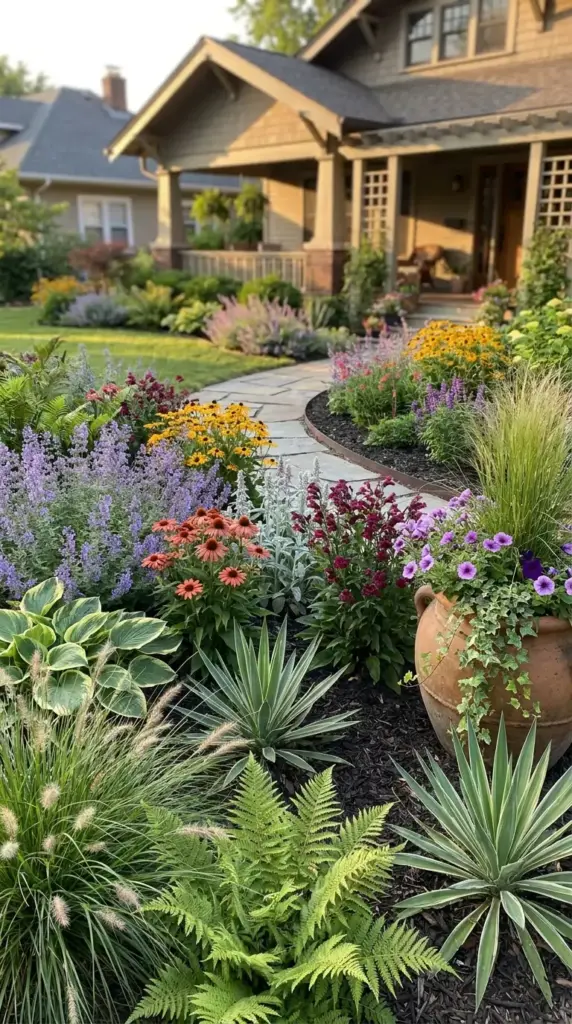
I have a confession.
For the first four years of my gardening life, my backyard looked like a plant collection — not a garden.
Individual plants I loved, scattered around with no real plan, no cohesion, no sense of intention. It looked like someone had gone to a garden center with a credit card and zero strategy. 😅
Which is… exactly what happened.
The day I started thinking about my garden as a design project — the same way I’d think about decorating a room — everything changed.
Why Most Home Gardens Look “Off” (And How to Fix It)
Here’s the honest truth: most home gardens look unfinished because they’re missing design intention — not plants.
Adding more plants to a garden that lacks design doesn’t fix it. It usually makes it worse.
What creates a beautiful garden isn’t the number of plants or even the quality of individual plants. It’s the relationships between plants — how they interact in terms of color, texture, height, and form — and how the garden as a whole relates to the space around it.
Professional garden designers think about five core elements in every design:
- Color — not just what colors you like, but how colors interact and flow through the space
- Texture — the visual and tactile quality of leaves, bark, and flowers
- Height and scale — how plants relate to each other and to the surrounding structures
- Form and shape — the overall silhouette and structure of individual plants and plant groupings
- Flow and movement — how the eye travels through the garden and how people move through the space
Master these five elements and your garden will look intentional regardless of your budget.
Color: The Element That Makes or Breaks a Garden
Color is where most home gardeners start — and where most make their biggest mistakes.
The most common mistake? Planting whatever colors you love individually without thinking about how they work together.
Hot pink next to orange next to purple next to red creates visual chaos — even if each individual plant is beautiful. Your eye doesn’t know where to rest and the whole thing feels exhausting.
The color wheel is your best friend here. Three approaches work reliably well in garden design:
Monochromatic color schemes — variations of a single color — create a sense of calm sophistication that photographs beautifully.
- An all-white garden (called a “white garden” in the tradition of Vita Sackville-West’s famous garden at Sissinghurst) feels luminous and elegant
- An all-blue and purple garden creates a cool, dreamy atmosphere that’s incredibly popular on Pinterest right now
- A yellow and gold garden feels warm and cheerful — perfect for brightening a shady corner
Analogous color schemes — colors that sit next to each other on the color wheel — create harmonious, flowing combinations that feel natural and cohesive.
- Orange, yellow, and red together feel warm and energetic — think late summer dahlias, rudbeckia, and helenium
- Purple, blue, and pink together feel romantic and soft — lavender, salvia, catmint, and phlox
- Peach, coral, and soft yellow together feel warm but gentle — one of the most sophisticated garden color combinations available
Complementary color schemes — colors opposite each other on the color wheel — create vibrant, high-energy contrast that’s visually exciting without being chaotic.
- Purple and yellow is the classic garden complementary combination — lavender with rudbeckia, salvia with coreopsis
- Orange and blue is dramatic and bold — marigolds with agapanthus, crocosmia with salvia
- Red and green is the most fundamental contrast in nature — it’s why red flowers always look so vivid against foliage
Practical color design tips:
- Use white and silver foliage plants as buffers between colors that clash — lamb’s ear, dusty miller, and artemisia are invaluable for this
- Repeat your key colors in at least three spots across the garden bed — this creates rhythm and cohesion
- Consider foliage color, not just flower color — flowers are temporary, but foliage is present all season
Texture: The Secret Ingredient of Sophisticated Gardens
Texture is the design element that separates good gardens from great ones — and it’s the one most home gardeners completely overlook.
Texture in garden design refers to the visual weight and surface quality of leaves and plants — whether they read as fine, medium, or coarse from a normal viewing distance.
Fine texture — grasses, ferns, astilbe, fennel — creates a sense of lightness and movement. It makes spaces feel larger and more airy.
Coarse texture — hostas, elephant ears, rodgersia, large-leafed hydrangeas — creates drama and visual weight. It anchors a design and draws the eye.
Medium texture — most standard garden perennials — is the workhorse of the garden. It connects fine and coarse elements without competing with either.
The rule for texture: always contrast it.
- Place fine-textured grasses next to bold-leafed hostas
- Put delicate fern fronds beside large-leafed ligularia
- Contrast spiky yucca with soft, mounding lavender
The contrast is what makes each plant more beautiful — they enhance each other in a way that planting similar textures together never achieves.
Foliage texture matters more than flower texture because foliage is present for the entire season. Build your texture combinations around leaves first, flowers second.
Height and Scale: Creating Depth and Drama
A flat garden — where everything is roughly the same height — looks like a carpet. It has no drama, no depth, and no visual interest.
Height variation is what creates the sense that a garden has layers — that there’s always something to discover as your eye moves through the space.
The classic layering formula:
- Canopy layer (trees and large shrubs): 10+ feet — provides structure, shade, and vertical scale
- Structural layer (medium shrubs and ornamental grasses): 3-8 feet — the backbone of the garden
- Perennial layer (most flowering perennials): 1-4 feet — the main show
- Ground layer (ground covers, low perennials, edging plants): under 12 inches — ties everything together
You don’t need all four layers in every garden — but you need at least three to create a sense of depth and completeness.
Scale matters as much as height. A single large plant in a small space can look dramatic and intentional. The same plant surrounded by tiny plants looks awkward and out of proportion.
Match plant scale to the scale of your space:
- Small urban gardens benefit from one or two bold structural plants rather than many small ones
- Large suburban yards can handle sweeping masses of plants — think in drifts of five, seven, or nine plants rather than individual specimens
- Containers and small beds look best with a clear hierarchy — one dominant plant, supporting players, and a ground-level edge
Creating a Cohesive Aesthetic That Complements Your Home
Here’s the design principle that transforms a garden from “nice” to genuinely stunning:
Your garden should look like it belongs to your house.
A sleek, modern home surrounded by a wild cottage garden creates visual dissonance — even if both the house and the garden are individually beautiful. They’re speaking different design languages and the result feels unresolved.
The most beautiful residential gardens I’ve ever seen share one quality: they feel like an extension of the interior of the home.
How to connect your garden to your home’s aesthetic:
- Repeat your home’s exterior colors in your plant palette — if your house has warm brick tones, lean into oranges, reds, and warm yellows in your garden
- Echo your home’s architectural lines in your garden structure — a modern home with clean horizontal lines calls for structured, geometric planting; a Victorian home calls for lush, layered abundance
- Use hardscape materials that match or complement your home — the same stone used in your home’s foundation looks intentional repeated in garden paths and edging
- Bring your interior style outside — if your home interior is bohemian and eclectic, your garden can be too; if it’s minimalist and clean-lined, your garden should reflect that
Style matching by home type:
- Craftsman bungalow: Native plants, cottage perennials, wooden raised beds, stone paths — warm, handcrafted, and slightly wild
- *Colonial or traditional: Formal symmetry, clipped boxwood hedges, classic roses, brick edging — structured and elegant
- Mid-century modern: Architectural plants (agave, ornamental grasses, sculptural shrubs), gravel mulch, geometric beds — clean lines and bold forms
- Farmhouse style: Kitchen gardens, raised beds, picket fencing, sunflowers and zinnias — productive and charming
- Contemporary/minimalist: Mass plantings of a single species, monochromatic color schemes, sleek metal edging — less is dramatically more
Pinterest-Worthy Garden Styles: A Design Guide
Let’s talk about the garden aesthetics that are absolutely dominating Pinterest and Instagram right now — and how to actually achieve them.
The Cottage Garden
The cottage garden aesthetic is all about romantic abundance — the feeling that the garden has been growing and self-seeding for generations, that it’s slightly wild but deeply intentional.
Key plants: Roses (especially old-fashioned varieties like David Austin roses), foxglove, delphinium, hollyhock, sweet peas, lavender, catmint, allium, and peonies.
Design principles:
- Soft, curved bed edges — never straight lines
- Plants allowed to spill onto paths and self-seed freely
- A mix of heights with no rigid structure
- Pastel and jewel-tone color combinations — dusty pink, lavender, soft yellow, deep purple
The cottage garden works beautifully with Victorian, Craftsman, and farmhouse-style homes and is one of the most forgiving styles for imperfect gardeners — the slightly wild look is the point.
The Modern Garden
Modern garden design is about restraint, structure, and bold simplicity. It’s the garden equivalent of a beautifully designed minimalist interior.
Key plants: Ornamental grasses (especially Karl Foerster feather reed grass and Blue Oat grass), architectural shrubs, mass plantings of a single perennial, agave, yucca, and sculptural trees like Japanese maple or multi-stem birch.
Design principles:
- Geometric bed shapes — rectangles, squares, clean curves
- Limited plant palette — three to five species maximum, planted in large masses
- Hardscape as a major design element — concrete, steel edging, gravel, and pavers
- Negative space — empty space is intentional and beautiful, not something to fill
The modern garden pairs perfectly with contemporary, mid-century modern, and minimalist homes. It’s also the lowest-maintenance aesthetic on this list — fewer species means less complexity.
The Boho Garden
The boho garden is having a major moment right now — and it’s one of my personal favorites because it’s so expressive and personal.
Boho garden design borrows from multiple traditions — a little cottage, a little wildflower meadow, a little global textile pattern — and layers them into something that feels uniquely individual.
Key plants: Dahlias, cosmos, zinnias, ornamental grasses, wildflowers, herbs, succulents mixed with traditional perennials, and lots of interesting foliage — burgundy, variegated, and silver-leafed plants.
Design elements:
- Eclectic containers — mismatched pots in different materials, vintage finds, woven baskets with liner inserts
- Macramé plant hangers and woven garden accessories
- Colorful, pattern-mixed textiles for outdoor seating areas
- Unexpected plant combinations that break conventional rules — succulents next to dahlias, herbs mixed with ornamental grasses
- String lights, lanterns, and candles for evening atmosphere
The boho garden works with almost any home style because its eclecticism is the point — it’s more about personal expression than architectural harmony.
The Minimalist Garden
Different from modern design, the minimalist garden takes restraint even further — it’s about creating maximum impact with minimum elements.
Key plants: One or two species of ornamental grass, a single flowering perennial in large masses, a carefully chosen specimen tree, and ground-level texture from gravel, moss, or a single ground cover species.
Design principles:
- One focal point — a single specimen plant, sculpture, or water feature that the entire garden is designed around
- Monochromatic or near-monochromatic color — all white, all green, or a single accent color
- Every element earns its place — nothing is included without a clear design reason
- Impeccable maintenance — the minimalist garden has nowhere to hide imperfection, so it requires consistent upkeep
The minimalist garden is extraordinarily photogenic — it’s the style most likely to stop people mid-scroll on Instagram. But it requires genuine design confidence to execute well.
The Wildflower/Prairie Garden
This is the garden style that’s growing fastest in popularity — and for good reason.
The wildflower or prairie-inspired garden takes its cues from natural meadow ecosystems — tall grasses, native wildflowers, and the kind of loose, naturalistic beauty that looks effortless but is actually carefully designed.
Key plants: Native grasses (little bluestem, prairie dropseed, switchgrass), coneflowers, black-eyed Susans, wild bergamot, rattlesnake master, prairie blazing star, and goldenrod.
Design principles:
- Drifts and masses rather than individual specimens
- Seasonal interest through seed heads and winter structure — don’t cut everything back in fall
- Paths mown through the planting to create a sense of intentionality
- Edge definition — a clean, defined edge between the naturalistic planting and the lawn signals that the “wildness” is intentional
The wildflower garden is the most ecologically valuable style on this list — it supports pollinators, birds, and beneficial insects at a level no other garden style approaches. And once established, it’s genuinely the lowest-maintenance option available.
Budget-Friendly DIY Garden Design Ideas
Beautiful garden design does not require a big budget. I want to be very clear about that.
Some of the most stunning gardens I’ve seen were created on almost nothing — because design is free.
Free and nearly free design upgrades:
- Define your bed edges — a clean, crisp edge between garden bed and lawn is one of the highest-impact, lowest-cost improvements you can make. A flat spade and 30 minutes creates a dramatic improvement
- Rearrange what you already have — before buying anything new, move plants that aren’t working in their current location. Sometimes the garden you want is already there, just in the wrong arrangement
- Divide and multiply your existing perennials — most perennials can be divided every 3-5 years, giving you free plants to fill gaps or create new beds
- Collect seeds from your best-performing annuals at the end of the season — zinnias, cosmos, marigolds, and sunflowers all grow easily from saved seed
Low-cost design investments with high impact:
- Mulch — a fresh layer of uniform mulch makes any garden look immediately more intentional and polished. Around $4-$6 per bag or significantly cheaper by the cubic yard from a local landscape supplier
- Metal garden edging — clean steel or aluminum edging creates a crisp, modern look that elevates the entire garden. Around $20-$30 for a 20-foot roll at most hardware stores
- One statement container — a single large, beautiful container planted with a dramatic combination can anchor an entire outdoor space. Thrift stores and estate sales are excellent sources for interesting containers at low prices
- Trellises and vertical structures — adding height with an inexpensive trellis, obelisk, or DIY bamboo structure creates instant design interest. A cedar obelisk runs $25-$40 at most garden centers
DIY projects inspired by art and architecture:
- Mosaic stepping stones — broken tile, pottery shards, and glass beads set in concrete create beautiful, one-of-a-kind path elements. Total cost: $15-$25 per stone
- Painted pot arrangements — a collection of terracotta pots painted in a coordinated color palette creates a designed, intentional look. Chalk paint adheres beautifully to terracotta and costs around $15 per quart
- Woven willow or bamboo edging — flexible branches woven into low edging creates a beautiful, organic border that looks expensive and costs almost nothing if you have access to willow or bamboo
- Repurposed architectural salvage — old doors, window frames, and iron gates used as garden structures create extraordinary focal points with a sense of history and character
Seasonal Planting Strategies for Year-Round Beauty
The most common garden design mistake I see — besides overcrowding — is planting for one season only.
A garden that looks spectacular in June but dead and brown by September isn’t a well-designed garden. It’s a June garden.
Designing for four-season interest requires thinking about each season deliberately:
Spring interest:
- Early bulbs — snowdrops, crocus, and early daffodils emerge before almost anything else
- Flowering trees and shrubs — cherry, magnolia, forsythia, and serviceberry provide structure and drama
- Hellebores — one of the most underused spring plants, blooming from February through April in most climates
Summer interest:
- Perennial backbone — coneflowers, black-eyed Susans, salvia, and rudbeckia carry the summer show
- Annuals for continuous color — zinnias, dahlias, and cosmos bloom from summer until frost
- Ornamental grasses begin their season of movement and texture
Fall interest:
- Asters and goldenrod — native fall bloomers that are absolutely covered in pollinators in September and October
- Ornamental grasses at peak beauty — seed heads catching light, foliage turning gold and bronze
- Fall foliage shrubs — itea, fothergilla, viburnum, and native azaleas provide spectacular color
Winter interest:
- Seed heads and structure — leave ornamental grass plumes, coneflower seed heads, and rudbeckia standing through winter. They’re beautiful under snow and feed birds through the cold months
- Evergreen structure — boxwood, holly, and broadleaf evergreens provide form and color when everything else is dormant
- Bark and branch interest — paperbark maple, river birch, and red-twig dogwood are spectacular in winter when their bark and stems are fully visible
The four-season planting rule: for every plant you add to your garden, ask yourself — what does this contribute in the seasons when it’s not blooming? If the answer is “nothing,” consider whether a plant with more seasonal interest might serve the design better.
Up Next: The Maintenance Problem
Your garden is now beautiful, intentional, and designed for four seasons of interest.
👇 Click “Next” below — because we’re tackling the question I get asked more than almost any other: how do you keep a garden looking this good without spending every weekend working in it?

GIPHY App Key not set. Please check settings