

 The Home Growns
Problem #7: Extreme Heat and Drought — Keeping Your Garden Alive in Hot Climates
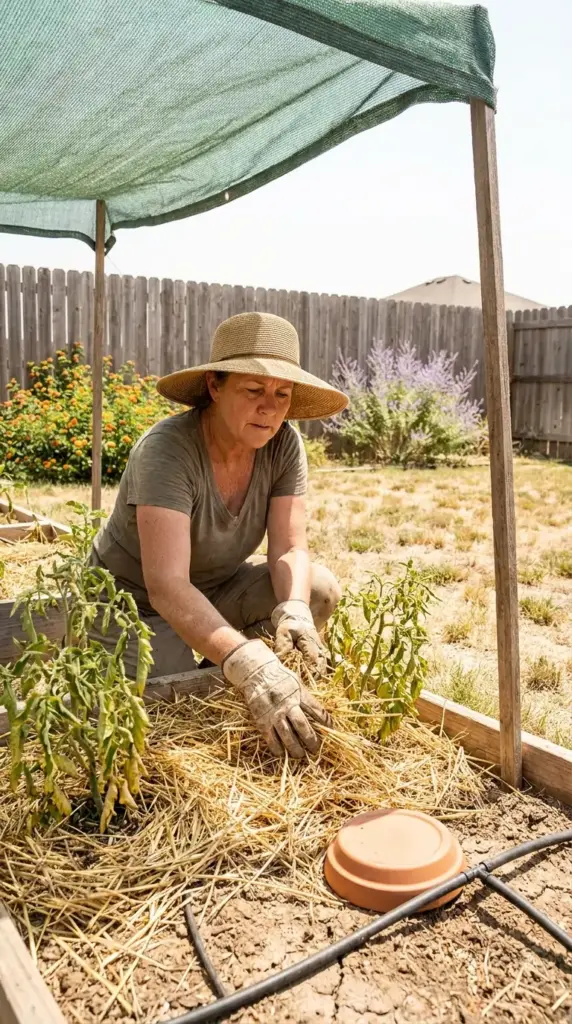
I remember the summer my garden just… gave up.
It was a brutal July in the South, temperatures hitting 105°F for two weeks straight, and I watched plant after plant wilt, crisp, and die despite my best efforts. 😞
That summer taught me more about heat gardening than any book ever could.
Why Heat Kills Gardens (And What’s Actually Happening to Your Plants)
Most people think heat kills plants by drying them out. And yes — that’s part of it.
But the real damage happens at the cellular level. When soil temperatures exceed 85°F, root function starts to shut down. The roots literally cannot absorb water and nutrients efficiently anymore — even if the soil is moist.
Above 95°F, most cool-season plants stop photosynthesizing almost entirely. They’re not growing. They’re not thriving. They’re just surviving — and barely at that.
This is why plants in Dallas, Los Angeles, and Atlanta summers look exhausted even when you’re watering them consistently. It’s not you. It’s physics.
Heat-Resistant Planting Strategies for Hot-Climate Gardeners
The single biggest mindset shift for hot-climate gardening is this: stop fighting your climate and start working with it.
That sounds simple. It took me years to actually do it.
Plant in two seasons, not one. Hot-climate gardeners in Dallas, Atlanta, and Los Angeles have a secret advantage that northern gardeners don’t — you can grow two full garden seasons per year.
Here’s how the calendar actually works in hot climates:
- Cool season (Sept-Nov and Feb-April): Vegetables, annuals, and most flowering plants thrive in these windows. Temperatures are mild, rainfall is more reliable, and plants establish quickly
- Hot season (May-August): Focus on heat-loving crops and ornamentals only. This is survival mode for most plants — plan accordingly
- Transition periods are your most productive planting windows — get plants in the ground 6-8 weeks before peak heat arrives so they can establish strong root systems before the stress begins
Choose the right varieties — not just the right species. This is a detail that makes an enormous difference.
Not all tomatoes handle heat equally. Regular tomato varieties stop setting fruit when nighttime temperatures stay above 75°F — which happens regularly in Dallas and Atlanta from June through August.
Instead, look for specifically heat-tolerant varieties:
- Solar Fire and Heatmaster tomatoes are bred specifically for hot climates and set fruit reliably up to 95°F
- Sweet 100 cherry tomatoes handle heat better than most large-fruited varieties
- Armenian cucumber thrives in intense heat where regular cucumbers collapse
- Malabar spinach is a heat-loving alternative to regular spinach that actually prefers temperatures above 80°F
Use shade cloth strategically during peak heat. A 30-40% shade cloth suspended over vulnerable plants during the hottest weeks of summer can reduce leaf temperature by 10-15°F — which is often the difference between a plant that survives and one that doesn’t.
Shade cloth is inexpensive — a 10×12 foot panel runs about $15-$20 on Amazon — and it’s reusable for years. I consider it an essential gardening supply for anyone in USDA zones 8-11.
Drought-Tolerant Plants That Are Stunning AND Low-Maintenance
Let me push back on something right now — the idea that drought-tolerant plants are boring.
That is absolutely not true anymore. The selection of beautiful, drought-resistant plants available today is genuinely incredible.
For flower beds:
- Lantana — produces clusters of tiny flowers in orange, yellow, pink, and red from spring until frost. Butterflies are obsessed with it. Thrives in full sun and intense heat with almost no supplemental water once established. One of my all-time favorites for Southern gardens
- Salvia — there are hundreds of salvia varieties, and most of them are extraordinarily heat and drought tolerant. Black and Blue salvia produces stunning deep blue flowers on 3-4 foot stems that hummingbirds can’t resist
- Agastache (Hyssop) — spiky flower heads in purple, orange, and pink that bloom for months. Drought tolerant, deer resistant, and absolutely covered in pollinators all season
- Gaillardia (Blanket Flower) — cheerful red and yellow daisy-like flowers that bloom prolifically in heat and drought. Native to the American Southwest and perfectly adapted to hot, dry conditions
- Russian sage — silvery stems and lavender-blue flowers that create an airy, romantic effect in the garden. Virtually indestructible once established and gorgeous in late summer when most other plants are struggling
For a low-maintenance landscape:
- Ornamental grasses like Muhly grass and Gulf muhly are spectacular in fall, producing clouds of pink and purple plumes. Native to the Southeast and Southwest, they require almost zero care once established
- Agave and succulents — for Los Angeles and Dallas gardeners especially, these are practically foolproof. Blue agave, echeveria, and sedum create dramatic, architectural garden designs that look expensive and require almost nothing from you
- Yucca — bold, spiky, and completely indestructible in heat and drought. The flower stalks that emerge in summer are genuinely dramatic — some varieties send up stalks 6-8 feet tall covered in creamy white bell-shaped flowers
Mulching Techniques That Save Your Garden in a Heat Wave
I cannot overstate how important mulching is in hot climates. It is genuinely the difference between a garden that survives summer and one that doesn’t.
Here’s the science: bare soil in direct sun can reach temperatures of 130-140°F at the surface during a heat wave. At those temperatures, feeder roots near the soil surface are literally being cooked.
A 3-4 inch layer of mulch keeps soil temperatures 20-30°F cooler than bare soil. That’s not a small difference — that’s the difference between roots that function and roots that shut down.
The best mulches for hot climates:
Shredded hardwood mulch is the workhorse option — widely available, affordable at around $4-$6 per bag, and effective at moisture retention and temperature regulation.
Straw mulch is my personal favorite for vegetable gardens in hot climates. It’s light-colored (reflects heat rather than absorbing it), breaks down to feed the soil, and keeps moisture in remarkably well. A large bale runs $8-$12 at most feed stores.
Pine straw is the go-to mulch in Atlanta and throughout the Southeast — it’s inexpensive, locally abundant, and creates a beautiful, natural look in garden beds. It also acidifies the soil slightly over time, which is great for acid-loving plants.
Application tips for maximum effectiveness:
- Apply mulch when soil is already moist — mulching dry soil just locks the dryness in
- Keep mulch 2-3 inches away from plant stems to prevent rot and pest harborage
- In extreme heat, water first, then mulch immediately after to trap that moisture in the soil
- Refresh mulch depth every spring and fall — it breaks down over time and loses effectiveness as it thins
Smart Irrigation Systems and Water-Saving Gardening Supplies
Watering efficiently in a hot climate isn’t just about saving money on your water bill — in some regions, it’s about complying with drought restrictions that limit when and how much you can water.
Los Angeles, Dallas, and Atlanta have all implemented mandatory water restrictions during drought periods in recent years. Having an efficient irrigation system isn’t optional anymore — it’s essential.
Drip irrigation is the gold standard for hot-climate gardens. Delivering water directly to the root zone means:
- Up to 70% less water use compared to overhead sprinklers
- No wet foliage, which reduces disease pressure even in humid climates
- Consistent moisture levels that protect plants during heat waves
A complete drip system for a standard 4×8 raised bed can be set up for around $25-$40 using components from brands like Rain Bird or DIG. Add a timer (around $20-$30) and your garden waters itself on a precise schedule — even when you’re traveling during a summer heat wave.
Ollas are an ancient irrigation technique that’s making a serious comeback — and for good reason. These are unglazed clay pots buried in the soil with just the neck sticking out above ground. You fill them with water, and they slowly seep moisture directly into the root zone over several days.
A single olla can water a 3-4 foot radius of garden bed and dramatically reduces evaporation compared to surface watering. They’re available online for $15-$30 each and last indefinitely.
Self-watering containers are a game changer for hot-climate patio and balcony gardeners. They have a built-in water reservoir in the base that plants draw from as needed — reducing watering frequency by 50-70% compared to regular containers during summer heat.
Brands like Lechuza and EarthBox make beautiful self-watering planters that look gorgeous on a patio while keeping plants consistently hydrated. They range from $30-$80 depending on size.
How to Time Your Planting Schedule Around Seasonal Heat
Timing is everything in hot-climate gardening. And most gardeners — especially those who moved from cooler climates — get this completely wrong at first.
The instinct is to plant in spring when it warms up. In northern cities, that’s exactly right. In Dallas, Atlanta, and Los Angeles, that instinct will get your plants killed.
Here’s a practical planting calendar for hot-climate gardeners:
Dallas (USDA Zone 8a):
- Cool season planting: Feb 15 – April 1 and Sept 1 – Oct 15
- Heat-tolerant summer crops: April 15 – June 1
- Avoid planting anything new from mid-June through August — the heat stress on newly planted seedlings is almost impossible to overcome
Atlanta (USDA Zone 7b-8a):
- Cool season planting: March 1 – April 15 and Aug 15 – Oct 1
- Summer planting window: April 15 – June 15 for heat-tolerant varieties
- Fall is actually the best planting season in Atlanta — mild temperatures and reliable rainfall make September and October ideal for establishing new plants
Los Angeles (USDA Zone 10a-11):
- LA’s mild climate allows for year-round planting of many species
- Peak heat stress period is typically July-September in inland areas
- Cool-season vegetables actually perform best planted October through February
- Summer focus should be on drought-tolerant ornamentals and heat-loving crops like peppers, sweet potatoes, and Armenian cucumber
The universal hot-climate rule: Always plant in the late afternoon or on a cloudy day. Planting in morning sun on a hot day stresses transplants immediately. Late afternoon planting gives new plants the entire cool night to begin establishing before facing their first day of heat.
Water new transplants deeply every day for the first two weeks — regardless of rainfall. The establishment period is when heat-related losses happen most often, and consistent moisture during those first 14 days is non-negotiable.
A Hot-Climate Garden Survival Checklist
Before we move on — here’s your quick reference for keeping a hot-climate garden alive and thriving:
- ✅ Plant in two seasons — cool season and heat-tolerant summer crops only
- ✅ Choose heat-tolerant varieties specifically bred for your climate
- ✅ Apply 3-4 inches of mulch before summer heat arrives
- ✅ Switch to drip irrigation or soaker hoses to reduce water waste
- ✅ Use 30-40% shade cloth during peak heat weeks
- ✅ Water deeply and infrequently — not a little bit every day
- ✅ Plant new transplants in late afternoon, never midday
- ✅ Water new plants daily for the first two weeks of establishment
- ✅ Know your local water restrictions before summer arrives
Save that list. You’ll thank yourself in July.
Up Next: When Your Garden Loves Itself Too Much
Your plants are surviving the heat — but now there’s a different problem brewing.
👇 Click “Next” below — because we’re tackling overcrowding next, and I promise you, this is the sneaky mistake that’s quietly sabotaging more gardens than almost anything else on this list.

GIPHY App Key not set. Please check settings