

 The Home Growns
Problem #4: Pest Damage — Protecting Your Plants Naturally
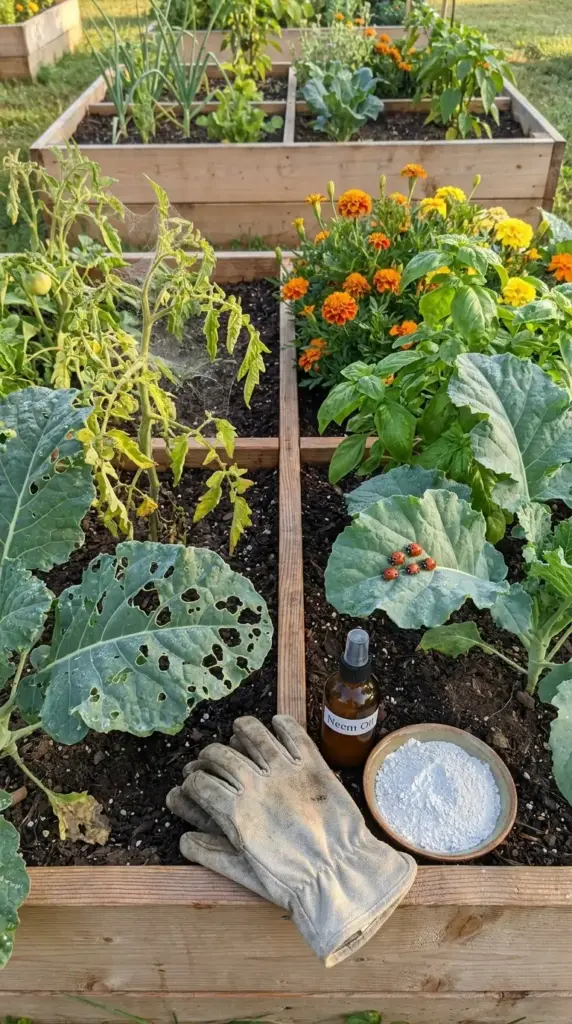
I walked out to my garden one morning and my kale looked like someone had taken a hole punch to every single leaf.
Every. Single. One. 😩
Identifying the Most Common Garden Pests by Region
Here’s something that took me way too long to figure out: not all garden pests are the same everywhere.
The bugs destroying gardens in Seattle are completely different from what’s wreaking havoc in Dallas or New York. Knowing your regional pests is honestly half the battle.
Aphids are probably the most universal pest — they show up in virtually every U.S. city and climate. These tiny, soft-bodied insects cluster on the undersides of leaves and literally suck the life out of your plants. Look for:
- Sticky, shiny residue on leaves (called honeydew)
- Leaves that are curling, yellowing, or distorted
- Tiny clusters of green, black, or white dots on new growth
Slugs and snails are the nightmare of gardeners in cool, wet climates like Seattle, Chicago, and the Pacific Northwest. They feed at night, leaving behind that telltale silvery slime trail and ragged, irregular holes in leaves.
Japanese beetles are a massive problem in the Mid-Atlantic and Midwest — think Washington DC, Philadelphia, Detroit, and Chicago. These metallic green-and-copper beetles skeletonize leaves by eating everything between the veins, leaving plants looking like lace curtains.
Whiteflies thrive in warm climates like Los Angeles and Atlanta, creating clouds of tiny white insects that rise up when you disturb a plant. They weaken plants fast and spread plant viruses between garden beds.
In Dallas and the South, spider mites are a constant summer threat — especially during hot, dry stretches. They’re almost invisible to the naked eye but leave behind fine webbing and stippled, bronze-colored foliage.
Knowing what you’re dealing with before you treat is everything. Treating for slugs when you actually have aphids is a waste of time and money.
Natural Pest Deterrents That Actually Work
Let me be upfront — I tried a lot of things before I found what actually worked consistently.
Neem oil is my absolute first line of defense for almost every soft-bodied pest. It’s pressed from the seeds of the neem tree and works as both an insecticide and a fungicide — which makes it incredibly versatile.
Here’s how to use it correctly:
- Mix 2 tablespoons of neem oil with 1 gallon of water and a few drops of dish soap (the soap helps it emulsify)
- Spray every part of the plant — tops and undersides of leaves — in the early morning or evening to avoid burning foliage in direct sun
- Repeat every 7-14 days as a preventative, or every 5-7 days during an active infestation
Neem oil breaks down quickly in the environment, which means it won’t harm beneficial insects like bees if you apply it at the right time of day. That matters a lot to me.
Companion planting is another strategy I’m genuinely obsessed with — and it’s one of those things that sounds almost too simple to work.
The idea is that certain plants naturally repel pests when grown near vulnerable crops. Some combinations that are proven to work:
- Basil near tomatoes — repels aphids, whiteflies, and tomato hornworms
- Marigolds around the perimeter of vegetable beds — their scent deters aphids, nematodes, and even rabbits
- Lavender near roses — repels aphids and attracts beneficial predatory insects
- Nasturtiums as a trap crop — aphids are so attracted to nasturtiums that they’ll flock to them instead of your vegetables. Plant them at the edges of beds as a sacrifice plant
Beneficial insects are nature’s pest control — and they’re free. Ladybugs eat up to 50 aphids per day. Lacewings devour aphid eggs. Ground beetles hunt slugs at night.
You can attract them by planting dill, fennel, yarrow, and sweet alyssum throughout your garden — these flowers are like a five-star restaurant for beneficial insects.
You can also buy live ladybugs online for around $7-$10 per 1,500 insects — just release them at dusk near infested plants and let them do their thing.
How Smart Garden Design Reduces Pest Problems
This one genuinely surprised me when I first learned it — but how you design your garden directly affects how many pest problems you’ll have.
Spacing is everything. Plants that are too close together create humid, stagnant microclimates that pests and diseases absolutely thrive in.
Most vegetable plants need at least 18-24 inches between them for adequate airflow. Tomatoes need even more — at least 24-36 inches — because they’re so prone to fungal issues when air can’t circulate freely.
Raised beds with good spacing are dramatically less prone to pest problems than crowded in-ground beds. The improved drainage also means less standing moisture, which slugs and fungus gnats need to survive.
Plant placement matters too. Keeping your most pest-vulnerable plants — like kale, roses, and tomatoes — away from fences and dense shrubs reduces hiding spots for insects that shelter during the day and feed at night.
And here’s a design tip I love: create a diverse garden rather than monoculture rows. Planting the same crop in large blocks makes it incredibly easy for pests to spread from plant to plant. Mixing different plant families throughout your beds confuses pests and slows their movement dramatically.
Pet- and Child-Safe Pest Control for Family Backyards
This is non-negotiable for me — and I know it is for a lot of you too.
The good news is that the most effective natural pest control methods are also the safest for families.
Diatomaceous earth (DE) is one of the best tools in a family-friendly garden. It’s a fine powder made from fossilized algae that damages the exoskeletons of crawling insects — killing slugs, beetles, and ants — while being completely harmless to humans, pets, and birds.
Sprinkle it around the base of plants and along garden borders. Reapply after rain since moisture reduces its effectiveness. A 4 lb. bag runs about $12-$15 and lasts a surprisingly long time.
Insecticidal soap spray is another safe option — it kills soft-bodied insects on contact by disrupting their cell membranes. You can buy it premixed (brands like Safer Brand are widely available) or make your own with 1 tablespoon of pure castile soap per quart of water.
For slug control specifically — especially important for Seattle, Chicago, and Minneapolis gardeners — iron phosphate bait (sold as Sluggo or Escar-Go) is certified organic and safe around pets and children. It’s far safer than the traditional metaldehyde slug baits, which are genuinely dangerous to dogs.
Copper tape around the edges of raised beds and containers creates a mild electrical barrier that slugs won’t cross. It’s a little pricey upfront — about $10-$15 for a 30-foot roll — but it lasts for years and requires zero maintenance.
When to DIY vs. When to Call a Professional
I’m a big believer in handling pest problems yourself — most of the time.
But there are situations where DIY just isn’t enough, and recognizing them early saves you from losing an entire garden.
Call a professional when:
- You’re dealing with a large-scale Japanese beetle or grub infestation that’s spreading across your lawn and garden beds simultaneously
- You suspect root-knot nematodes — microscopic soil pests that cause lumpy, distorted roots and are nearly impossible to treat without professional soil fumigation
- A pest problem has spread to multiple beds despite consistent treatment over 3-4 weeks
- You’re seeing damage but genuinely cannot identify the pest after careful inspection
Handle it yourself when:
- You can clearly identify the pest and it’s contained to one area
- The infestation is caught early — early intervention is almost always manageable
- You’re dealing with common pests like aphids, slugs, or whiteflies that respond well to neem oil and organic treatments
A good rule of thumb: if you’ve treated consistently for three weeks with no improvement, it’s time to bring in an expert. Your local cooperative extension office often offers free pest identification services — which is always my first call before spending money on a professional.
Up Next: Plant Diseases That Spread Fast
You’ve got your pest situation under control — but there’s another invisible threat quietly spreading through your garden.
👇 Click “Next” below — because we’re talking about plant diseases next, and some of them can wipe out an entire bed in less than a week if you don’t catch them early.

GIPHY App Key not set. Please check settings