

 The Home Growns
Problem #3: Pesky Weeds Taking Over Your Garden Beds
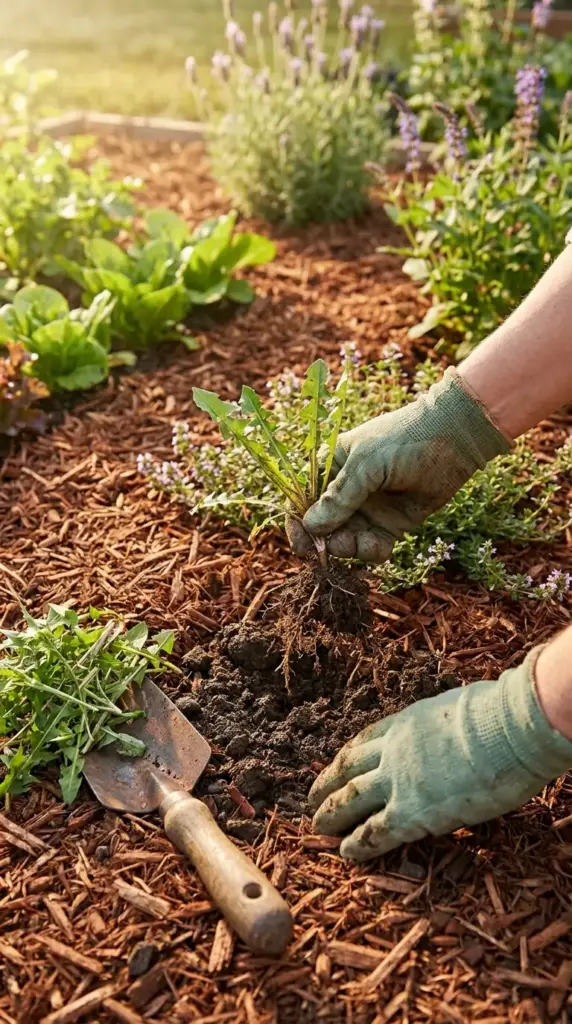
There’s a specific kind of frustration that comes from pulling weeds on a Saturday morning, feeling really good about it — and then walking outside Monday to find them all back.
I’ve been there more times than I care to admit. 😤
Why Weeds Seem to Grow Faster in Your Garden Than Anywhere Else
Here’s the thing nobody tells you: the better your soil, the faster weeds grow in it.
When you improve your garden beds with compost and amendments — which you absolutely should — you’re also creating the perfect environment for weed seeds to germinate.
Raised beds are especially vulnerable. The loose, nutrient-rich soil that makes them so great for vegetables? Weeds absolutely love it too.
Container gardens have a slightly different problem. Weed seeds blow in on the wind and land in that perfect potting mix, germinating almost overnight in warm weather.
Border gardens — those long beds along fences or walkways — tend to get invaded from underneath and alongside, with grass and ground-level weeds creeping in from the edges constantly.
The hard truth? Weeds are opportunists. Any bare patch of soil is an open invitation.
Organic Weed Control Methods That Actually Work
I stopped using chemical herbicides in my garden years ago — mostly because I have dogs that roll around in the flower beds like it’s their personal spa. 🐾
The good news is that organic weed control has come a long way, and some of these methods work just as well as anything you’d find in a chemical spray bottle.
Hand pulling is still the gold standard — but timing matters enormously. Pull weeds when the soil is moist (right after watering or rain), and you’ll get the entire root system out cleanly. Pull them when the soil is dry and you’ll just snap the stem, leaving the root to regrow.
Corn gluten meal is one of my favorite organic secret weapons. It’s a natural pre-emergent herbicide that prevents weed seeds from germinating in the first place. Apply it in early spring before weed season kicks off — about 20 lbs per 1,000 square feet — and you’ll see a noticeable reduction in new weed growth.
Boiling water sounds almost too simple, but it’s devastatingly effective on weeds growing in sidewalk cracks or gravel paths. Pour it directly on the weed and it kills everything it touches — roots included — within 24 hours.
Just keep it away from plants you actually want to keep. Learned that one the hard way. 😬
Mulching: The Strategy That Does Double Duty
If there’s one weed control method I’d tell every gardener to prioritize, it’s mulching.
A 2-3 inch layer of mulch across your garden beds does something almost magical: it blocks sunlight from reaching the soil surface, which prevents the vast majority of weed seeds from ever germinating.
And it looks absolutely beautiful at the same time.
Here’s a quick breakdown of the best mulch types for different garden styles:
- Shredded hardwood mulch — classic, natural look, great for flower beds and borders. Around $4-$6 per bag at Home Depot
- Cedar mulch — naturally repels certain insects, smells amazing, lasts longer than basic hardwood. Worth the slight price premium
- Straw mulch — perfect for vegetable gardens, breaks down quickly and feeds the soil
- Black rubber mulch — ultra long-lasting, great for modern garden designs, but doesn’t improve soil health over time
- Cocoa shell mulch — gorgeous dark color, smells like chocolate (seriously), but keep it away from dogs as it can be toxic to them
Refresh your mulch layer every spring and fall to maintain that 2-3 inch depth. As it breaks down, it actually feeds your soil — so it’s doing two jobs at once.
Ground Covers That Block Weeds AND Look Gorgeous
Here’s a garden design move that more people need to know about: replacing bare soil with low-growing ground covers.
Instead of leaving empty space between plants — which is basically a welcome mat for weeds — you fill those gaps with plants that spread naturally and crowd weeds out.
Some of my absolute favorites:
- Creeping thyme — spreads beautifully, handles foot traffic, produces tiny purple flowers in summer, and smells incredible. Drought-tolerant too, which makes it perfect for LA and Dallas gardeners
- Ajuga (Bugleweed) — deep purple foliage that looks stunning in shaded areas where grass won’t grow. Spreads aggressively enough to choke out most weeds
- Creeping Jenny — bright chartreuse color that pops against darker plants, loves moist soil, great for Seattle and Chicago gardeners
- Sweet woodruff — delicate white flowers, thrives in shade, spreads steadily without becoming invasive
- Sedum (Stonecrop) — succulent ground cover that’s virtually indestructible, perfect for hot dry climates and rock gardens
The key is choosing a ground cover that matches your climate and light conditions. A plant that thrives in Seattle’s cool moisture will struggle in a Dallas summer — so always check your USDA hardiness zone before planting.
DIY Weed Killer Recipes From Your Kitchen
Okay, let’s talk about the homemade stuff — because these recipes genuinely work for spot-treating weeds in non-garden areas like driveways, patios, and walkways.
The Classic Vinegar Spray:
- 1 gallon of white vinegar (the regular grocery store kind works fine)
- 1 cup of table salt
- 1 tablespoon of dish soap (helps it stick to leaves)
Mix it together, pour into a spray bottle, and apply directly to weeds on a sunny day. The heat amplifies the effect. You’ll see results within 24-48 hours.
The acetic acid in vinegar draws moisture out of the plant, essentially dehydrating it to death. The salt prevents regrowth by making the soil inhospitable.
Important caveat: This mixture will kill anything it touches — including your good plants and beneficial soil organisms. Use it only on weeds in hardscape areas, not in your garden beds.
For garden beds, stick to horticultural vinegar (20-30% acetic acid concentration) applied with extreme precision using a small paintbrush directly on the weed leaves. It’s stronger and more targeted than the spray method.
A Simple Weekly Weed Management Routine
The gardeners with the cleanest beds aren’t spending hours weeding every weekend. They’re spending 10-15 minutes, three times a week.
Little and often beats big and occasional every single time.
Here’s the routine that works for me:
- Monday: Quick scan of beds, pull anything that emerged over the weekend while soil is still moist from Sunday watering
- Wednesday: Check mulch depth, top up any thin spots
- Friday: Spot-treat any stubborn weeds with vinegar solution or hand pull before the weekend
That’s it. Consistency is the entire secret to weed control — there’s no magic spray or one-time fix that replaces showing up regularly.
Up Next: The Pest Problem
Your beds are clean, your soil is healthy, your watering is dialed in — but something is still eating your plants.
👇 Click “Next” below — because we’re getting into pest control, and I’ve got some natural, family-safe methods that will protect your garden without a single drop of harsh chemicals.

GIPHY App Key not set. Please check settings