

 The Home Growns
Problem #1: Poor Soil Quality — The Root of Most Garden Problems
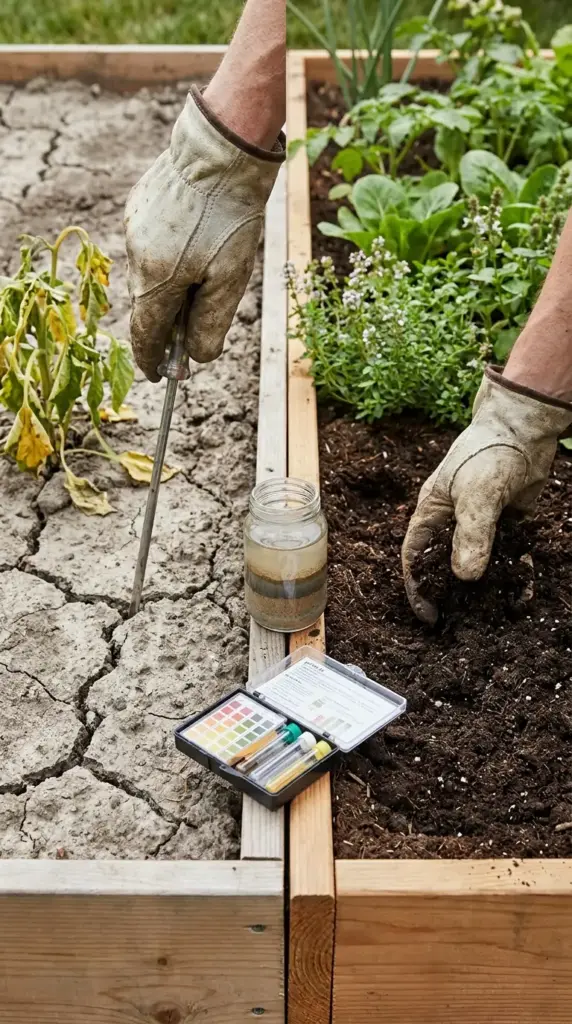
I remember the first time I realized my soil was the problem. I had spent almost $200 on plants that season — and every single one of them was struggling.
Turns out, I was basically asking them to grow in concrete.
How to Tell If Your Soil Is the Problem
Compacted soil is usually the easiest to spot. If you push a screwdriver into the ground and it won’t go deeper than 2-3 inches without serious effort — yeah, your soil is too dense for healthy root growth.
Nutrient-deficient soil tells a different story through your plants. Yellow leaves, stunted growth, and pale coloring are classic signs that your soil is simply not feeding your plants what they need.
Overly sandy soil is another beast entirely. Water drains so fast that roots barely get a chance to absorb it — I once watered a sandy bed and watched the moisture disappear in under 10 minutes.
DIY Soil Testing vs. Store-Bought Kits
Here’s the thing — you don’t need to spend a fortune to figure out what’s wrong.
A DIY jar test can tell you your soil composition for free. Fill a jar with soil and water, shake it, and let it settle for 24 hours. Sand sinks first, then silt, then clay — and you can literally see what your soil is made of.
But if you want real data, a store-bought soil test kit like the Luster Leaf Rapitest (around $15-$20 at most garden supply stores) will give you your pH level, nitrogen, phosphorus, and potassium readings in about 10 minutes.
Knowing your pH is a game changer. Most vegetables thrive between 6.0 and 7.0 pH — even a small deviation outside that range can lock nutrients out of your plants’ roots entirely.
For the most accurate results, your local cooperative extension office will test your soil for around $15-$30 and give you a detailed report with specific amendment recommendations for your region.
The Best Soil Amendments (And When to Use Them)
Once you know what your soil is missing, fixing it is actually pretty straightforward.
Compost is the MVP of soil amendments — full stop. Adding 2-3 inches of finished compost to your beds each season improves drainage in clay soil, adds water retention to sandy soil, and feeds your plants with slow-release organic nutrients.
Peat moss is great for loosening compacted soil and slightly lowering pH — which is perfect if you’re growing blueberries, azaleas, or other acid-loving plants. Just keep in mind it’s not the most sustainable option, so use it sparingly.
Perlite — those little white volcanic glass pellets — is something I add to every container garden I build. It dramatically improves soil aeration and drainage, especially in pots where compaction happens fast.
And if your soil is seriously depleted, worm castings are like a superfood boost. They’re gentle enough that you can’t over-apply them, and plants visibly respond within a couple of weeks.
Why Raised Bed Gardening Is a Total Game Changer
Honestly? If your native soil is really bad, stop fighting it.
Raised bed gardening lets you build the perfect growing environment from scratch — and it looks gorgeous doing it. A standard 4×8 raised bed filled with a mix of 60% topsoil, 30% compost, and 10% perlite gives you an almost ideal growing medium right out of the gate.
In cities like Chicago, New York, and Philadelphia, where urban soil is often compacted, contaminated, or full of construction debris, raised beds aren’t just stylish — they’re practically a necessity.
Cedar and redwood are the best materials for raised beds because they’re naturally rot-resistant and can last 10-20 years without treatment.
Budget-Friendly Gardening Supplies for Soil Improvement
You don’t have to break the bank to fix your soil. Here’s what I’d actually spend money on:
- Luster Leaf Rapitest Soil Kit — ~$15, covers 40 tests
- Bag of perlite (8 qt.) — ~$10 at Home Depot or Lowe’s
- Compost — free if you start a backyard compost bin, or ~$6-$8 per bag at most garden centers
- Worm castings — ~$20 for a 15 lb. bag, worth every penny
- pH adjusters — garden lime to raise pH (
$8), sulfur to lower it ($7)
The biggest mistake I see new gardeners make is spending all their budget on plants and nothing on soil prep. Flip that equation — invest in your soil first — and your plants will practically take care of themselves.
Up Next: The Watering Problem Nobody Talks About
Now that your soil situation is sorted, there’s another sneaky issue that trips up even experienced gardeners.
👇 Click “Next” below — because we’re diving into the overwatering vs. underwatering debate, and trust me, what you think you know about watering your plants might be completely wrong.

GIPHY App Key not set. Please check settings