

 The Home Growns
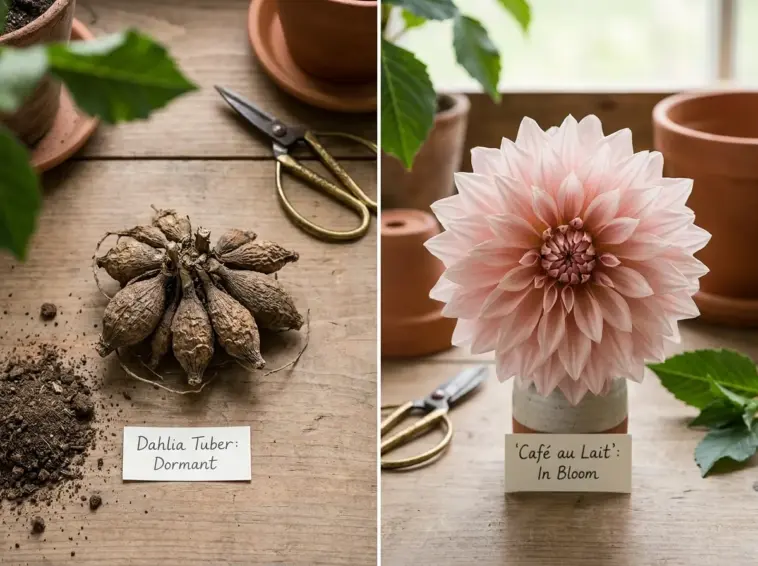
Honestly, the first time someone handed me a dahlia tuber, I almost threw it straight into the compost bin. It looked exactly like a wrinkly, completely dead old potato that had been lost behind the kitchen pantry for six months.
But magic happens in the dirt, my friends.
It is completely wild how that ugly little brown lump transforms into an absolute visual explosion of color later in the summer. I am talking massive, dinnerplate-sized dahlia flowers that look like they belong on a high-end luxury home decor blog.
If you are staring at a bag of shriveled roots right now and feeling some major “tuber anxiety,” don’t panic. We have all been there, and I promise you that your green thumb is just waiting to wake up.
Today, I am giving you the ultimate dahlia care blueprint so you can create the jaw-dropping cutting garden of your dreams. Let’s get these beauties in the ground and ready to steal the show!
Demystifying the Dahlia Tuber: What to Look For
Before we dig into the dirt, let’s address the elephant in the garden shed: dahlia tubers are inherently ugly. When you open your first shipment or pull them out of winter storage, they can look pretty discouraging. However, learning how to read these weird little roots is your first step toward a backyard full of spectacular color.
Healthy vs. Dead: The Squish Test
When you hold a tuber, it should feel relatively firm, much like a fresh potato. Give it a gentle squeeze. If it feels hard or slightly yielding but solid, it is alive and well. Even dormant tubers that look deeply wrinkled and shriveled can still hold plenty of life force inside!
On the flip side, keep an eye out for these deal-breakers:
- The Mush Factor: If the root feels squishy, spongy, or leaks water when pressed, it has likely succumbed to root rot and cannot be saved.
- The Hollow Shell: If a tuber feels incredibly light, brittle, or crumbles in your hand, it has completely dried out and died.
- Broken Necks: The narrow part connecting the body of the tuber to the main crown is called the “neck.” If this neck is broken or completely snapped, the tuber won’t be able to send nutrients to the new growth.
Playing Detective: Spotting the “Eye”
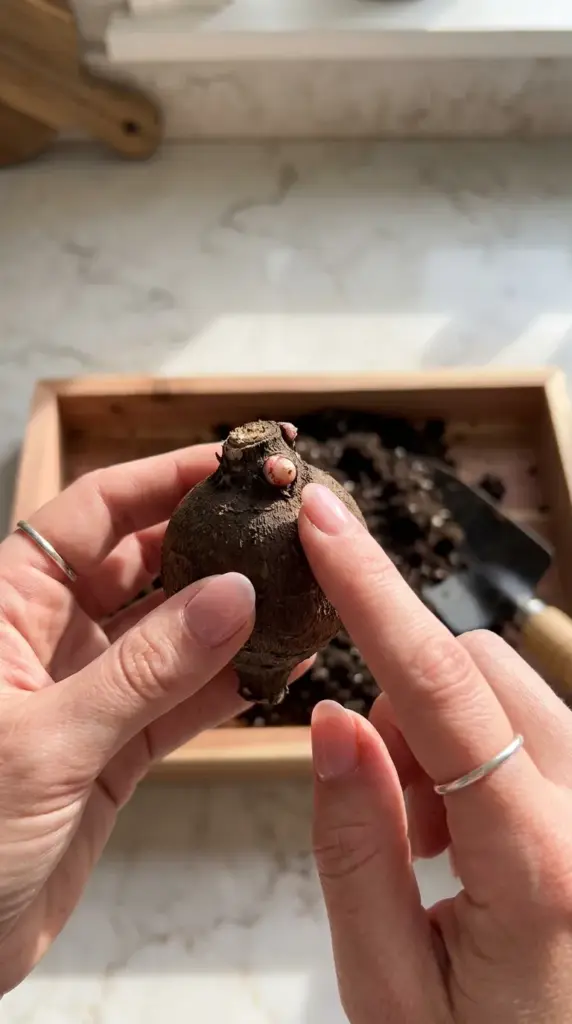
The absolute most important part of your tuber isn’t its size—it’s the “eye.” Think of it exactly like the eye on a baking potato. This tiny, raised bump is the growth point where the future stem will emerge. Without an eye, a tuber is “blind” and will never sprout, no matter how much love you give it.
If you are looking at them in early spring, the eyes can be notoriously difficult to see. They look like a tiny, pale pimple or a small, swollen bump located right where the neck meets the center crown. Don’t worry if it looks incredibly microscopic right now; once they warm up, those eyes will swell and eventually turn into bright green or purple sprouts.
Curating Your Garden Aesthetic
Half the fun of growing these flowers is choosing from the thousands of unique dahlia varieties to fit your personal style. If you want your backyard to look like a high-end editorial shoot, you need to match your flower shapes and colors to your home’s palette.
If you love a romantic, cottage-core aesthetic, you cannot miss out on dinnerplate dahlias. These varieties produce massive, fluffy flower heads that can literally grow up to 10 or 12 inches across. The absolute queen of this category is the legendary ‘Café au Lait’ dahlia—a stunning, creamy-blush bloom that wedding florists obsess over.
If your style is more modern, crisp, and structural, look for “ball” or “pompon” dahlias. They produce perfectly symmetrical, tight spheres of petals that hold up incredibly well in rain and wind, ensuring you always have a steady supply of flawless, beautiful blooms to cut for your kitchen table.

GIPHY App Key not set. Please check settings