

 The Home Growns
Build a Stable Base That Drains Well
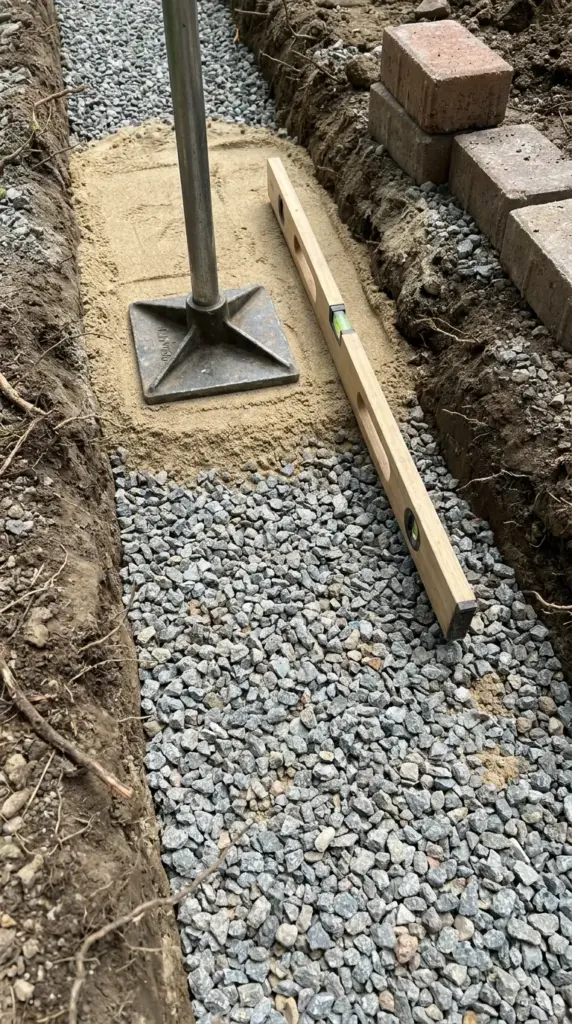
Add the right amount of gravel
Pour in crushed stone base or compactable gravel in thin lifts. For most edging jobs, 2 to 4 inches works well, but wetter sites may need more.
If the area stays soggy after rain, give drainage extra respect. That’s usually where edging failures begin.
Compact in layers
Compact each layer before adding the next. This matters way more than people expect because loose gravel settles later and drops your bricks with it.
A hand tamper works for smaller areas. For longer runs, a rented plate compactor is a game changer.
Add a leveling layer if needed
A thin layer of coarse paver sand base or leveling sand can help you fine-tune the top surface. Keep it thin so the bricks stay supported by the compacted base, not just floating in sand.
Too much sand makes the edge squishy. I learned that the messy way on a border that looked great for three weeks.
Check slope and runoff
Use a level and your eyes to make sure water won’t funnel toward the house or pool against the bricks. A slight natural slope is fine as long as the bricks follow it consistently.
Once the base is right, everything else gets easier. Hit the next button below, because now you get to place the first row and see the project come to life.



GIPHY App Key not set. Please check settings