

 The Home Growns
Mark and Measure the Edge Line
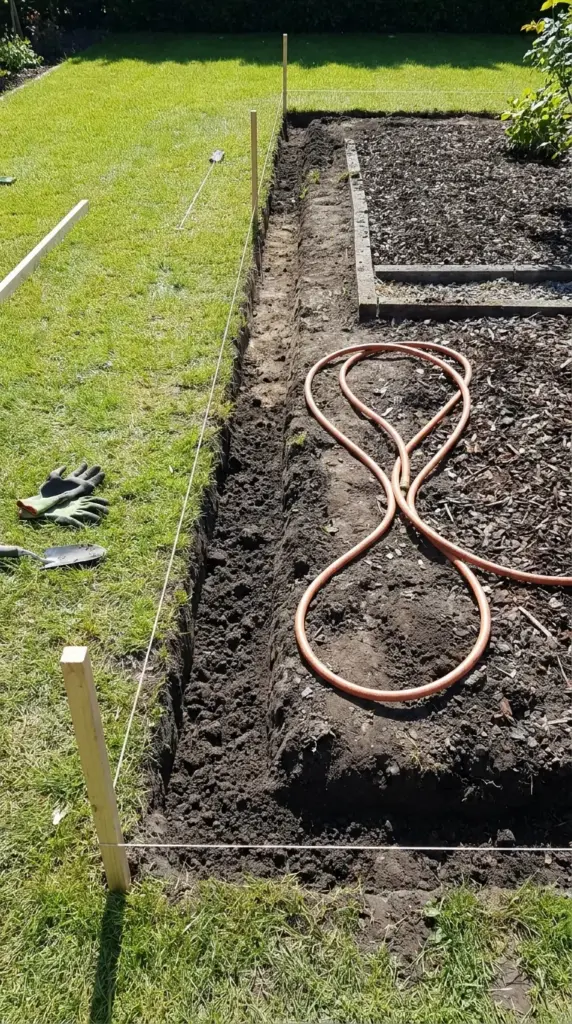
Use stakes, string, or a hose
For straight borders, use stakes and a string line layout. For curves, lay out a hose first, then step back and look at it from the driveway and from inside the house.
That second view helps a ton. Some lines look perfect up close and weirdly lopsided from ten feet away.
How wide and deep the trench should be
Your trench should be slightly wider than the brick plus a little room for adjustment and backfill. Depth depends on brick size, but usually includes the base plus the amount of brick you want buried.
A common setup is 2 to 4 inches of base, plus enough trench depth to sink one-third to one-half of the brick. That helps with mulch retention and stability.
Keep curves smooth and straights crisp
For curves, avoid tiny wiggles. Broad, intentional arcs look cleaner and are easier to build with standard bricks.
For straight runs, check the line from multiple angles. One tiny drift at the start gets really obvious by the end.
Mistakes that cause wobbly edging
The biggest layout mistake is changing depth or width as you go. The second biggest is eyeballing a line and hoping for the best.
I’m all for intuition in the garden, but not when it comes to edging. Hit the next button below, because trench prep is what keeps your border from settling unevenly.



GIPHY App Key not set. Please check settings