

 The Home Growns
Avoid the Most Common DIY Mistakes
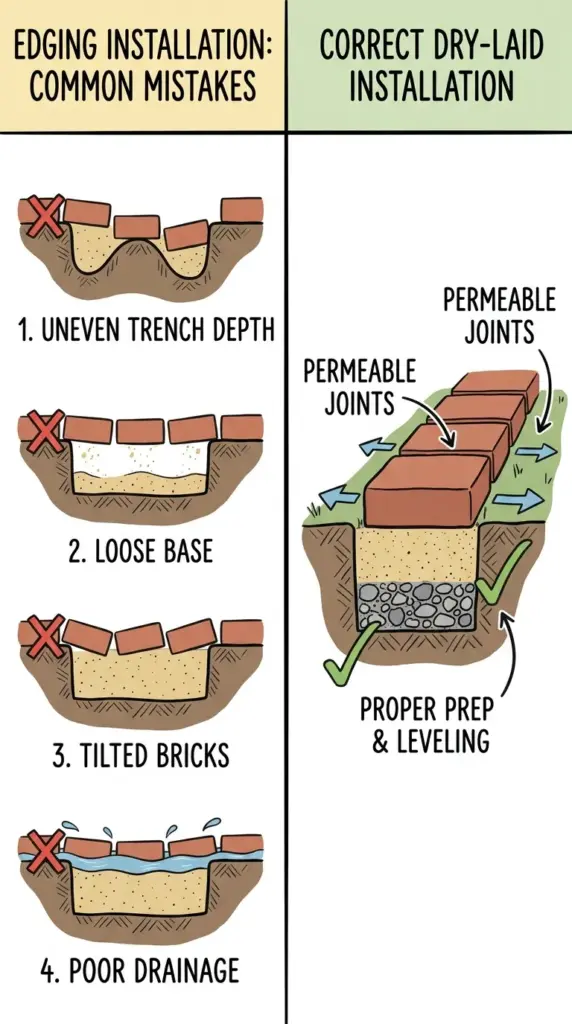
Skipping compaction
The number one mistake is not compacting the base enough. If the gravel is loose, the bricks will settle, tilt, or spread apart after rain.
This is the classic “looked amazing on Sunday, looked tired by Thursday” problem.
Digging the wrong trench
A trench that’s too shallow makes the edging unstable. A trench that’s too wide makes it harder to keep the bricks aligned and supported.
You want just enough room to work, not a mini moat.
Using the wrong base in wet areas
Plain loose sand under everything is rarely the best call in soggy sites. Wet climates usually need a proper gravel base for bricks to support drainage and reduce movement.
If your yard holds water, don’t pretend it doesn’t. The yard always wins that argument.
Ignoring frost heave and runoff
In freeze-prone regions, trapped water can lift bricks over winter. Good base prep, good drainage, and a flexible system all help with frost heave prevention.
The good news is most mistakes are preventable. Hit the next button below, because maintaining brick edging is way easier than rebuilding it.



GIPHY App Key not set. Please check settings