

 The Home Growns
Dig the Trench the Right Way
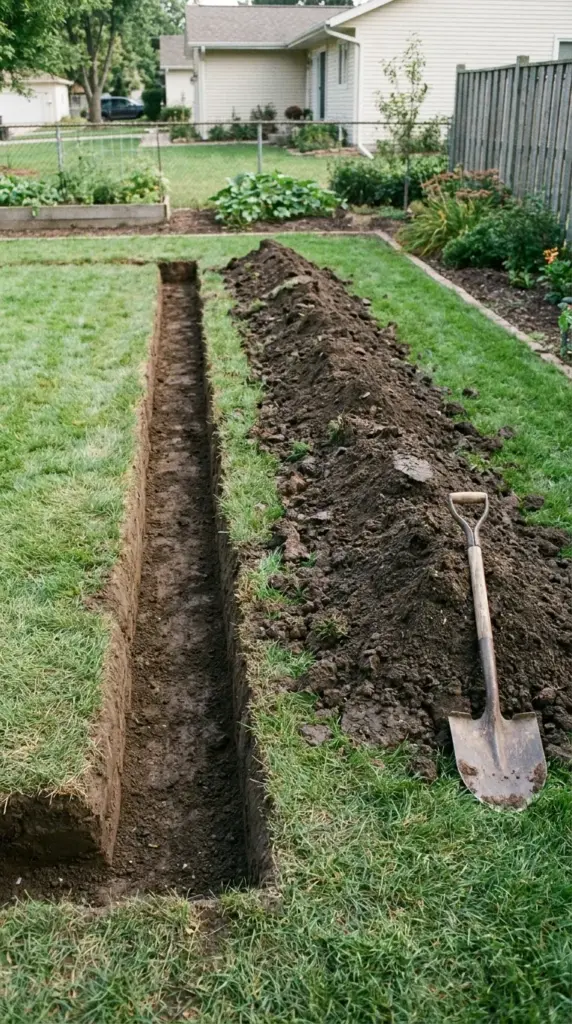
Dig for the look you want
If you want a low-profile edge, bury more of the brick. If you want a taller visual border, expose more brick while still keeping enough buried for support.
For upright brick soldier course edging, you’ll usually bury a deeper portion than you would for a flat-laid row.
Create a flat bottom
Use the shovel to remove loose soil, then scrape the bottom of the trench fairly level. It doesn’t need to be laser perfect, but it should be consistent.
This is one of those quiet, boring steps that makes the finished job look ten times better. Annoying, yes. Worth it, also yes.
Adjust for clay, rock, or sand
In clay soil, be extra careful with drainage and compaction because water can sit there. In sandy soil, compact in thin layers so the trench doesn’t keep collapsing on you.
Rocky soil takes more patience. I’ve muttered a few words at buried stones over the years, and I stand by every one of them.
Prevent future shifting
Don’t leave soft pockets in the trench. If one area feels spongy underfoot, fix it now instead of hoping the gravel will magically solve everything.
It won’t. Hit the next button below, because the base layer is what makes a low-maintenance landscape border possible.



GIPHY App Key not set. Please check settings