

 The Home Growns
Lock the Bricks in Place Naturally
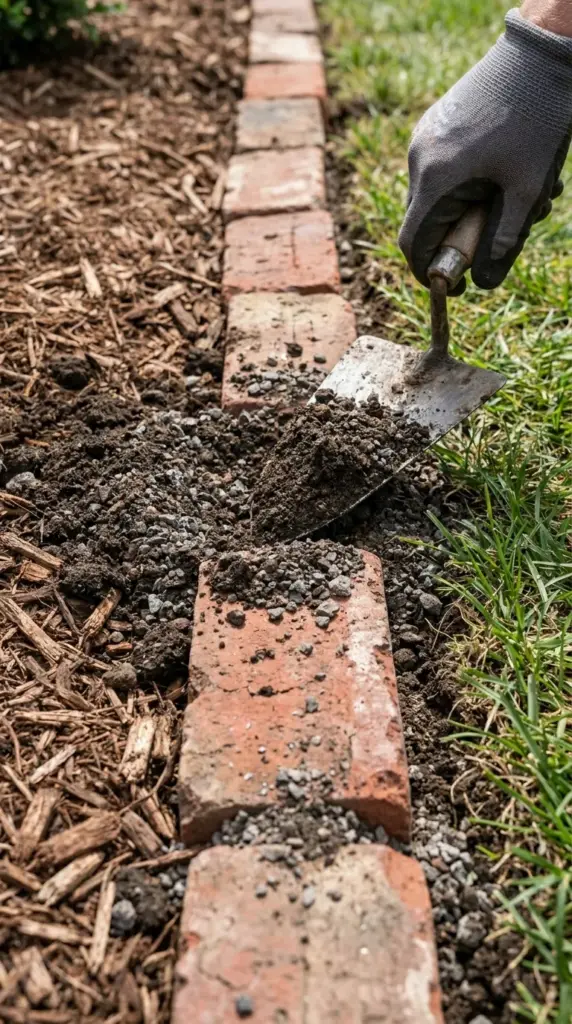
Backfill both sides
Once the bricks are set, backfill along both sides with soil, gravel, or stone dust. This side pressure helps keep the edging from leaning or sliding.
I like to backfill a little, tamp a little, then repeat. It feels slower, but the result is sturdier.
Fill gaps smartly
For small joints, use coarse sand, fine gravel, or stone dust. These materials settle into gaps and add friction without creating a rigid bond.
That flexibility is useful in climates where soil movement happens. Drainage-friendly edging usually lasts longer when it can move a tiny bit without cracking.
Optional restraint methods
In high-traffic areas, hidden edging restraints or buried side support can help. You’re still avoiding mortar, but you’re giving the border a little extra backbone.
This can be handy near a patio, path, or frequently mowed strip.
Let mulch and turf help
Over time, turf roots on one side and mulch or soil on the other help stabilize the border even more. That’s one reason flower bed borders often settle in nicely after a season.
The border isn’t just sitting there alone. Hit the next button below, because finishing details are what make it look truly professional.



GIPHY App Key not set. Please check settings