

 The Home Growns
Plan the Border Before You Dig
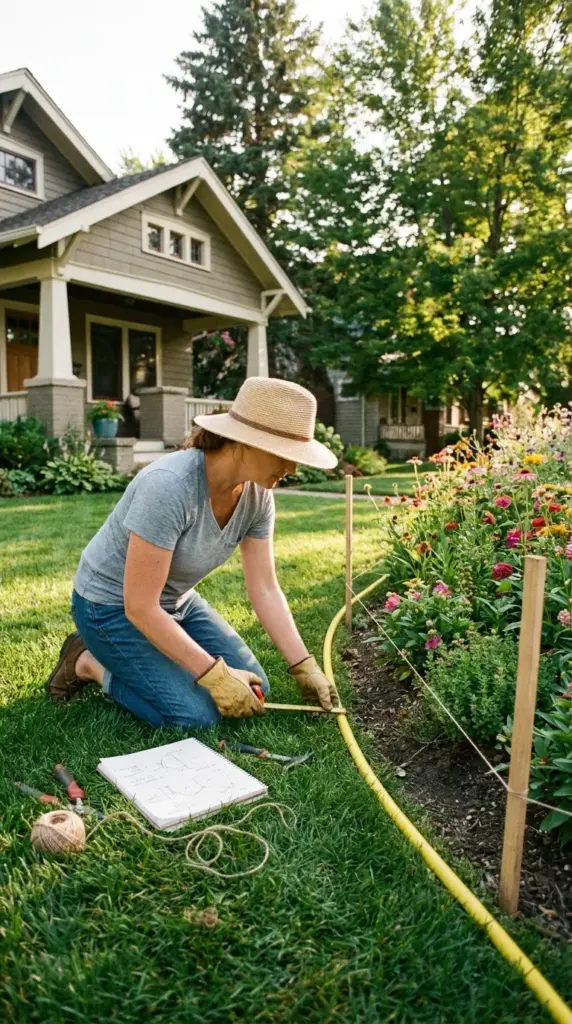
Straight lines, curves, and corners
Start by deciding whether you want a crisp straight lawn edge or a softer curved brick edging look. Straight runs feel formal, while curves look more relaxed and natural around planting beds.
I usually match the line to the house. Sharp homes with modern trim look nice with straight edges, while cottage-style yards can carry curves better.
Measure the run and count your bricks
Measure the total length with a tape or garden hose. Then divide by the face length of your brick and add 5 to 10 percent extra for cuts, mistakes, and the one brick you’ll absolutely drop on your foot.
That little overage matters. I’ve made the “I’ll just buy exact quantities” mistake, and wow, I do not recommend a second store run covered in dirt.
Match the style to your landscape
Think about whether you want a brick soldier course, a flat row, or a slightly angled edge. Taller upright bricks look classic, while flatter layouts feel more relaxed and pair well with mulch-heavy beds.
For a homey look, reclaimed brick can be gorgeous. For cleaner lines, standard landscape pavers often install faster.
Check for roots, irrigation, and utilities
Before digging, identify sprinkler lines, landscape lighting wires, and shallow tree roots. If you’re in the U.S., calling 811 before deeper digging is just smart, even for smaller yard projects.
This part isn’t glamorous, but it can save you from turning a simple edging job into a full-blown yard repair saga. Hit the next button below, because brick choice affects stability more than most people think.



GIPHY App Key not set. Please check settings