

 The Home Growns
Pick the Best Bricks for a Mortar-Free Install
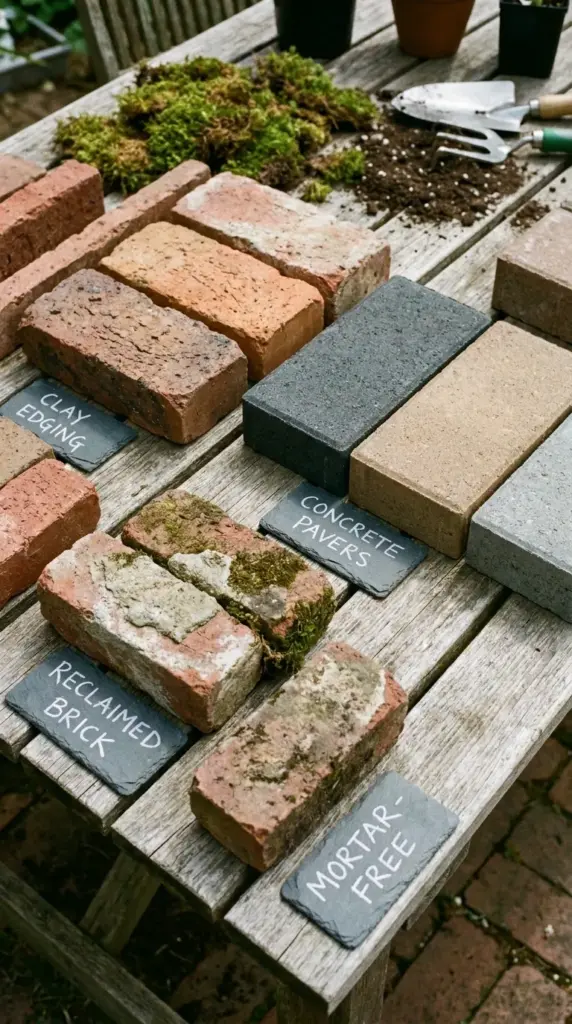
Standard brick vs. pavers vs. reclaimed brick
For brick border installation, solid clay bricks and concrete pavers both work. Concrete pavers are often more uniform, while clay bricks bring that warm, timeless garden look.
Reclaimed brick can be beautiful, but it varies in size and may chip more easily. I love the look, but it asks for more patience.
Best sizes and shapes for stability
Wider bricks are generally easier to stabilize in a dry-laid setup. If you’re doing upright edging, choose bricks deep enough to bury at least a third of their height.
Uniform shape makes leveling easier. When every piece is a little wonky, the whole border can start looking like it had a rough night.
Climate and freeze-thaw cycles
In colder regions, dense pavers or bricks rated for exterior use hold up better. Repeated moisture plus freezing can crack weaker materials over time.
That matters a lot in cities with real winter weather. A sturdy brick now saves you from springtime repairs later.
Color and finish ideas
Warm red brick works with older homes, while charcoal or tan pavers fit more modern exteriors. If your yard already has a patio border brick or walkway, matching tones helps everything feel intentional.
Right now, lots of homeowners lean toward natural, earthy hardscaping that looks low-key instead of overly polished. Hit the next button below, because the right tools and base materials make this job way easier.


GIPHY App Key not set. Please check settings