

 The Home Growns
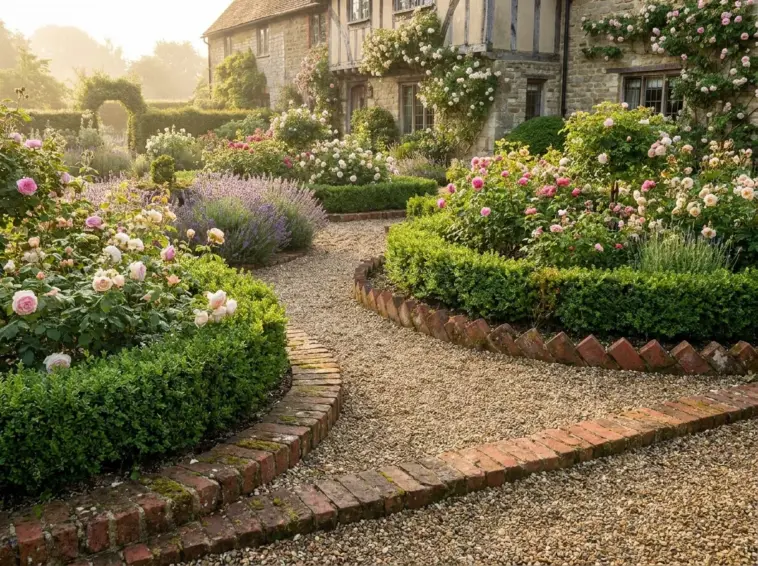
If you love that settled, graceful, slightly storybook look in a garden, red brick edging is one of the easiest ways to get there. It brings order to loose planting, gives paths a finished outline, and adds the kind of charm that never really goes out of style.
I’ve always thought brick does its best work quietly. It sits there looking all proper and timeless while the roses flop, the lavender spills, and the whole English garden border somehow looks more intentional.
Lately, I’m seeing more gardeners mix classic edging with practical upgrades too. Think reclaimed brick edging, flush mowing strips, and softer curved lines that still feel traditional but work better for real-life maintenance.
So if you’re trying to choose a border that looks beautiful and makes sense for your yard, these 12 classic styles are a great place to start.
Why Red Brick Edging Still Defines the Traditional English Garden
Why brick feels timeless
There’s something about red brick garden edging that instantly makes a space feel settled and rooted. It gives structure without making the garden feel stiff or overdesigned.
That balance is a huge part of why it works so well in traditional landscapes. In a classic English country garden style, brick helps the whole space feel calm, collected, and full of character.
How brick supports soft planting
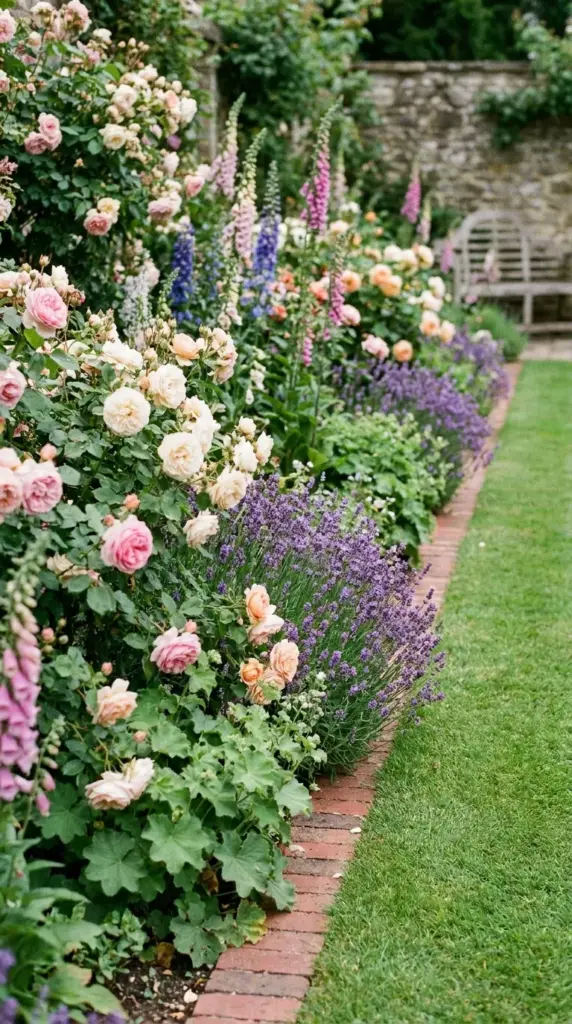
Brick is especially good at grounding soft, romantic planting. Roses, foxgloves, lavender, nepeta, and billowy annuals all look better when they have a clear border to lean against.
I love that contrast. A neat line of brick lawn edging next to slightly unruly planting is basically the whole charm of an English-style garden.
New, tumbled, or reclaimed?
If you want a crisp finish, new clay paver edging works beautifully. If you want a softer, older feel, tumbled red bricks or salvaged brick landscaping materials usually look more authentic.
I’ve used reclaimed bricks before, and they were gorgeous. They were also heavy, dusty, and annoyingly uneven, so yeah, it was character-building in every sense.
A quick planning checklist
Before you start, think about layout, mowing, drainage, and climate. In colder places like Chicago, Minneapolis-St. Paul, Detroit, and Philadelphia, frost-resistant bricks and a stable base are worth every bit of effort.
Spring and early fall are still the easiest seasons for brick edging installation. The ground is workable, the weather is nicer, and you’re less likely to make sweaty, irritated decisions with a shovel in your hand.
If you want the most formal look of the bunch, the next style is about as classic as it gets, so hit the next button below.

GIPHY App Key not set. Please check settings