

 The Home Growns
Herringbone Brick Edge Panels
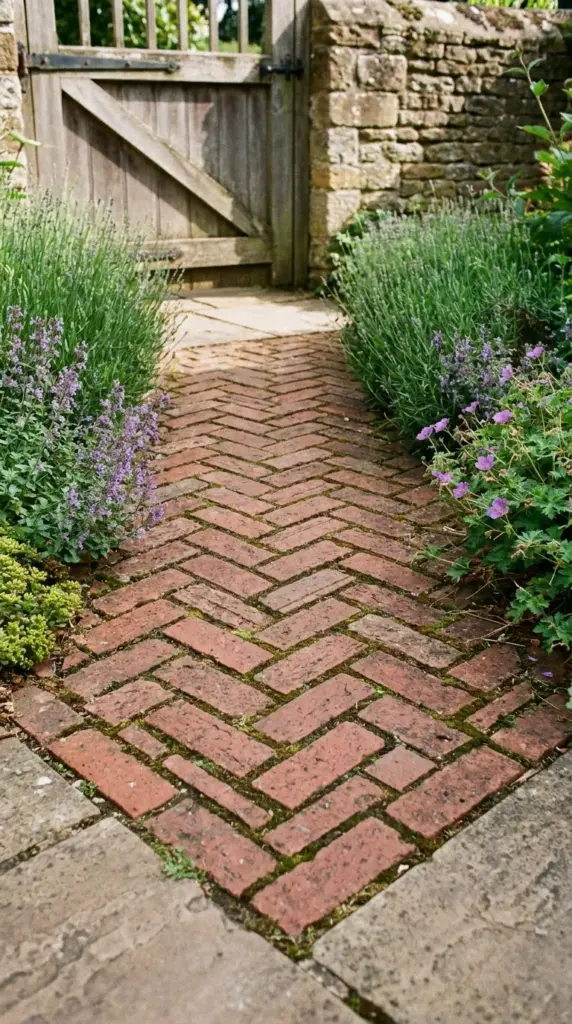
What makes herringbone special
Herringbone brick edging has more motion and texture than a simple row of brick. It feels tailored, decorative, and very intentional.
Because it has such a strong pattern, I think it works best as an accent. Too much of it can feel heavy in a smaller garden.
Where to use it
I love herringbone near path entries, patio edges, or short focal sections beside a special bed. It’s perfect for spots where people naturally slow down and notice details.
It adds richness without needing a huge footprint. That makes it useful in both large and small gardens.
Installation basics
Start with a square base and dry-lay the pattern first. Herringbone can go sideways fast if your first few bricks aren’t set correctly.
This is not the pattern I’d rush on a hot afternoon. Ask me how I know.
How to combine it well
Herringbone pairs best with simpler borders nearby, like running bond or header course. That contrast lets the pattern stand out instead of blending into visual clutter.
It’s one of my favorite period garden details when used sparingly. If you want something compact, tidy, and quietly elegant, the next style is a lovely option, so hit the next button below.


GIPHY App Key not set. Please check settings