

 The Home Growns
Circular Brick Tree Rings and Feature Borders
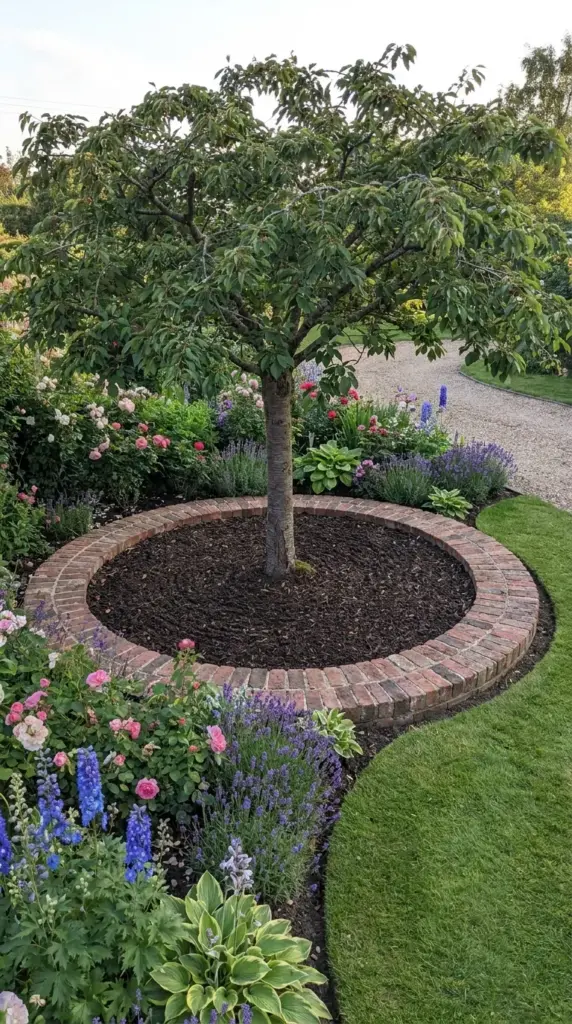
Why circles work so well
A brick tree ring border adds structure around a focal point and helps anchor the whole garden visually. It’s especially good for breaking up yards filled with straight lines.
I love circles in traditional gardens. They feel intentional and a little elegant without being overly formal.
Best uses for circular edging
Use circular borders around specimen trees, birdbaths, urns, or standout shrubs. They also work nicely around small seating features in a more decorative layout.
In looser gardens, circles bring just enough geometry to keep the design from drifting into chaos.
Sizing it correctly
Leave enough space around tree trunks for airflow, mulch, and root flare. Never crowd the bark just to make the ring look tighter.
I also think bigger usually looks better than too small. Tiny rings can look stingy, and mature trees deserve more breathing room than that.
How to repeat the detail
One circular border can be a lovely focal point. Repeating the shape once or twice elsewhere helps tie together traditional garden pathways and mixed beds.
It’s a small detail, but it can do a lot. And if you want a pattern that looks even more decorative and historic, the next brick style brings that woven texture, so hit the next button below.



GIPHY App Key not set. Please check settings