

 The Home Growns
9. Soil Too Compacted? Leftover Club Soda Can Help Aerate It
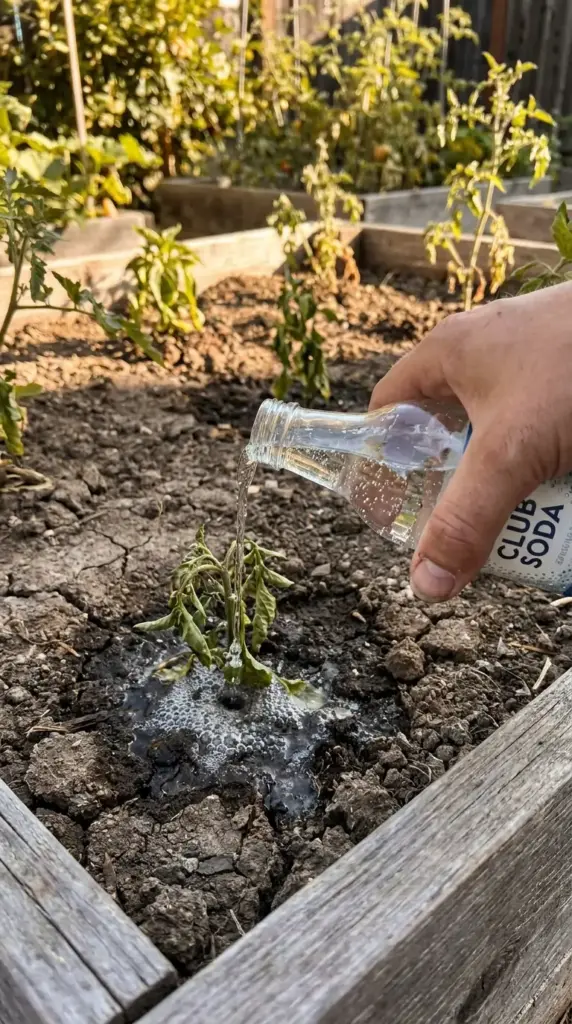
I once had a raised bed that looked perfect on the outside — tidy, well-mulched, regularly watered.
But nothing grew well in it. Stunted roots. Slow growth. Frustrated gardener. Turns out the soil underneath was packed solid as concrete.
What Soil Compaction Actually Does to Your Plants
Compacted soil is essentially suffocating your plants from below.
When soil particles are pressed too tightly together, water can’t drain properly, oxygen can’t reach roots, and beneficial microorganisms that keep soil healthy simply die off.
Roots physically cannot push through compacted soil to access nutrients — no matter how well you water or fertilize. It’s like trying to breathe through a pillow.
How Club Soda Helps Loosen Compacted Soil
Okay, I’ll admit — I raised an eyebrow at this one too when I first heard it.
But here’s what’s actually happening: the carbonation in club soda introduces carbon dioxide directly into the soil, which mildly acidifies the water and helps gently break apart tightly packed soil particles.
Some research also suggests carbonated water may stimulate plant growth by making certain minerals more accessible at the root level.
It’s subtle. It’s not dramatic. But it genuinely helps over time.
How to Use It Correctly
This is a supplement, not a replacement for regular watering — that distinction really matters.
- Use flat or leftover club soda — don’t buy fresh bottles specifically for this
- Pour slowly and directly at the base of your plants
- Incorporate it once or twice a week alongside your normal watering routine
- Never use flavored sparkling water — added sugars and sodium will damage your soil
Other Kitchen Items That Improve Soil Structure
Club soda isn’t the only kitchen staple pulling weight here:
- Used tea leaves — improve drainage and add organic matter as they decompose
- Vegetable cooking water (cooled and unsalted) — delivers trace minerals directly to roots
- Coffee grounds mixed into soil — improve texture and drainage in dense, clay-heavy beds
- Crushed eggshells — create tiny air pockets as they break down over time
When to Consider Deeper Aeration Solutions
Sometimes a kitchen fix isn’t enough — and that’s okay to admit.
If your soil is severely compacted, consider using a garden fork to manually aerate every 8–10 inches throughout the bed.
For raised beds and formal garden designs, refreshing your soil mix entirely every 2–3 seasons is honestly the most effective long-term solution.
Up next, we’re tackling one of the most underestimated garden pests out there — ants. Hit Next to find out how a simple kitchen spice you already own can create a surprisingly powerful natural barrier around your entire garden. 🌿


GIPHY App Key not set. Please check settings