

 The Home Growns
2. Pesky Aphids Taking Over? Dish Soap to the Rescue
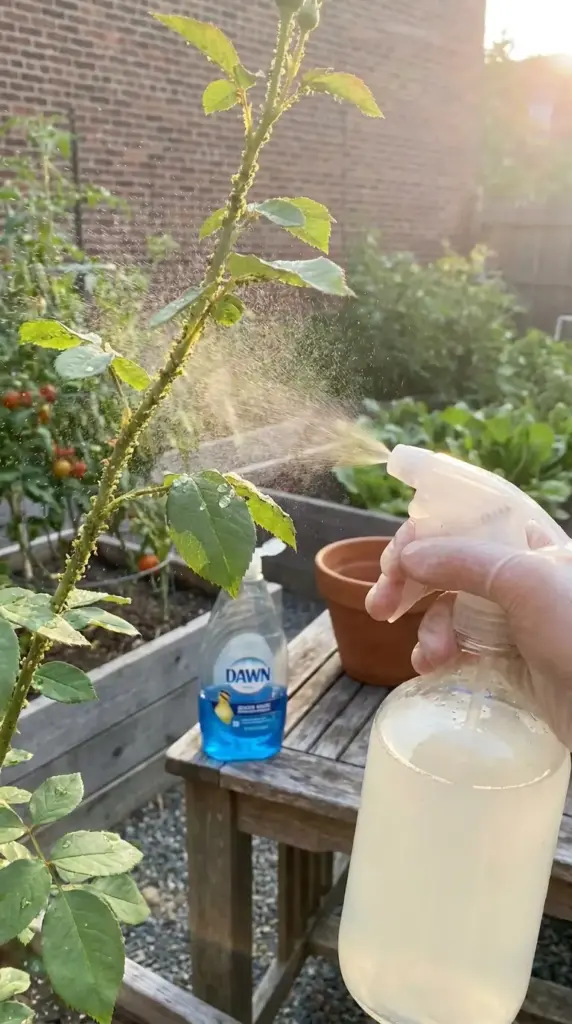
I found aphids on my rose bushes on a Tuesday morning and by Friday, they’d spread to my tomatoes.
That was a rough week. But it taught me everything I needed to know about dealing with these tiny, relentless little pests.
Why Aphids Are Everywhere in Urban Gardens
Aphids thrive in urban environments because of the warm microclimates created by buildings, pavement, and limited airflow.
They reproduce incredibly fast — a single aphid can produce up to 80 offspring in a week. Yeah. A week.
How Dish Soap Actually Kills Them
This isn’t just an old wives’ tale — there’s real science behind it.
Dish soap disrupts the cell membranes of soft-bodied insects like aphids, causing them to dehydrate and die. It also suffocates them by clogging their breathing pores.
No chemicals. No expensive sprays. Just something already sitting next to your kitchen sink.
The Exact Ratio to Use
Getting this wrong can burn your leaves — I learned that the hard way on a beloved hydrangea.
The safe, effective ratio is:
- 1–2 teaspoons of pure liquid dish soap
- 1 quart (32 oz) of water
Avoid dish soaps with added degreasers, bleach, or moisturizers. Plain Dawn or castile soap works best.
Which Plants Need the Most Protection
Some plants are basically aphid magnets. Keep a close eye on:
- Roses — aphids’ all-time favorite
- Tomatoes and peppers — especially during flowering
- Kale and cabbage — they’ll hide under the leaves, sneaky things
- Nasturtiums — ironically often used as a trap crop to lure aphids away
Morning vs. Evening — Timing Actually Matters
Don’t spray in the middle of a hot, sunny afternoon. The soap can dry too fast and scorch your leaves before it even does its job.
Early morning is ideal — the temperature is cooler, the spray stays wet longer, and it gives leaves time to dry before nightfall. Evening works too, but prolonged moisture overnight can invite fungal issues.
Reapply every 3–4 days for two weeks to fully break the infestation cycle.
Up next, we’re tackling something that really frustrated me one summer — a mysterious white powder taking over my squash plants. Hit Next to find out why baking soda might just be your new best gardening friend. 🌿


GIPHY App Key not set. Please check settings