

 The Home Growns
7. Fruit Not Setting on Your Tomatoes or Peppers? Use Sugar Water
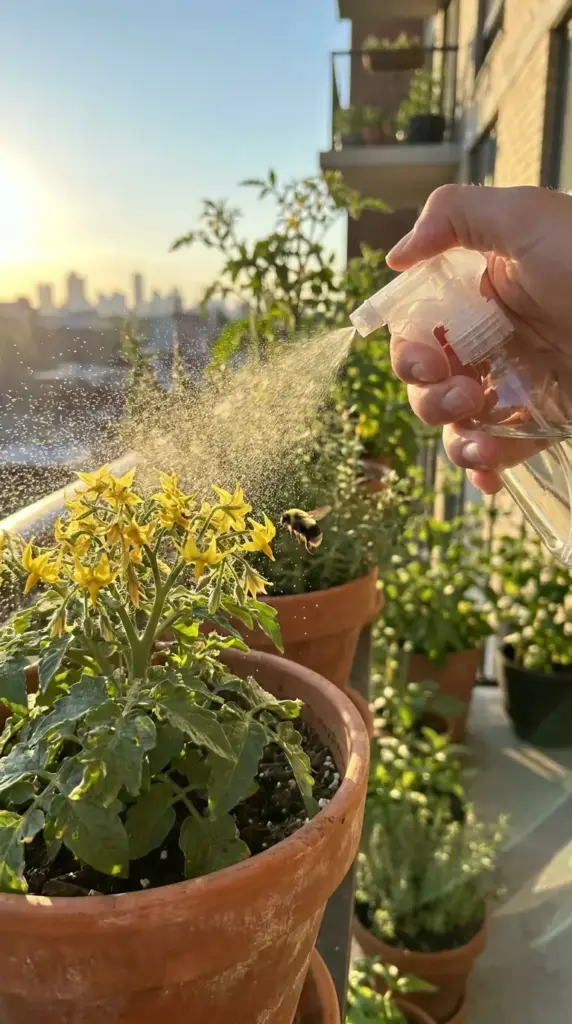
I grew the most beautiful tomato plant one summer. Lush, green, absolutely covered in yellow blossoms.
And then every single flower fell off without producing a single tomato. I was devastated — and completely baffled.
What Blossom Drop Actually Is
Blossom drop is exactly what it sounds like — flowers appear on your plant but fall off before they ever develop into fruit.
It happens for a few reasons: temperature stress, inconsistent watering, nutrient imbalance, or most commonly in urban gardens — lack of pollinator activity.
No pollination. No fruit. Simple as that.
How Sugar Water Attracts Pollinators
This is such an elegant little fix and I genuinely wish someone had told me sooner.
A light sugar water spray mimics the scent of nectar, drawing bees, butterflies, and other pollinators directly toward your blossoms.
More pollinator visits mean more successful fertilization — and more fertilization means actual tomatoes and peppers on your plants.
The Simple Recipe and How to Apply It
You probably have everything you need right now:
- 1 tablespoon of plain white sugar
- 1 cup of warm water
- Stir until fully dissolved
Lightly mist the blossoms in the early morning when pollinators are most active. Don’t drench the flowers — a fine, gentle spray is all you need.
Apply every few days during peak flowering season.
Why This Works Especially Well for Balcony and Indoor Gardens
If you’re gardening on a Chicago high-rise balcony or a Philadelphia rooftop, pollinators may rarely — if ever — find your plants.
Urban gardens are essentially pollinator deserts compared to open countryside. Sugar water spray helps bridge that gap in a completely natural, chemical-free way.
It’s honestly one of the most underrated tricks for container garden success in city environments.
Other Ways to Encourage Pollination Naturally
Sugar water isn’t your only option:
- Gently shake flowering stems to simulate wind pollination — works surprisingly well
- Use a soft paintbrush to manually transfer pollen between flowers
- Plant pollinator-attracting herbs nearby — basil, dill, and lavender are excellent companions
- Place your containers near other flowering plants to create a more inviting environment for beneficial insects
Up next, we’re tackling every gardener’s most persistent frustration — weeds. Hit Next to find out how plain white vinegar from your pantry shelf can become your most powerful natural herbicide. 🌿


GIPHY App Key not set. Please check settings