

 The Home Growns
8. Weeds Popping Up Everywhere? White Vinegar Is a Natural Herbicide
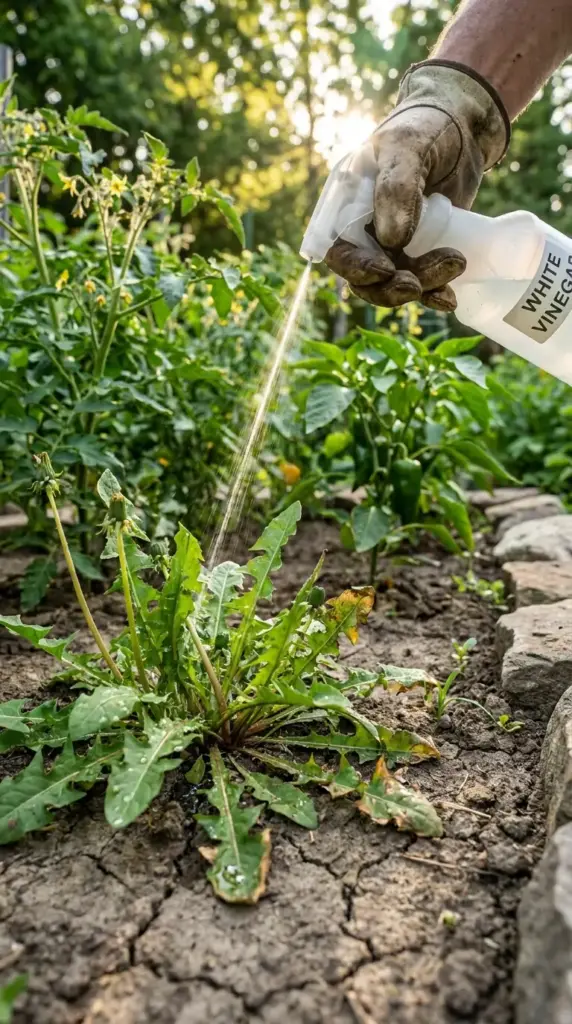
Weeds don’t take days off. I’m convinced they grow faster overnight just to spite me.
One summer I spent every single weekend pulling them by hand — and by Monday they were back like nothing happened.
Why Weeds Are More Damaging Than They Look
It’s easy to dismiss weeds as just an eyesore, but they’re actually actively stealing from your plants.
Weeds compete aggressively for nitrogen, phosphorus, water, and root space — resources your tomatoes, peppers, and flowers desperately need.
A heavily weeded garden bed can reduce plant yields by up to 50%. That’s not a minor inconvenience. That’s a real problem.
How Acetic Acid in Vinegar Kills Weeds
Here’s the science behind why this works so well.
Acetic acid — the active compound in white vinegar — draws moisture out of weed leaves, essentially dehydrating the plant from the outside in.
At higher concentrations, it can penetrate down to the root system and prevent regrowth. Standard household white vinegar sits at 5% acetic acid, which handles young weeds effectively.
For tougher, more established weeds, look for horticultural vinegar at 20–30% concentration — available at most garden centers.
The Critical Warning About Placement
I cannot stress this enough — vinegar does not know the difference between a weed and your prize rose bush.
It will kill any plant it touches. Apply with precision and intention, never carelessly.
Keep your spray at least 2–3 inches away from any plants you actually want to keep.
Best Application Method and Timing
Technique genuinely matters here:
- Use a spray bottle with a narrow stream setting, not a wide mist
- Apply on a calm, dry day — wind will carry the spray onto plants you love
- Spray in the morning so the sun helps accelerate the dehydration process
- Avoid applying before rain — it’ll just wash everything away before it works
The Supercharged Weed Killer Recipe
When basic vinegar isn’t cutting it, try this combination:
- 1 gallon of white vinegar
- 1 cup of table salt
- 1 tablespoon of dish soap
The salt dehydrates roots further and the dish soap helps everything adhere to waxy weed surfaces.
Use this formula only on driveways, walkways, and garden borders — salt can linger in soil and affect future planting.
Up next, we’re solving something that most gardeners completely overlook — compacted, suffocating soil. Hit Next to find out why your leftover club soda might be the most surprising soil fix you’ve never tried. 🌿

GIPHY App Key not set. Please check settings