

 The Home Growns
3. Fungal Disease on Your Plants? Baking Soda Is Your Best Friend
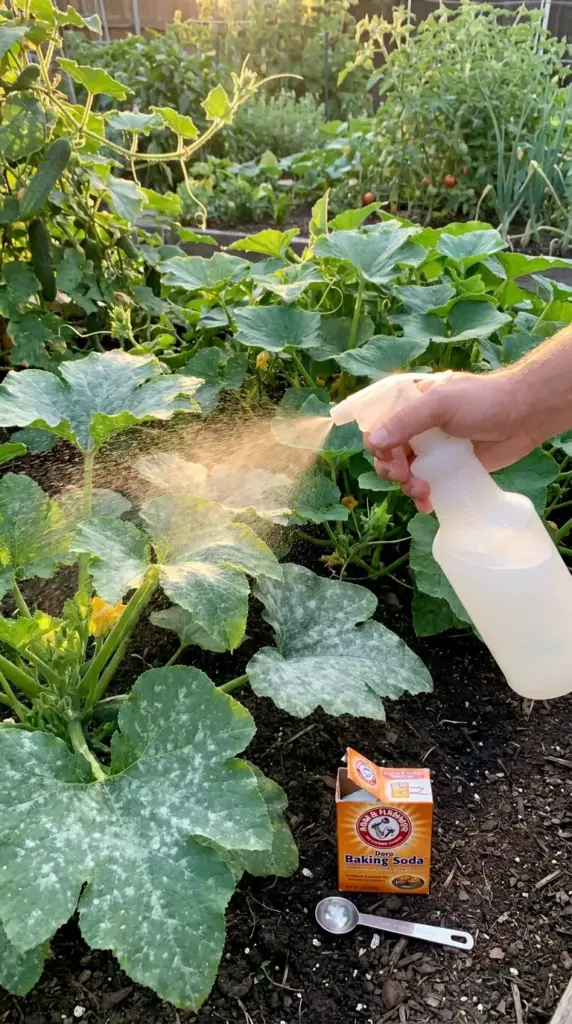
There’s nothing quite like walking out to your garden on a Saturday morning, coffee in hand, and finding your squash plants dusted in what looks like powdered sugar.
Spoiler: it’s not powdered sugar. It’s powdery mildew, and it will spread fast if you ignore it.
What Actually Causes Fungal Disease in Home Gardens
Fungal issues thrive in conditions of high humidity, poor air circulation, and fluctuating temperatures — basically a perfect description of a backyard garden in summer.
Powdery mildew, in particular, doesn’t even need wet leaves to spread. It actually prefers dry foliage with humid air. That caught me completely off guard the first time.
Why Baking Soda Works Against Fungal Spores
Here’s the science in plain English.
Baking soda (sodium bicarbonate) raises the pH on the leaf surface, creating an alkaline environment where fungal spores simply can’t survive.
It doesn’t just treat the infection — it changes the conditions that allow fungus to grow in the first place. That’s a meaningful difference.
The DIY Spray Recipe
This is the exact mix I’ve been using for years:
- 1 tablespoon of baking soda
- 1 tablespoon of vegetable oil or neem oil
- 1 teaspoon of dish soap (to help it stick)
- 1 gallon of water
Shake it well before each use. The oil is important — it helps the solution adhere to leaves instead of just running off.
Plants Most Vulnerable to Fungal Disease
Keep this list on your radar:
- Squash and zucchini — almost guaranteed to get powdery mildew by midsummer
- Roses — susceptible to both powdery mildew and black spot
- Cucumbers — especially in humid climates like Atlanta or Washington DC
- Phlox and bee balm — if you grow ornamentals, watch these closely
Use It as Prevention, Not Just a Cure
This is honestly the biggest lesson I learned — don’t wait until you see the problem.
Start spraying every 7–10 days once summer humidity kicks in. Treating healthy plants preventatively is so much easier than trying to reverse an established fungal infection.
Next up, we’re talking about something that genuinely made me laugh when I first heard it — using beer to solve a garden problem. Hit Next to find out how this surprisingly effective slug trap works. 🌿


GIPHY App Key not set. Please check settings