

 The Home Growns
Fix #5 — Feed Your Plants the Right Way With the Right Supplies
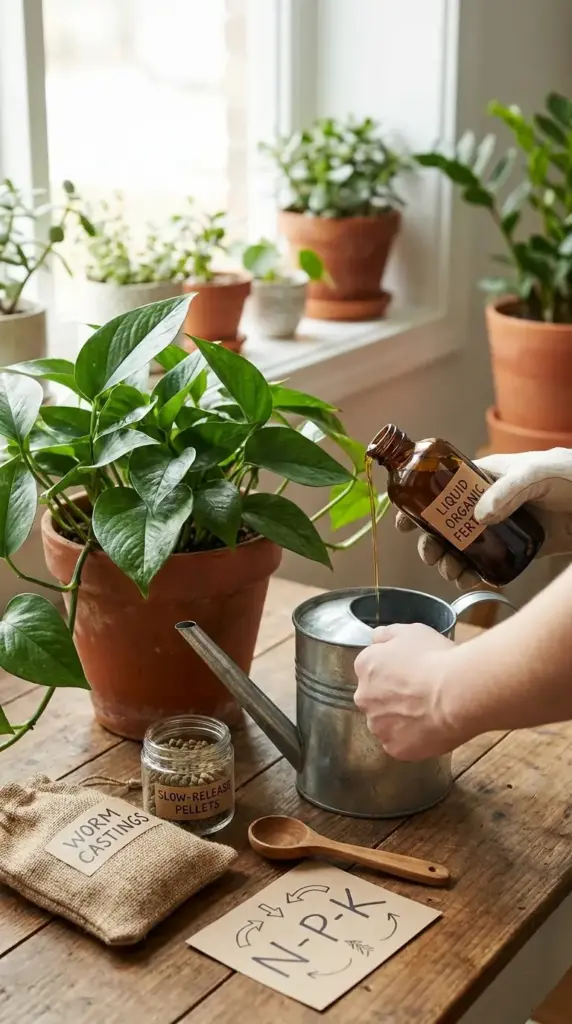
For my first two years of gardening, I never fertilized. Not once.
I just assumed soil had everything plants needed forever. Spoiler: it absolutely does not.
Once I started fertilizing correctly, the difference was almost embarrassing. Fuller leaves, faster growth, actual blooms. I’d been starving my plants the whole time without knowing it.
Why Fertilizing Matters and When to Start
Think of fertilizer as your plant’s multivitamin.
Fresh potting mix usually contains enough nutrients for about 4 to 6 weeks. After that? Your plant is running on empty.
When to start fertilizing:
- New plants in fresh soil — wait 6 weeks before feeding
- Established plants — begin fertilizing at the start of spring
- Outdoor gardens — feed when you see active new growth beginning
Never fertilize a stressed or newly repotted plant. It does more harm than good.
NPK Ratios Explained Simply
Every fertilizer label shows three numbers. Something like 10-10-10 or 5-10-5.
These represent Nitrogen (N), Phosphorus (P), and Potassium (K). In that exact order. Always.
Here’s what each one actually does:
- Nitrogen (first number) — fuels leafy, green growth
- Phosphorus (second number) — supports strong roots and flowering
- Potassium (third number) — boosts overall plant immunity and resilience
Leafy plants like pothos and herbs? Want higher nitrogen. Look for something like 3-1-2.
Flowering plants like zinnias? Want higher phosphorus. Look for something like 5-10-5.
Once you understand NPK, fertilizer labels stop being intimidating. Promise.
Organic vs. Synthetic Fertilizers
Both work. The difference is mostly about how fast and how naturally.
Organic fertilizers:
- Slow-release, feeding plants gradually over weeks
- Improve overall soil health long-term
- Lower risk of accidentally burning roots
- Great beginner picks: worm castings, fish emulsion, compost tea
Synthetic fertilizers:
- Fast-acting, results visible within days
- Precise nutrient ratios, easy to control
- Risk of fertilizer burn if over-applied
- Great beginner picks: Miracle-Gro All Purpose, Osmocote Smart-Release Pellets
My personal recommendation for beginners? Start organic. The margin for error is much more forgiving.
Seasonal Feeding Schedules That Actually Work
Plants don’t need feeding year-round. Their nutritional needs follow the seasons.
Spring — begin feeding as new growth appears, every 2 weeks for most plants
Summer — continue regular feeding, increase slightly for heavy bloomers like zinnias
Fall — gradually reduce feeding as growth slows naturally
Winter — stop fertilizing almost entirely. Most plants are resting and can’t process nutrients efficiently
This rhythm works for container gardens, raised beds, and indoor houseplants alike.
Must-Have Gardening Supplies for Plant Nutrition
You don’t need a lot. But these are genuinely worth having:
- Espoma Organic Indoor Plant Food — gentle, liquid organic option perfect for houseplants
- Osmocote Smart-Release Plant Food — slow-release pellets, practically foolproof
- Worm castings — mix into soil for a natural, gentle nutrient boost
- Miracle-Gro Water Soluble All Purpose Plant Food — widely available at Home Depot and Lowe’s, fast results
- A simple measuring spoon set — dedicated to gardening only, prevents accidental over-fertilizing
Consistency beats intensity every single time when it comes to feeding your plants.
Fix #6 is honestly one of my favorite topics — because it’s where gardening meets home decor. Hit next to learn how to design a garden space that’s genuinely beautiful, functional, and completely tailored to your personal style. 🌸

GIPHY App Key not set. Please check settings