

 The Home Growns
Fix #4 — Understand Light Requirements Before You Plant Anything
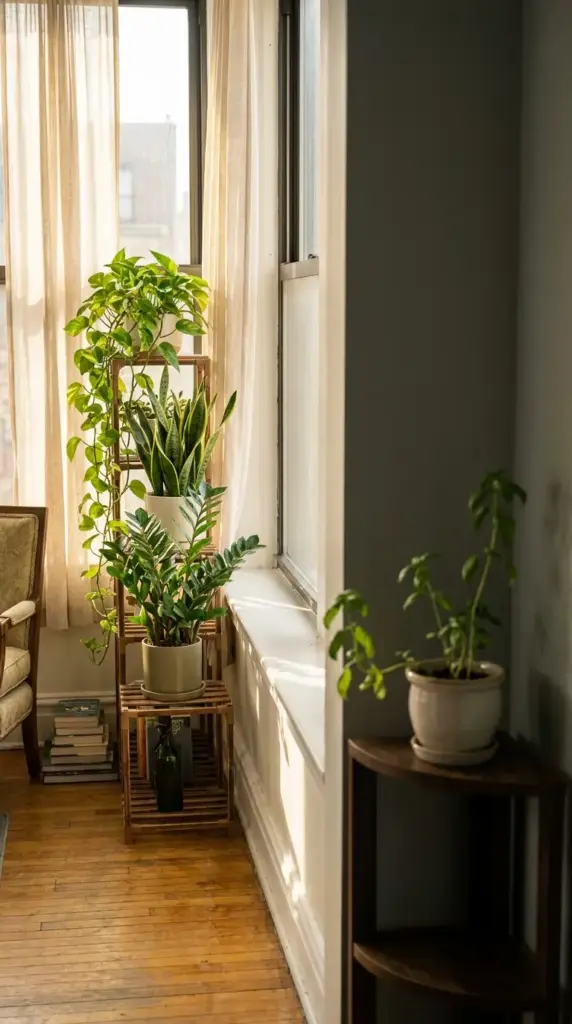
I spent an entire summer wondering why my herb garden looked sad and leggy on my north-facing windowsill.
Turns out, herbs need full sun. Like, a lot of it. My windowsill was basically a cave with curtains.
That was a humbling lesson. But an important one.
Full Sun vs. Partial Shade vs. Full Shade — What It Actually Means
These terms are on every plant tag, but nobody really explains them clearly.
Full sun — at least 6 hours of direct sunlight daily. Think south or west-facing windows indoors, open patios outdoors.
Partial sun/partial shade — 3 to 6 hours of direct light. East-facing windows are perfect for this category.
Full shade — less than 3 hours of direct light. North-facing rooms, shaded balconies, darker apartment corners.
Direct light and bright indirect light are also different things. Direct means sun rays physically touching the plant. Indirect means bright room, no direct rays.
This distinction matters more than most beginners realize.
How to Assess the Light in Your Home or Yard
Here’s a simple method I teach beginners every time.
Stand in your space at noon on a sunny day. Hold your hand about a foot above a white piece of paper.
- Sharp, defined shadow — bright direct light
- Soft but visible shadow — bright indirect light
- Faint or no shadow — low light
That’s your light assessment. Free, fast, and surprisingly accurate.
You can also download free light meter apps on your phone. Lux Plant Light Meter is one I’ve personally used and recommended for years.
Best Plants for Low-Light Apartments
This one’s especially for my readers in Chicago, DC, and Minneapolis — cities where winter light is genuinely scarce and apartments can feel like beautiful, stylish caves.
These plants genuinely thrive in low-light conditions:
- Pothos — practically grows in the dark
- Snake plant — tolerates neglect AND low light simultaneously
- ZZ plant — glossy, gorgeous, and remarkably shade-tolerant
- Peace lily — actually prefers indirect light and rewards you with elegant white blooms
- Cast iron plant — the name says everything you need to know
These aren’t settling. These are smart, intentional choices for your environment.
Grow Lights — When You Actually Need One
Sometimes your space just doesn’t have enough natural light. And that’s okay.
Grow lights are worth considering if:
- Your plants are stretching dramatically toward any light source
- Leaves are becoming pale or yellowing without overwatering being the cause
- You’re growing herbs or vegetables indoors year-round
Affordable options that genuinely work:
- Barrina LED Grow Light Strips (~$30) — perfect for shelves and small spaces
- GE BR30 Full Spectrum Grow Light Bulb (~$10) — fits standard lamp sockets, incredibly convenient
- Spider Farmer SE3000 — a bigger investment, but worth it for serious indoor growing
You don’t need to spend a fortune. A $10 grow bulb in a regular floor lamp can genuinely transform a dark corner.
Rearranging Your Space to Maximize Natural Light
Before buying anything, try moving things around first.
South-facing windows get the most light year-round — prioritize these spots for sun-loving plants like herbs and succulents.
Rotate your plants a quarter turn every week so all sides receive equal light exposure. Uneven light causes lopsided, stressed growth.
Clean your windows. Seriously. Dirty glass blocks more light than you’d think, especially in cities like New York and LA where grime builds up fast.
Remove heavy curtains from windows where plants live. Sheer panels let light through beautifully while still giving you privacy.
Fix #5 is all about feeding your plants the right way — and honestly, fertilizing confused me for years. Hit next to finally decode those mysterious numbers on fertilizer bags and learn exactly when and how to feed your plants. 🌱

GIPHY App Key not set. Please check settings