

 The Home Growns
Fix #2 — Stop Overwatering (The #1 Beginner Mistake)
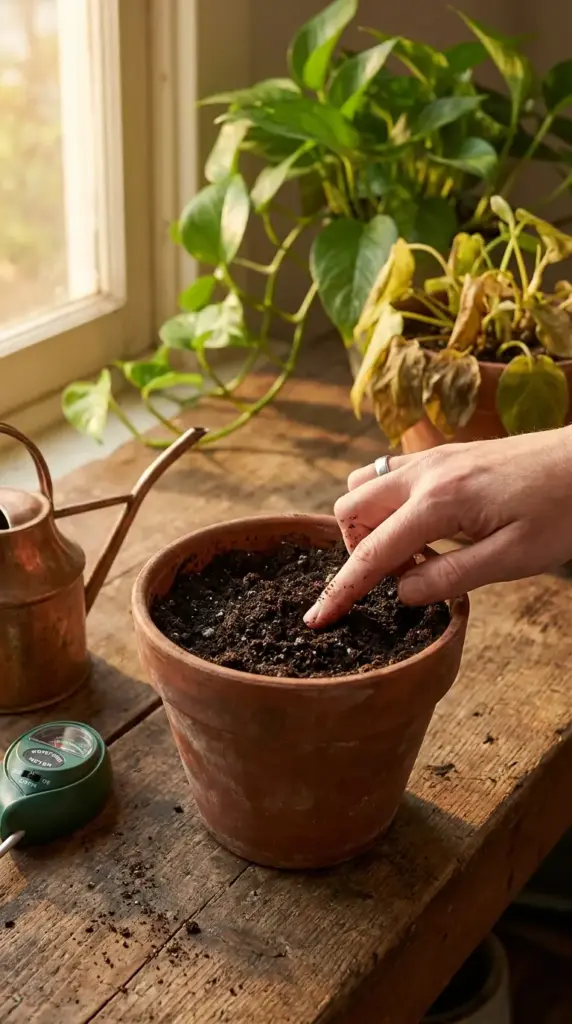
If I had a dollar for every plant I drowned with good intentions, I could fund a pretty impressive garden by now.
Overwatering feels like caring. It feels responsible. But to your plant? It feels like slowly suffocating underground.
Here’s the hard truth — more water is not more love.
How to Tell If You’re Overwatering vs. Underwatering
These two problems look surprisingly similar, which is why beginners get confused.
Signs of overwatering:
- Yellow, mushy leaves
- Soggy soil that never fully dries
- A musty smell coming from the pot
- Brown, slimy roots when you check underneath
Signs of underwatering:
- Dry, crispy leaf edges
- Soil pulling away from the pot’s sides
- Leaves that droop but feel dry to the touch
- Lightweight pot when you lift it
When in doubt, underwater. Most plants recover from thirst faster than they recover from root rot.
The Finger-Test Method (Your New Best Friend)
Forget watering schedules for a second.
Stick your finger one to two inches into the soil. If it feels damp — wait. If it feels dry — water.
That’s it. Seriously.
This one habit alone would have saved probably six of my plants in year one. It takes three seconds and it’s shockingly accurate.
For succulents and snake plants, go even deeper — about three inches before watering.
Watering Schedules for Common Beginner Plants
General guidelines that actually work:
- Pothos — every 1–2 weeks, less in winter
- Snake plant — every 2–6 weeks depending on light
- Herbs (basil, mint) — every 2–3 days, they’re thirsty
- Zinnias (outdoor) — every 2–3 days in summer heat
- ZZ plant — once a month, maybe less
Seasons matter too. Plants drink less in winter. Adjust accordingly.
Choosing Pots With Proper Drainage
This is non-negotiable for beginners.
Always choose pots with drainage holes. Always.
Without them, excess water pools at the bottom and quietly destroys roots before you notice anything wrong.
Terracotta pots are genuinely great for beginners — they’re porous, which means they help soil dry out naturally between waterings.
Watering Tools Worth Buying
You don’t need much, but these help:
- A narrow-spout watering can — gives you control without flooding the soil
- A moisture meter (~$10 on Amazon) — removes all guesswork instantly
- A spray bottle — perfect for misting humidity-loving plants
Next up is Fix #3, and it’s one most beginners completely overlook — the soil inside your pot might be silently sabotaging everything. Hit next to find out exactly what to use instead. 🌿

GIPHY App Key not set. Please check settings