

 The Home Growns
Fix #8 — Identify and Fix Common Plant Problems Fast
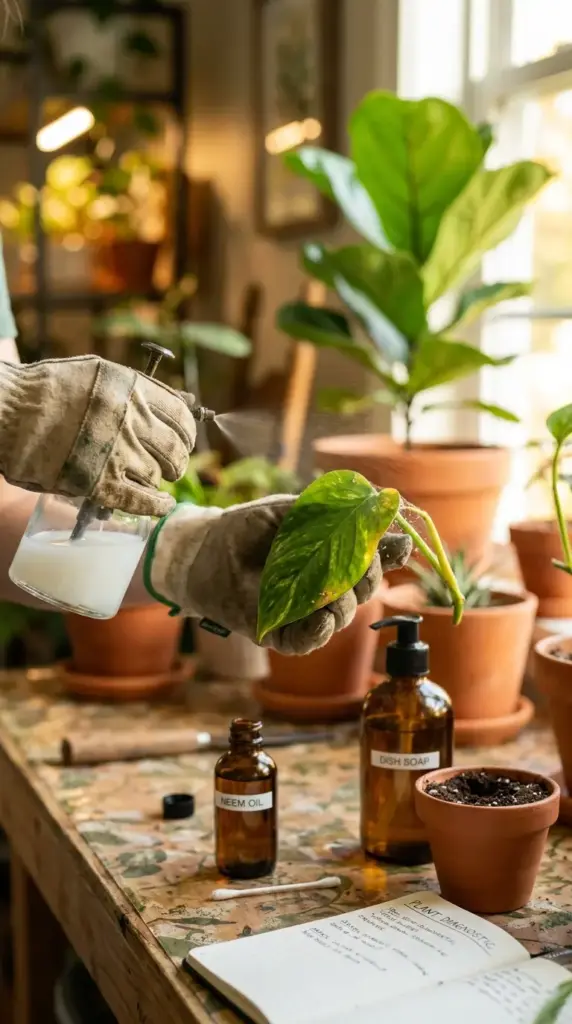
My pothos once developed these weird yellow patches and tiny webbing underneath the leaves.
I panicked. Googled everything. Convinced myself it was some rare tropical plant disease.
It was spider mites. Treatable with dish soap and water in about ten minutes.
Most plant problems look scarier than they actually are — and the faster you identify them, the faster you fix them.
How to Spot the Big Three Plant Problems
Root rot:
- Yellowing leaves that feel soft and mushy rather than crisp
- Soil that stays wet for more than 10 days consistently
- A sour, unpleasant smell coming from the pot
- Dark, slimy roots when you gently remove the plant and inspect
Root rot is serious but not always fatal if you catch it early enough.
Pest damage:
- Tiny holes or ragged edges on leaves
- Sticky residue on leaves or surrounding surfaces — called honeydew, left by aphids
- Fine webbing underneath leaves — classic spider mite signature
- Small visible insects on stems, soil surface, or leaf undersides
Nutrient deficiency:
- Pale, yellowing leaves on an otherwise healthy-looking plant — often nitrogen deficiency
- Purple-tinged leaves or stems — frequently signals phosphorus deficiency
- Brown leaf edges and tips — commonly potassium deficiency or inconsistent watering
- Stunted growth despite adequate light and water
Take a photo of the problem before treating anything. It helps you track progress and identify patterns over time.
Most Common Garden Pests and Natural Remedies
These are the pests beginners encounter most frequently.
Aphids:
- Tiny, soft-bodied insects clustering on new growth and stems
- Natural fix: blast them off with a strong stream of water, then apply neem oil spray
- They reproduce incredibly fast — catch them early
Spider mites:
- Nearly invisible individually, identified by fine webbing and stippled leaves
- Natural fix: 1 teaspoon dish soap mixed with 1 quart water in a spray bottle, applied to all leaf surfaces
- Thrive in hot, dry conditions — increasing humidity helps prevent them
Fungus gnats:
- Tiny flies hovering around soil surface, larvae damage roots underground
- Natural fix: let soil dry out completely between waterings — larvae cannot survive in dry soil
- Sticky yellow traps catch adults effectively and cost almost nothing
Mealybugs:
- White, cottony clusters hiding in leaf joints and stem crevices
- Natural fix: dab individual bugs with a cotton swab dipped in rubbing alcohol
- Check neighboring plants immediately — mealybugs spread fast
Scale insects:
- Brown, shell-like bumps attached to stems that look almost like part of the plant
- Natural fix: scrape off manually, then treat with neem oil weekly for a month
- Patience is required here. Scale takes consistent treatment to fully eliminate.
When and How to Repot Without Killing Your Plant
Repotting at the wrong time — or into the wrong pot — causes more stress than the original problem.
Signs your plant genuinely needs repotting:
- Roots visibly growing out of drainage holes
- Plant drying out within a day or two of watering
- Roots circling tightly around the inside of the pot when removed
- Plant looks disproportionately large and top-heavy for its container
How to repot safely:
Step one: Water your plant thoroughly 24 hours before repotting — hydrated roots handle stress significantly better.
Step two: Choose a new pot only 1 to 2 inches larger in diameter than the current one. Going too large causes soil to stay wet too long and invites root rot.
Step three: Gently loosen the root ball with your fingers. If roots are tightly circled, carefully tease them apart to encourage outward growth.
Step four: Add fresh potting mix to the bottom of the new pot, position your plant, and fill in around the sides. Don’t pack soil too tightly — roots need air pockets.
Step five: Water lightly and place in indirect light for one to two weeks. Repotted plants need recovery time before returning to full sun exposure.
Best time to repot: Spring, when plants are entering active growth and recover fastest.
Never repot a plant that’s already severely stressed from pests or disease. Stabilize the problem first, then repot once the plant shows signs of recovery.
Simple DIY Pest Control Using What You Already Have
You genuinely don’t need expensive chemical sprays for most beginner pest problems.
Basic neem oil spray:
- 2 teaspoons neem oil
- 1 teaspoon mild dish soap
- 1 quart warm water
- Shake well, spray all leaf surfaces including undersides, repeat weekly
Dish soap spray (for aphids and spider mites):
- 1 teaspoon dish soap to 1 quart water
- Test on one leaf first and wait 24 hours before treating the whole plant
Rubbing alcohol solution (for mealybugs and scale):
- 70% isopropyl alcohol applied directly with a cotton swab or spray bottle
- Effective, fast, and available at every drugstore for under $2
Cinnamon powder (for fungus gnats and fungal issues):
- Sprinkle lightly on soil surface
- Natural antifungal properties disrupt gnat larvae development
- Smells great too — genuinely a bonus
Hydrogen peroxide soil drench (for root rot and fungus gnats):
- Mix 1 part 3% hydrogen peroxide with 4 parts water
- Water your plant normally with this solution
- Kills harmful bacteria and larvae without damaging healthy roots
Plant First Aid — How to Revive a Struggling Plant
Before you give up on a struggling plant, try this systematic rescue approach.
Step one — diagnose honestly: Check soil moisture, inspect roots, examine leaves top and bottom, assess light conditions. Don’t treat blindly.
Step two — remove all damaged material: Cut away yellowed leaves, rotted roots, and dead stems with clean scissors. This redirects the plant’s energy toward healthy growth.
Step three — treat the specific problem: Root rot gets fresh dry soil and reduced watering. Pests get appropriate treatment. Nutrient deficiency gets a gentle liquid fertilizer.
Step four — create recovery conditions: Move the plant to bright indirect light regardless of its normal preference. Avoid fertilizing until you see new healthy growth emerging.
Step five — be patient: Recovery takes time. A plant that looks half-dead today can look completely different in three weeks with proper care.
The plants I’ve brought back from the absolute brink are honestly some of my most satisfying gardening victories. Don’t give up too soon.
You’ve made it to the final fix — and honestly, it might be the most important one of all. Hit next to discover Fix #9, where we pull everything together and build a sustainable gardening routine that actually fits your real life. 🌱✨

GIPHY App Key not set. Please check settings