

 The Home Growns
Build the Rail System That Holds Everything Together
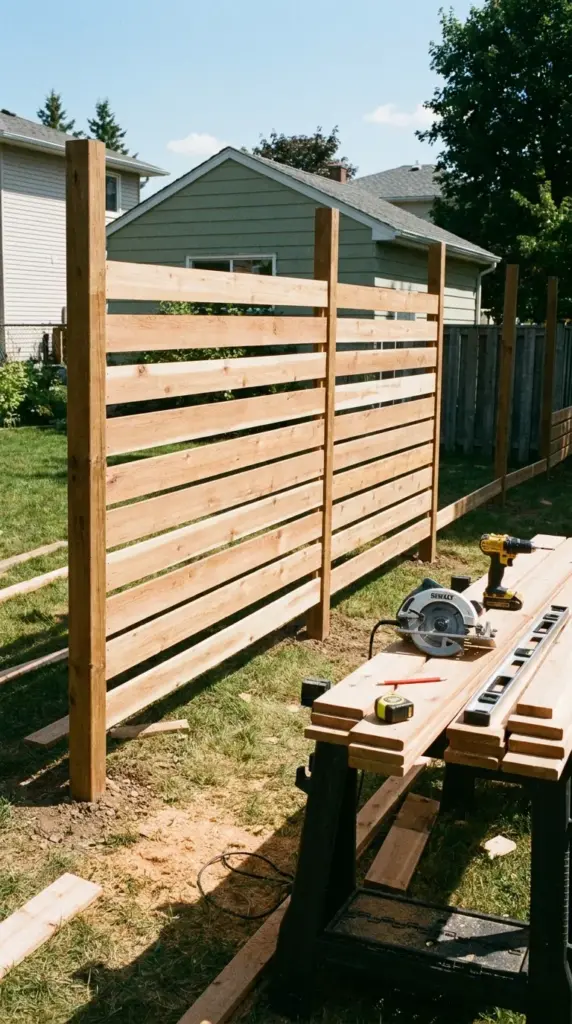
How many rails you need
For most 6-foot fences, three rails are standard. Shorter fences may use two, while taller or wind-exposed fences may need extra support depending on design and code.
Your fence rail layout affects strength and how balanced the final pickets look. Don’t treat it like an afterthought.
Where to place the rails
Space rails evenly, but keep top and bottom placement practical for the picket pattern. You want solid fastening points and nice visual proportions.
I like to dry-mark a section before attaching everything. It helps catch weird spacing before it becomes permanent.
How to keep rails level and strong
Attach rails securely with exterior screws or approved connectors. Check each section with a level and string line so the fence doesn’t start waving halfway down the yard.
That wavy-fence look? It sneaks up fast. One section off becomes five sections off before you notice.
High-wind upgrades
If your yard gets gusty conditions, tighten spans, use heavier rails, and choose solid hardware connections. A little extra reinforcement now beats replacing a busted section later.
And now for the fun part. In the next section, I’ll break down the actual shadow box fence design pattern so the privacy and airflow work the way they’re supposed to.


GIPHY App Key not set. Please check settings