

 The Home Growns
Check Codes, Property Lines, and HOA Rules First
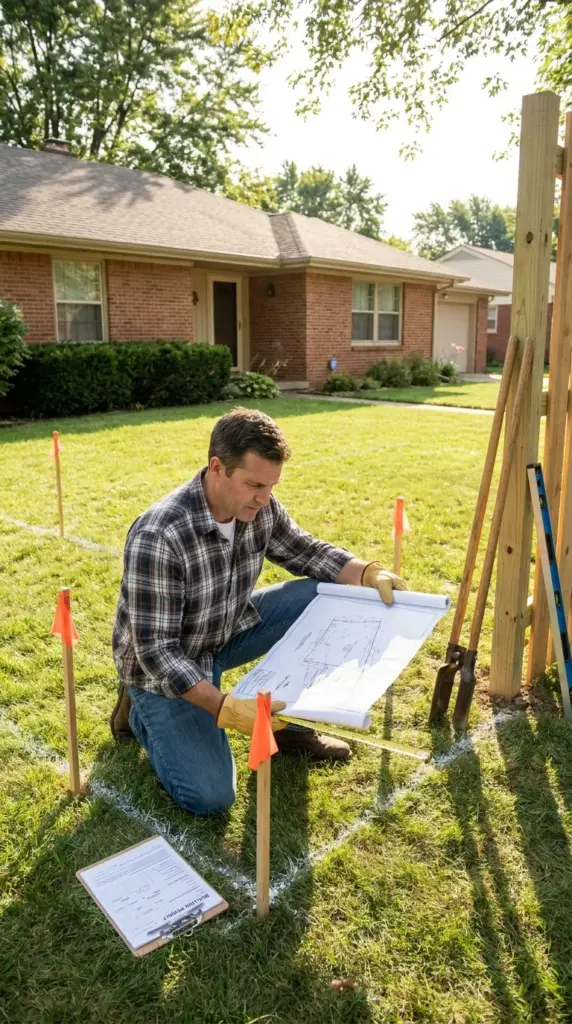
Fence height and setback basics
Most residential fences fall under local limits, often around 6 feet for backyards, though front-yard rules are usually stricter. Some cities also require a setback from sidewalks, alleys, easements, or property lines.
Do not guess here. Fence setback rules can turn a weekend project into a very expensive redo.
Why a survey matters
A property survey is way cheaper than a neighbor dispute. If you build over the line, even by a little, you may have to move the whole thing.
I know it feels dramatic, but I’ve seen people confidently measure from an old tree stump like it’s legal proof. It is not.
Permits and utility marking
Many areas require a local fence permit, especially for taller fences, corner lots, or homes in regulated neighborhoods. You also need utilities marked before digging.
Always call for utility locates first. Hitting a line is not a DIY learning moment anybody wants.
HOA rules and neighbor conversations
If you have an HOA, check the approved fence style, stain color, and height rules. Some even specify modern wood fence looks versus traditional vertical board layouts.
And yes, talk to your neighbor early. In the next section, I’ll help you pick materials that won’t warp, rot, or make you regret trying to save twenty bucks.



GIPHY App Key not set. Please check settings