

 The Home Growns
Nail the Fence Layout Before You Dig
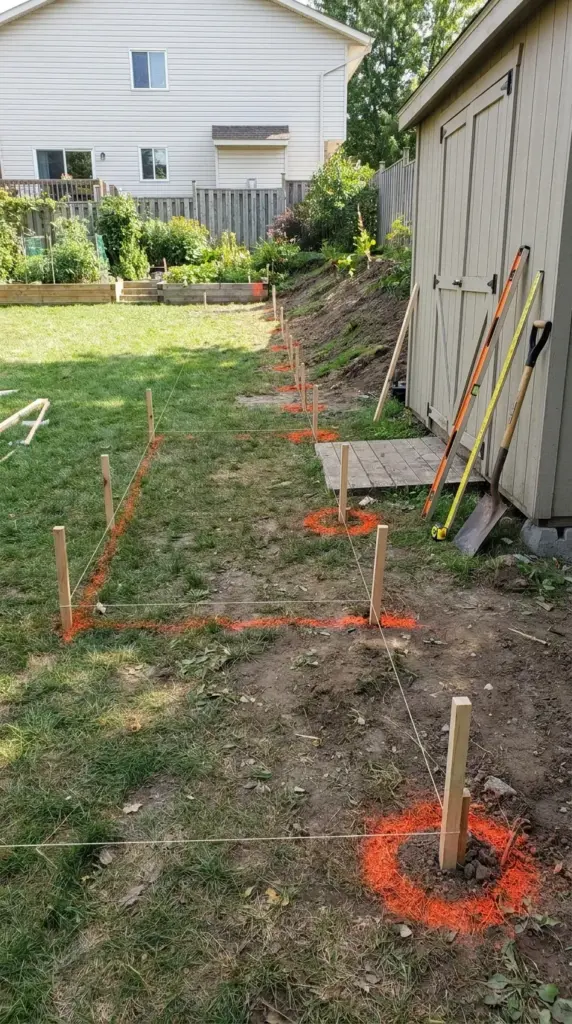
Mark corners, runs, and gates first
Start by laying out all corners and stretching a string line. Then mark every run, gate opening, and post location before a single hole gets dug.
This step saves so much frustration. A clean level fence line starts with planning, not with post-hole optimism.
Ideal post spacing
For many wood fences, fence post spacing around 6 to 8 feet on center works well. Shorter spans can add strength, especially in windy areas or with heavier boards.
Try to keep spacing consistent. Random panel widths make the finished fence look off, even if most people can’t explain why.
Flat yards vs. sloped yards
A flat yard is simpler because rails can run straight across. On a sloped yard fence, you’ll need to choose between stepping the panels or racking the design based on the grade and style.
Shadowbox fencing usually looks best stepped on steeper slopes. It keeps the pattern cleaner and avoids awkward board angles.
Avoid the awkward last panel problem
Measure the full run and divide it before you set posts. If you don’t, you may end up with one tiny leftover section that screams DIY in the wrong way.
I’ve done that once, and wow, it bugged me for years. In the next section, I’ll walk you through how to set posts so the whole fence stays straight and strong.


GIPHY App Key not set. Please check settings