

 The Home Growns
Privacy vs. Breeze: What This Fence Can and Can’t Do
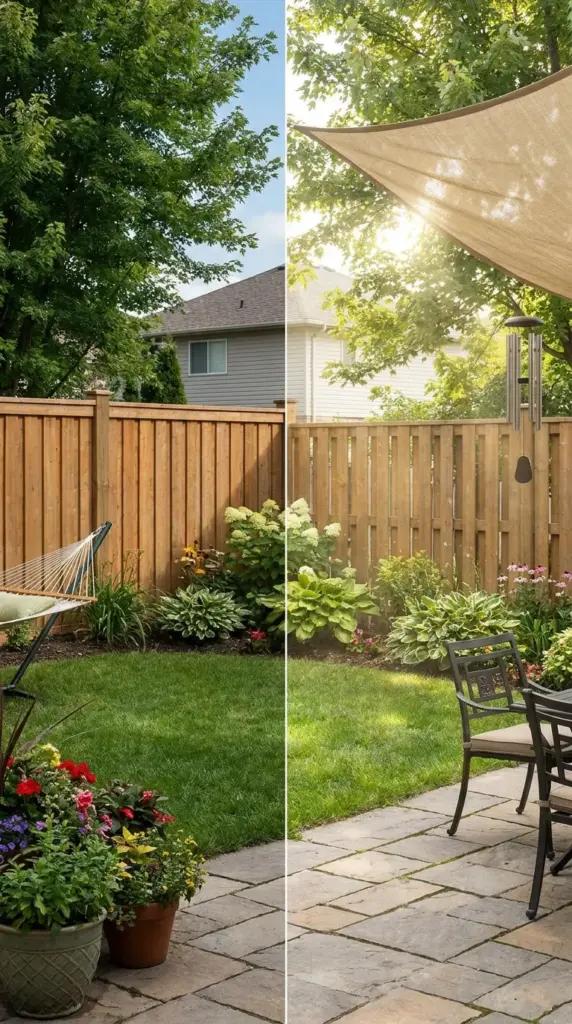
Set the right expectations
A semi-private fence is not a sound barrier, and it’s not a total visual block. If someone stands right up against it, they may still catch some sightlines through the staggered boards.
But from a patio, a seating area, or across the yard, it feels much more private than people expect. That’s the little magic trick of the design.
How spacing changes the result
Wider boards and tighter spacing create more privacy. Narrower boards or bigger gaps create more airflow.
I usually tell DIYers to think hard about how they actually use the backyard. If you want a cozy dining zone, lean more private; if you want breezier garden edges, leave a bit more reveal.
Best spots for shadowbox fencing
This style works beautifully in suburban backyard design, side yards, pet areas, and outdoor living zones. It’s also a smart option in places that get summer heat but still need wind-resistant fence performance.
Where it falls short is in super noisy areas or places where you need total screening, like around a pool pump or a busy alley.
Think seasonally, not just aesthetically
Spring winds, humid summers, and stormy shoulder seasons all matter. A fence that lets pressure move through often holds up better than a fully solid wall in gusty weather.
I learned that one the hard way after helping fix a friend’s bulky fence panel after a windy week. Up next, let’s cover the boring-but-important stuff that can save you from expensive mistakes: codes, permits, and property lines.

GIPHY App Key not set. Please check settings