

 The Home Growns
Choose the Best Materials for a Long-Lasting Fence
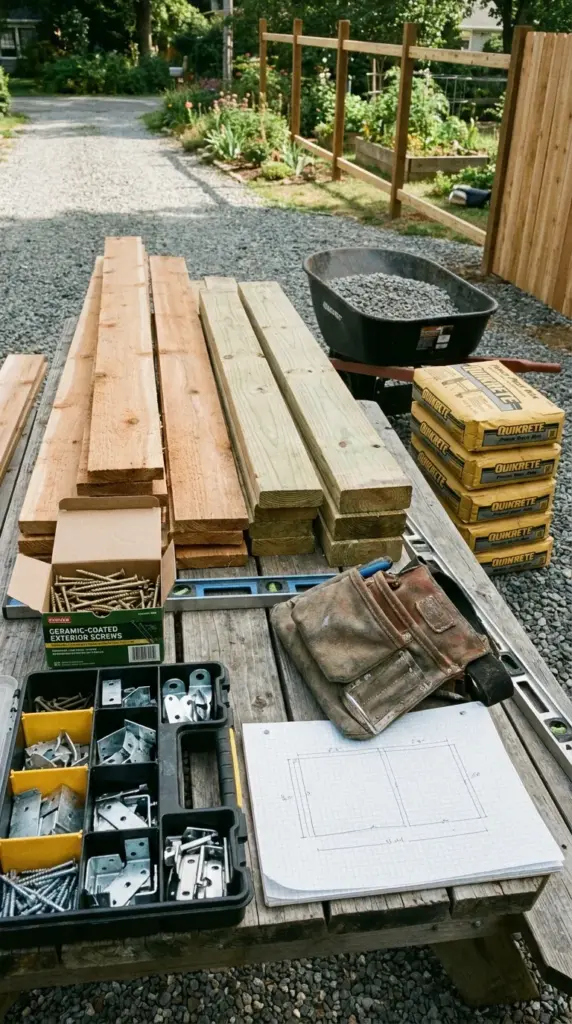
Pressure-treated pine, cedar, or redwood?
Pressure-treated lumber is the budget-friendly workhorse. It’s widely available and strong, but it can twist or shrink more as it dries.
Cedar fence boards cost more, but they’re naturally more rot resistant and lighter to work with. Redwood fence material looks gorgeous, though it’s usually the pricier choice and may be harder to source depending on your region.
Rot resistance and appearance
If you want that warm, natural 2026 backyard trend look, cedar is still a favorite. People are leaning into earthy wood tones, softer landscapes, and less harsh backyard styling.
For pure value, treated pine is still the common winner. Just choose straight boards and expect to sort through the pile a bit.
Fasteners and hardware that last
Use exterior-rated screws or hot-dipped galvanized or stainless fasteners. Cheap hardware stains wood and fails faster, especially in wet or humid climates.
I’m extra picky about this because rusty drips down a pretty fence make me irrationally annoyed. Spend the extra few dollars here.
Posts, concrete, and gravel choices
Strong fences start with strong posts. Use properly rated fence posts, a gravel base for drainage, and quality fence post concrete where needed by soil and code conditions.
This is not the glamorous part, but it matters more than the stain color. Next, let’s map out the layout so your fence line looks intentional instead of weirdly improvised.

GIPHY App Key not set. Please check settings