

 The Home Growns
The Real Problems I Kept Running Into With Mulch
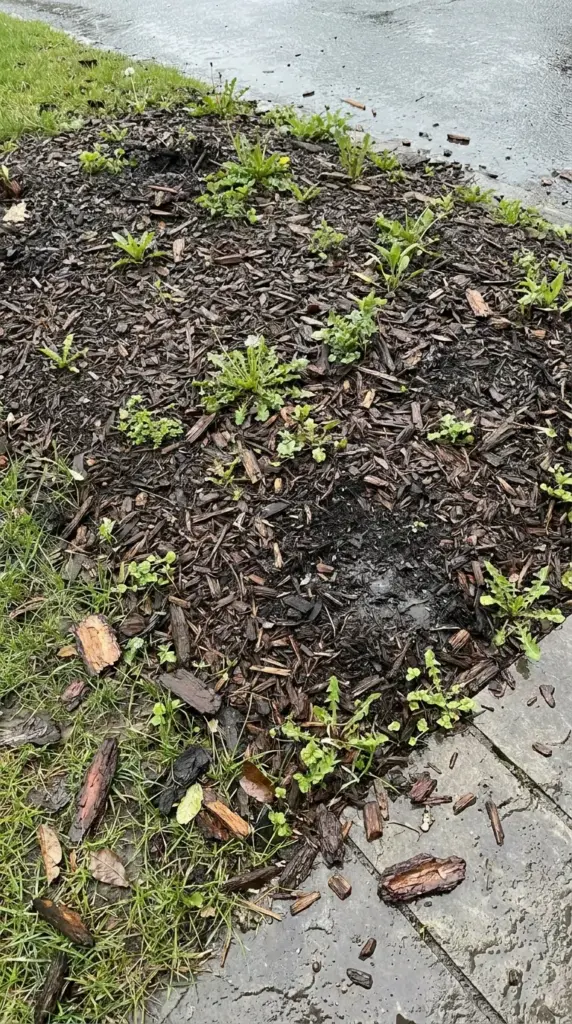
Weeds still showed up
People talk about mulch like it’s magical weed control without mulch, but let’s be honest.
Weed seeds still blow in, land on top, and sprout right in that fluffy layer.
I had beds with fresh mulch and fresh weeds at the same time.
That combo made me irrationally annoyed, not gonna lie.
Wet spots got gross fast
In shady beds, especially after back-to-back rain, I’d get soggy patches, mushroom growth, and that funky smell nobody puts on Pinterest.
Some organic mulch types also matted down and blocked airflow to the soil surface.
That was especially frustrating around foundation beds where airflow already isn’t amazing.
The bed looked dark, heavy, and kind of tired.
It never stayed where I put it
This was my biggest issue.
Loose mulch migrates.
It slid onto pathways, spilled into lawn edges, and got kicked around every time I trimmed.
In high-traffic spots, I felt like I was constantly re-raking the same 12 square feet.
If you live in windy or stormy areas, or even just mow often, you probably know the dance.
And once I admitted I wanted a more stable landscape edging system, the brick idea made way more sense.
So why did brick win over metal, plastic, and stone? Hit the next button below, because the appeal of brick went way beyond looks.


GIPHY App Key not set. Please check settings