

 The Home Growns
Where Mulch Still Makes Sense in My Garden
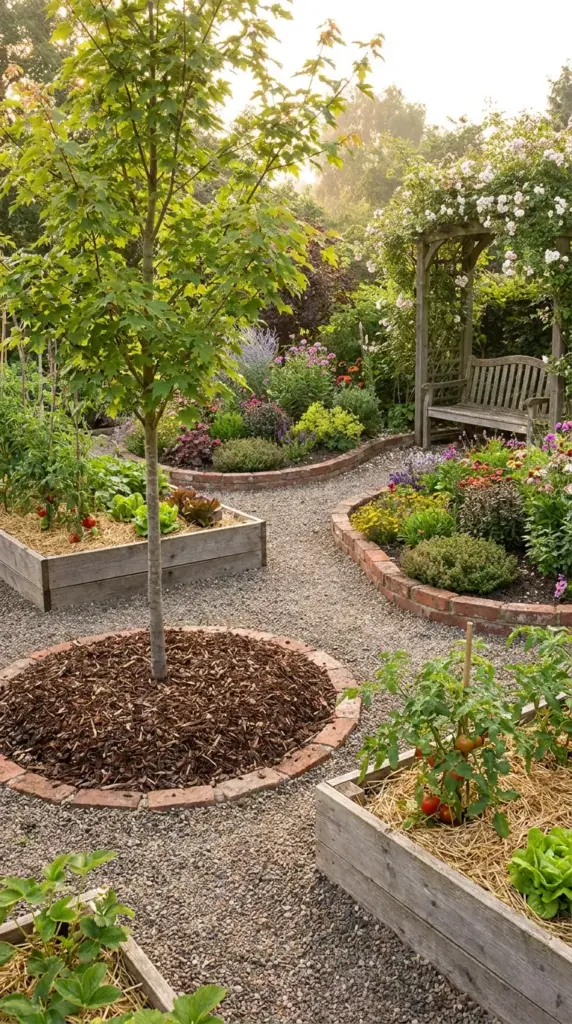
Around new trees and shrubs
Fresh plantings still benefit from mulch.
It helps moderate soil temperature, reduce evaporation, and cushion the root zone while plants establish.
I still use it around young shrubs and trees, just not everywhere.
That’s a very different approach from blanketing every bed out of habit.
In vegetable and moisture-sensitive areas
In the vegetable garden, mulch can still earn its spot.
It helps suppress splash-up, stabilize moisture, and protect soil in summer heat.
That’s especially useful in hotter regions like Dallas-Fort Worth or Atlanta.
And in water-wise spaces, strategic organic mulch can support water wise garden design.
As a selective tool, not a default
This is really the shift I made.
I stopped treating mulch like the only “finished” look available.
Now I use garden border materials more intentionally.
Brick for structure, mulch where plants actually benefit, and groundcovers where living coverage makes more sense.
That brings us to the big question.
Should you make the switch too, or is this just one of my gardening rabbit holes?
Hit the next button below, because the answer depends on your yard, budget, and tolerance for repeat chores.

GIPHY App Key not set. Please check settings