

 The Home Growns
Mistake #7: Painting or Staining at the Wrong Time
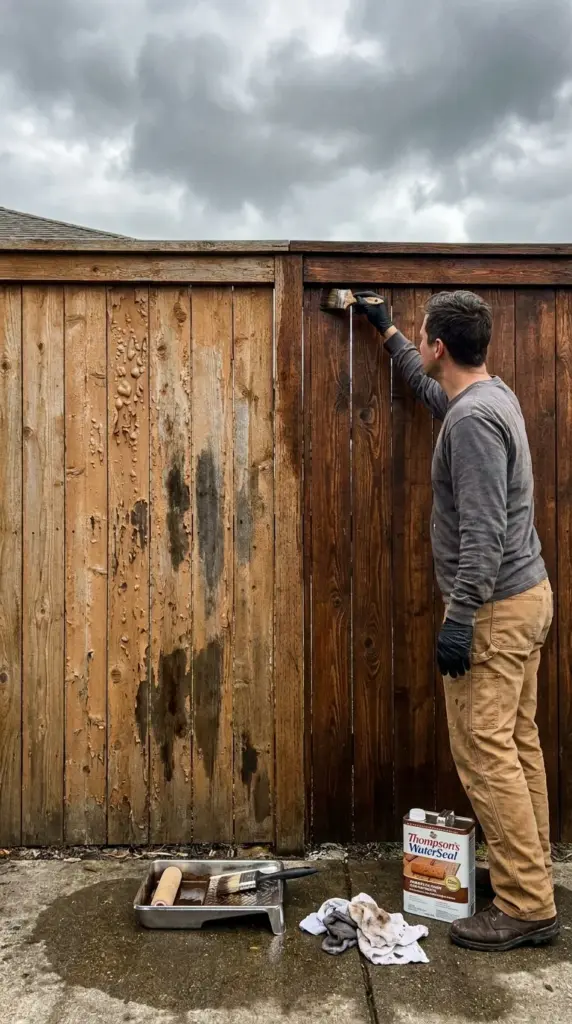
Why Sealing Wet Wood Locks In Moisture
This one hurts because people do it with good intentions.
They finish the build, feel proud, and immediately slap on paint or stain before the wood has dried enough. That can trap moisture inside, leading to peeling, blistering, and hidden rot.
The Best Timing for Stain, Paint, and Water Repellent
The right timing depends on the wood, weather, and product label.
Some pressure-treated lumber needs time to dry before finishing, while some kiln-dried or pre-dried materials can be coated sooner. I always recommend checking moisture, reading the can carefully, and waiting for a stretch of dry weather.
For most fences, a penetrating waterproof wood sealer or quality exterior stain tends to age more gracefully than thick film-forming paint.
Signs the Wood Is Ready for Finish
The wood should feel dry, not cool and damp.
If water beads heavily on fresh treated lumber, it may still be too wet for stain. If the surface absorbs a little water instead of repelling it, you’re usually closer to the right window.
That simple splash test is not laboratory science, but honestly, it helps.
Common Coating Mistakes That Lead to Peeling and Rot
Using interior products, applying too thick a coat, skipping prep, or staining right before rain can all shorten finish life.
And if you don’t coat vulnerable areas like tops, edges, and cut ends well, moisture will find those weak spots first.
Now that we’ve covered the seven biggest mistakes, hit the next button below because some fence failures come from design details homeowners never even think to check.


GIPHY App Key not set. Please check settings