

 The Home Growns
Mistake #1: Using the Wrong Lumber for the Job
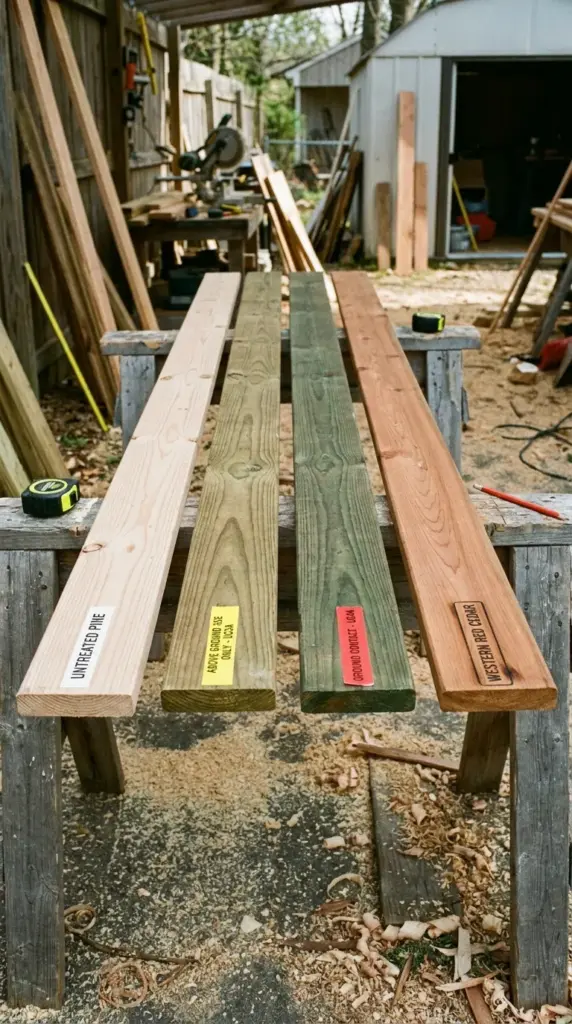
Why Untreated Boards Fail Fast Outdoors
If you use regular untreated wood outside, especially near soil or in a humid yard, you’re basically inviting rot over for dinner.
Untreated lumber absorbs moisture quickly, and once it stays damp long enough, fungi get to work.
I know untreated boards can look cheaper on the rack. They are, but only until you’re replacing them.
Ground-Contact vs. Above-Ground Pressure-Treated Lumber
This one gets missed all the time.
Ground-contact lumber is made for places where wood is near soil, moisture, or constant splash-back. Above-ground lumber is for parts that dry more easily and don’t sit in wet conditions.
Posts, kick boards, and anything near the dirt should usually be ground-contact rated. Using the wrong treatment level is one of the fastest ways to end up with rotting fence posts.
When Cedar Helps and When It Still Needs Protection
I love cedar fence boards for looks and decent rot resistance.
But cedar is not magic, and I wish more DIYers knew that before they spend extra on it and then skip basic protection.
Cedar still benefits from good drainage, airflow, and sealing on cuts. If the design traps moisture, cedar can still fail earlier than expected.
How to Shop Smarter Without Blowing the Budget
I usually tell people to spend money where failure hurts most: posts, rails, and fasteners.
You can save on decorative trim or fancy top details, but don’t cheap out on structural wood or treatment ratings. Read the tags, ask whether the board is rated for ground contact, and check for straight stock with fewer large knots.
Next up is the post-setting mistake that quietly destroys fences from the bottom up, so hit the next button below because this one catches even pretty handy people.


GIPHY App Key not set. Please check settings