

 The Home Growns
Mistake #3: Letting Wood Touch Soil, Mulch, or Wet Grass
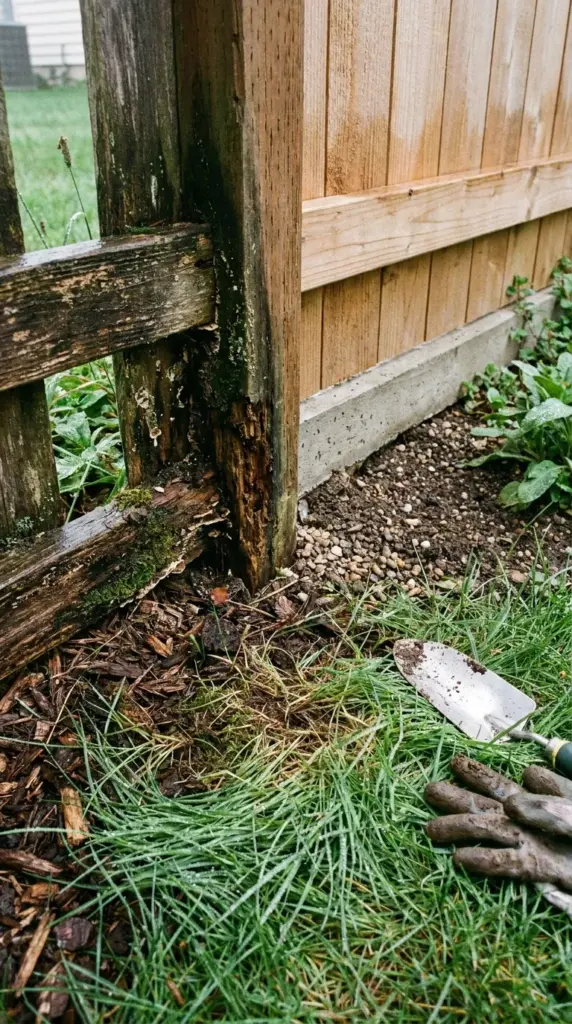
How Ground Moisture Wicks Into Fence Boards
Wood acts like a sponge, especially at the lower edges and end grain.
When pickets or rails sit too close to damp soil, capillary action can pull moisture upward, and that constant wetting leads to soil contact wood rot.
This is one reason a fence can rot from the bottom even when the top still looks pretty decent.
Why Mulch Piled Against a Fence Speeds Decay
Mulch is great for plants, but terrible when it’s heaped against wood.
It holds moisture, reduces airflow, and keeps the fence base damp for long stretches after rain or watering.
I see this all the time in pretty landscaped yards. The flower bed looks amazing, and the fence behind it is quietly getting wrecked.
The Ideal Bottom Clearance for Pickets and Rails
A little bottom rail clearance goes a long way.
I like to keep fence boards high enough that they don’t sit in mud, lawn clippings, or standing water. Even a small gap helps the wood dry faster and makes backyard fence maintenance easier.
If your yard stays wet, that clearance becomes even more important.
Easy Yard Adjustments That Protect the Fence Line
Pull back mulch, trim overgrown plants, and make sure wet grass isn’t plastered against the boards all season.
If sprinklers hit the same fence panels every morning, redirect them. Sprinkler damage on a fence is real, and repeated soaking can age a fence way faster than people expect.
The next mistake is tiny on the surface but huge over time. Hit the next button below, because cut ends and drill holes are where rot often starts first.


GIPHY App Key not set. Please check settings