

 The Home Growns
Mistake #6: Choosing Cheap Fasteners That Rust and Stain
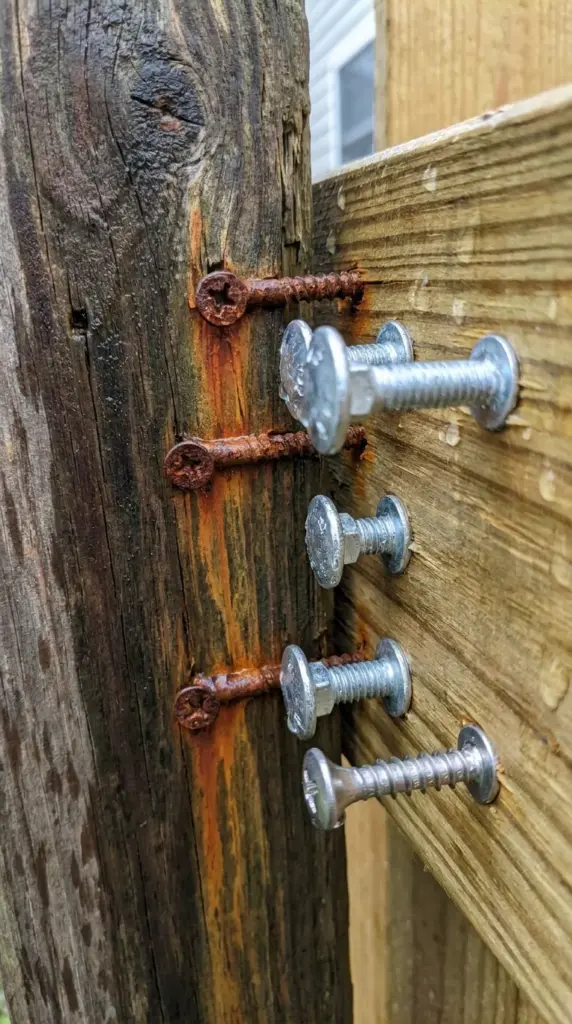
How Rust Speeds Fence Failure Beyond Looks
Rust isn’t just ugly.
When fasteners corrode, they weaken the connection, stain the wood, and create entry points for moisture around screw and nail holes.
That combination can speed up splitting and decay around rails and pickets.
Why Hot-Dip Galvanized and Stainless Steel Matter
For outdoor fencing, I prefer hot-dip galvanized hardware or stainless steel fasteners depending on the lumber and climate.
These resist corrosion much better than cheap interior screws or thinly coated bargain fasteners.
With treated wood, this matters even more. Some treatment chemicals are rough on the wrong metal, and you can end up with corrosion sooner than expected.
What Happens When Screws and Treated Wood Don’t Match
Not all screws play nicely with copper azole lumber and other modern treated products.
If the packaging doesn’t clearly say the fastener is rated for treated lumber and exterior use, I move on.
I learned this the hard way years ago on a garden gate. The screws looked fine at first, then started staining and loosening way too soon. I was not thrilled.
Hardware Upgrades That Cost Less Than Repairs
Use exterior-rated galvanized fence screws, hot-dip galvanized brackets, and compatible connectors from the start.
This is one of the easiest upgrades to justify because the price jump is small compared to the cost of replacing a sagging panel or rust-streaked rails.
The next mistake happens after the fence is built, and it’s one of the biggest reasons coatings fail early. Hit the next button below because timing your stain or paint is everything.

GIPHY App Key not set. Please check settings