

 The Home Growns
Mistake #2: Setting Posts in a Way That Traps Water
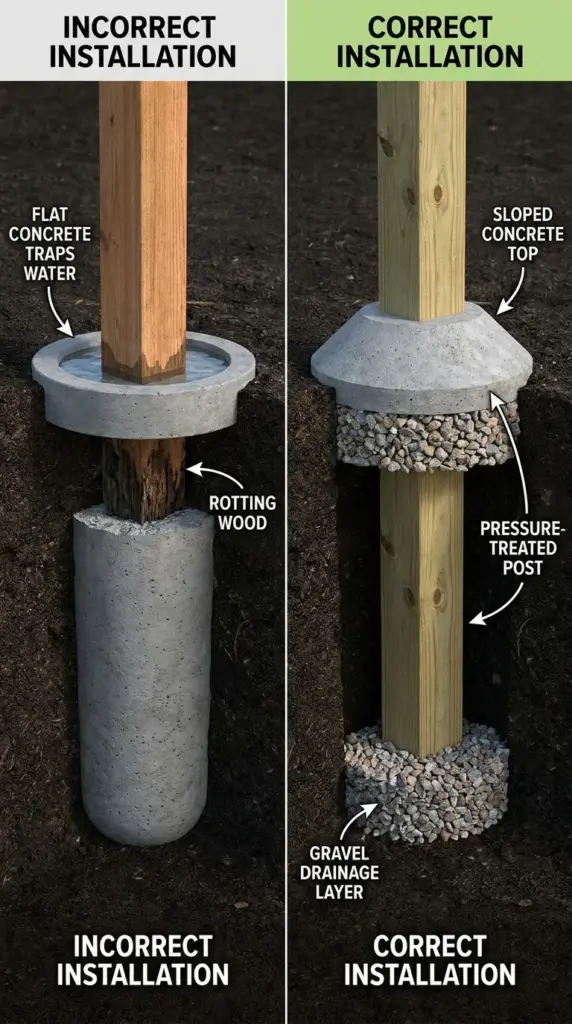
Why Post Bases and Post Holes Become Rot Hotspots
The bottom of a fence post lives in the worst possible place.
It sits where water collects, where soil stays cool and damp, and where oxygen and organic matter help rot do its ugly little job.
That’s why fence post drainage matters more than people think. A post can look fine above ground while the buried section is already mushy.
Common Concrete-Setting Mistakes That Hold Moisture
A lot of DIY builds set wood directly into a concrete plug and call it good.
The issue is that poorly shaped concrete can trap water around the post collar, especially if the top of the concrete is flat or dips inward instead of sloping away.
That creates a constant wet ring right where posts often fail. I’ve dug up old posts that were basically compost at the concrete line, and yeah, it was gross.
When Gravel Drainage Actually Helps
A layer of compacted gravel at the base of the hole can help improve post hole drainage.
It gives water somewhere to move instead of pooling under the post like a little underground bathtub.
Gravel is not a miracle fix, though. If the soil is heavy clay or the concrete crown is shaped wrong, water can still hang around longer than you want.
Better Budget-Friendly Post-Setting Methods
If I’m building on a budget, I still try to prioritize a few smart details: gravel below, a properly sloped concrete top, and wood that’s rated for ground-contact use.
In some cases, post protector sleeves or metal post bases can also extend life, especially in wet climates. They cost more up front, but not nearly as much as rebuilding a fence line.
The next mistake is sneaky because it doesn’t look dramatic, but it keeps wood wet day after day. Hit the next button below and let’s talk about soil, mulch, and grass contact.


GIPHY App Key not set. Please check settings