

 The Home Growns
Early Warning Signs Your Fence Is Already Starting to Rot
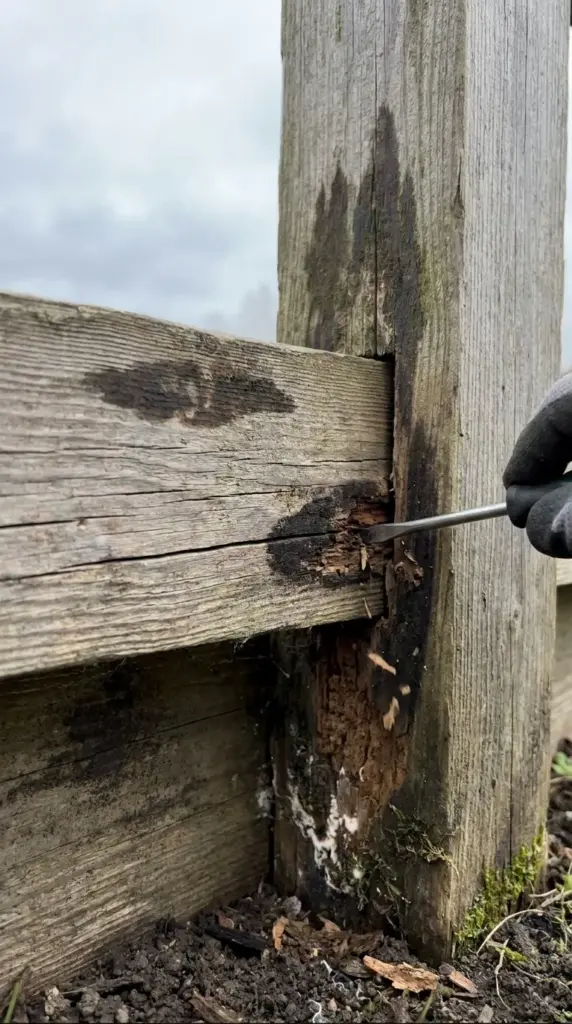
Soft Spots, Splitting, and Discoloration
The first clues are often subtle.
Look for dark patches, soft wood near the base, peeling finish, cracks around screws, and boards that seem to swell or warp more than the rest.
Black streaks and mushroom-like growth are especially bad signs. At that point, I stop hoping it’s “just weathering.”
How to Inspect Posts, Rails, and Pickets Like a Pro
Take a screwdriver and gently probe the base of posts, the ends of rails, and low pickets near soil level.
If the wood feels soft, flakes apart, or sinks in too easily, you’re likely dealing with developing rot. Also check whether panels lean, wobble, or move when pushed.
When Repair Makes Sense
If rot is limited to a few pickets or one rail, targeted repair can still be worth it.
You might replace individual boards, improve drainage, seal exposed wood, and upgrade the nearby hardware before the damage spreads.
That’s why I’m big on seasonal checks. Catching trouble early is the difference between a simple Saturday repair and a budget-destroying rebuild.
When Replacement Makes More Sense
If multiple posts are failing, the fence line is leaning, or rot has spread through core structural parts, replacement is often smarter.
At some point, patching turns into denial. I say that with love because I’ve absolutely tried to “save” things that were past saving.
If you’re wondering how to avoid all this on your next build, hit the next button below because I’m going to lay out the budget-friendly way to build a fence that actually lasts.


GIPHY App Key not set. Please check settings