

 The Home Growns
Check Local Rules Before You Fall in Love With a Layout
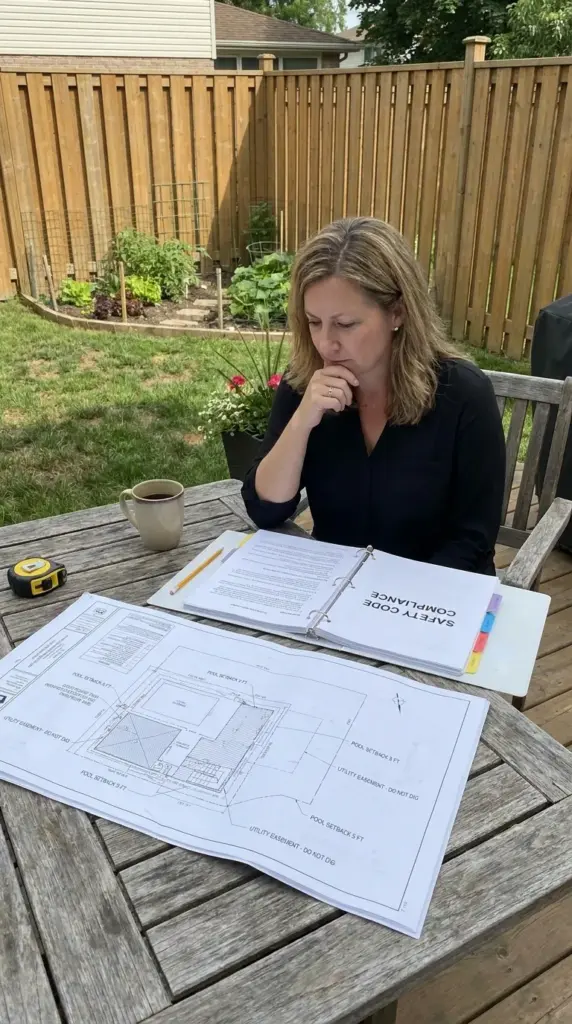
Permits and setbacks come first
This is the boring part, but wow, it matters. Many cities treat any pool or plunge feature over a certain depth as a regulated structure, which can trigger permits, fencing rules, electrical inspections, and setback requirements.
Depth, water volume, and equipment all matter. Even a compact patio plunge pool may need code review depending on your location.
Ask about safety and utilities
You’ll want to confirm requirements for gates, barriers, anti-entrapment drains, GFCI protection, and equipment placement. In tight urban lots, property lines and utility easements can become the whole game.
I always tell people to call before digging. Hitting a buried line is the kind of DIY memory that sticks with you forever, and not in a cute way.
Think about stormwater and water use
Some areas care about drainage discharge, overflow routing, or whether water can spill into alleys and neighboring lots. If you’re considering rainwater harvesting for ponds, double-check local rules before tying systems together.
That’s extra important in cities where stormwater management is already a hot topic. A beautiful pool loses its sparkle real quick if it causes runoff trouble.
Know when to bring in a pro
If your site is sloped, elevated, rooftop-adjacent, or close to retaining walls, bring in a designer, engineer, or experienced builder. That is not me being dramatic; it’s me wanting you to keep your house where it is.
Now for the fun part. Hit the next button below, because the first real design hack is the one that instantly makes small natural pools more realistic and way more beautiful.


GIPHY App Key not set. Please check settings