

 The Home Growns
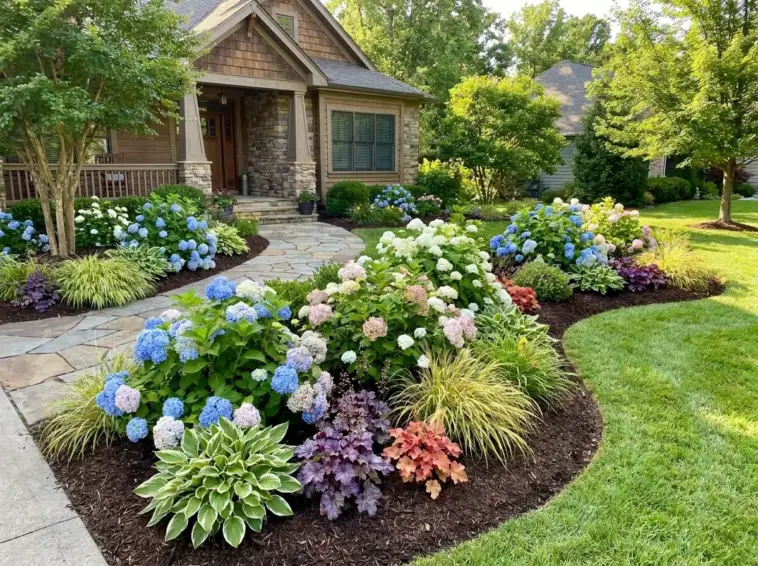
I used to plant hydrangeas the same way a lot of us were taught to plant shrubs: neat, straight, evenly spaced rows. On paper, it looked tidy.
In real life, it looked… kind of stiff. Worse, the bed never had that soft, lush, magazine-worthy feel I wanted.
After a few seasons of tweaking, replanting, and muttering to myself in the mulch, I switched to what I call the cluster method.
It gave me a fuller, more natural look, and honestly, it made my whole hydrangea landscape design feel more expensive without spending more money.
Why Rows Stopped Working for Me
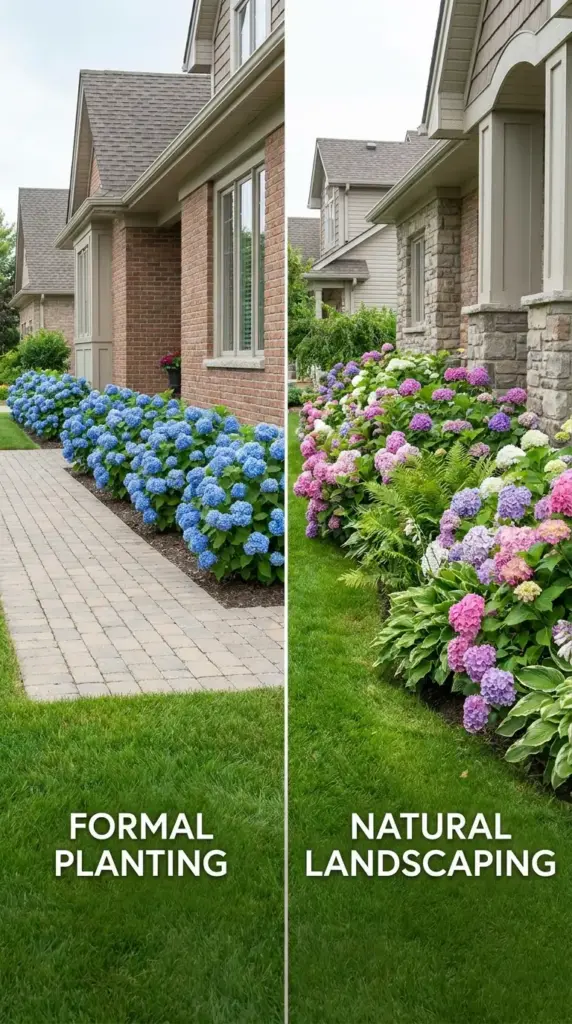
What my old row-planted beds looked like
My old beds had hydrangea shrubs lined up like little soldiers. Every plant sat at the same distance, same depth, same visual plane.
At first, I thought that looked organized. After they filled in, it started reading more like a strip mall hedge than a dreamy garden bed.
The biggest problems I kept seeing
The first issue was visual flatness. With everything in one line, there was almost no depth, no layered texture, and no real focal point.
The second issue was maintenance. When one plant outgrew the others, the whole row looked off, and I felt like I was constantly trying to force them into matching shapes.
Why rows felt stiff and harder to style
A straight row can work in very formal spaces, but most homes do better with a softer naturalistic planting style. My beds looked too rigid against curved walkways, porch steps, and foundation corners.
I also noticed it limited my hydrangea companion plants. There wasn’t much room to tuck in grasses, perennials, or spring bulbs without the layout feeling crowded.
The moment I knew I was done
One summer, I stood at the curb and realized my hydrangeas looked like a green wall with pom-poms. Oof. That was the exact moment I knew I needed a better hydrangea bed layout.
And trust me, once I changed the layout idea itself, everything got easier. Hit the next button below, because the cluster method is simpler than it sounds.



GIPHY App Key not set. Please check settings