

 The Home Growns
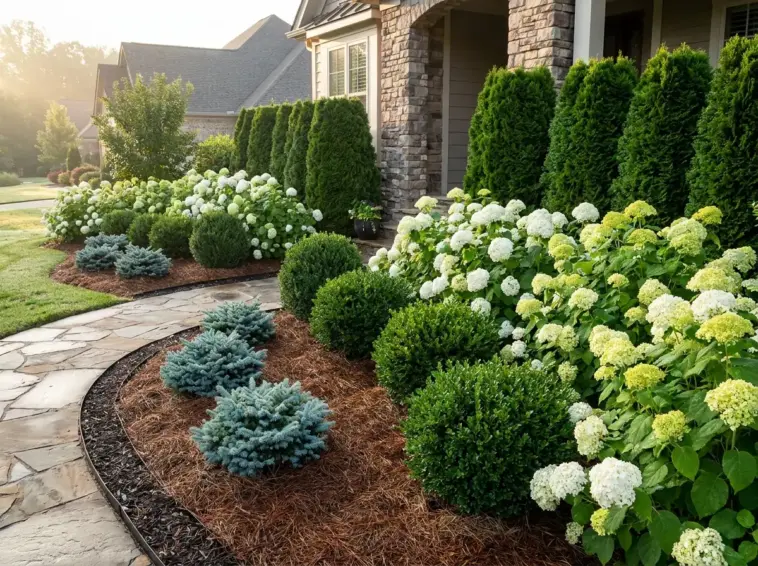
I love a garden that still looks put together in January, not just in peak bloom season.
That’s why hydrangeas with evergreens are one of my favorite power combos for a mixed shrub border, a foundation bed, or a backyard privacy screen that doesn’t go flat after frost.
Secret 1: Build the Evergreen Backbone First
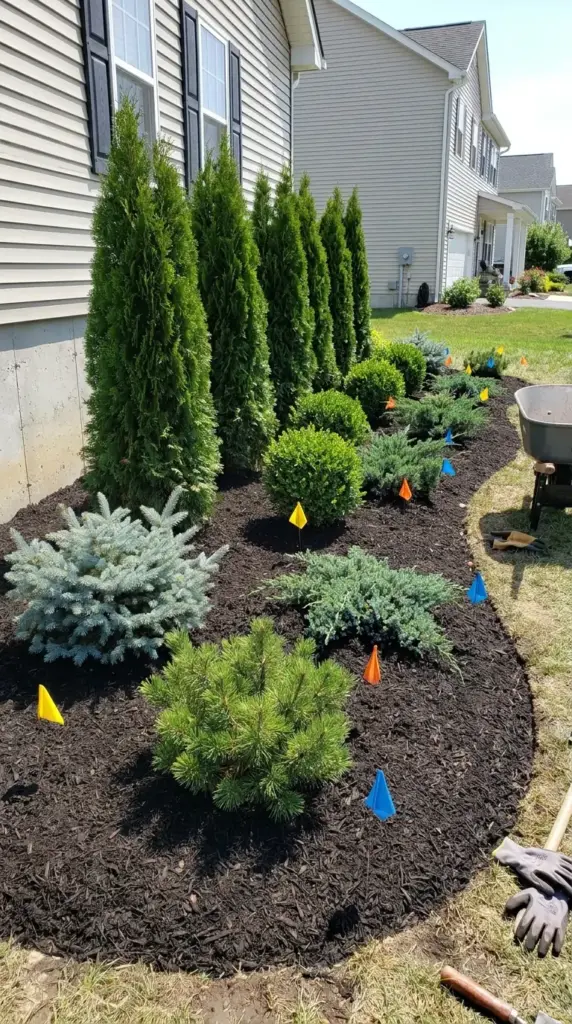
Start with structure, not flowers
When I design a layered planting bed, I start with the evergreen foundation planting first.
Blooms are the fun part, sure, but the evergreen shapes are what hold the whole design together through winter, rain, and those weird in-between months when everything looks a little tired.
Choose three evergreen roles
I like to think in roles: backdrop evergreens, mounding evergreens, and accent evergreens.
A tall arborvitae, a rounded inkberry holly, and a low dwarf spruce can give you height, bulk, and texture before the first hydrangea even opens.
Mix forms for a cleaner designer look
The best structural planting design uses contrasting forms.
Try one columnar shape for height, one rounded shrub for softness, and one spreading plant to keep the front edge grounded and lush.
Don’t make the classic shopping-center mistake
I’ve done this myself: bought a gorgeous Limelight hydrangea, got home, and then tried to cram random evergreens around it.
It looked like I decorated a cake after it already slid off the stand, and yep, I deserved that lesson.
Now that the backbone is in place, hit the next button below, because the real magic starts when we match the right hydrangea type to those evergreen forms.

GIPHY App Key not set. Please check settings