

 The Home Growns
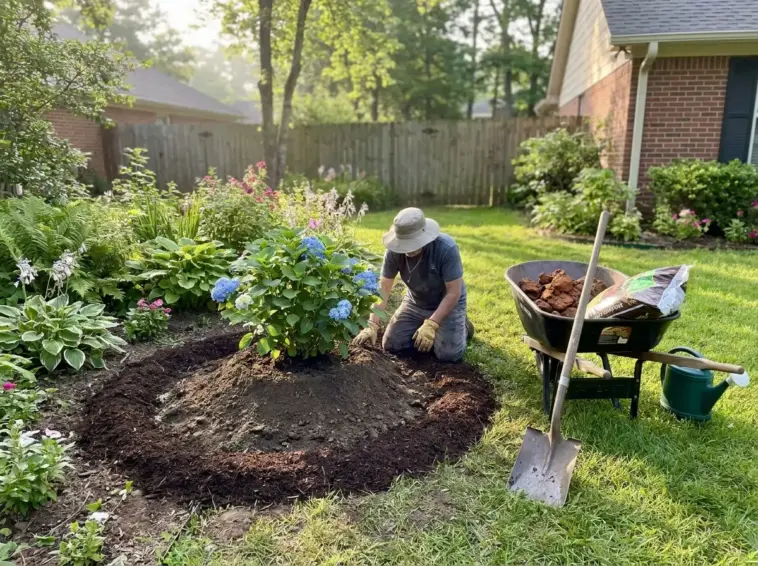
If you’ve ever planted a hydrangea in what looked like “nice moist soil,” only to watch it sulk, droop, or turn yellow, I feel your pain.
I’ve made that exact mistake, and wow, it was annoying.
The good news is this so-called “upside down” hydrangea rule is simple.
It’s not about planting the shrub upside down like some internet chaos hack, thank goodness.
What the “Upside Down” Hydrangea Rule Actually Means
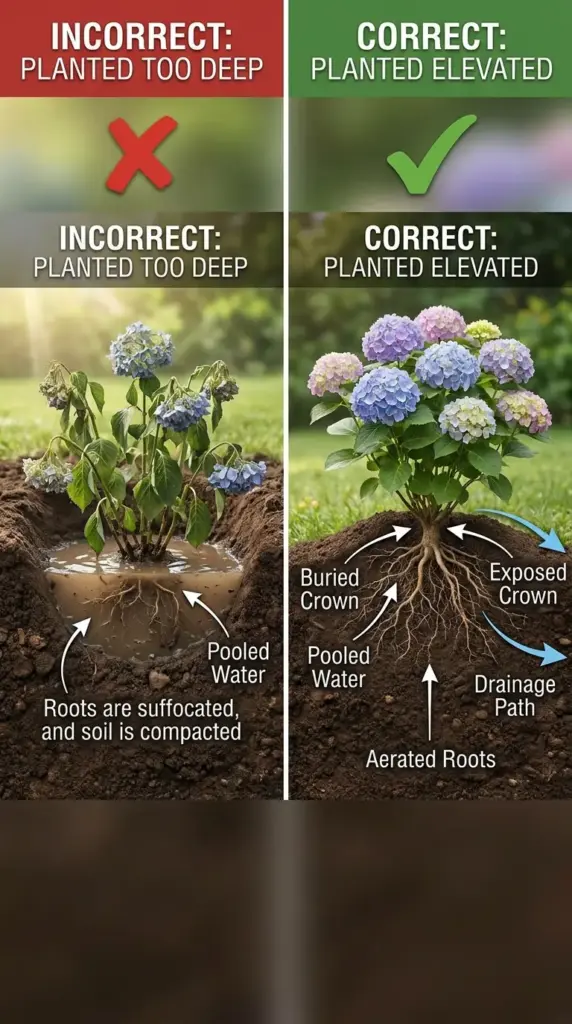
It Means Planting High, Not Deep
The upside down hydrangea rule really means you plant the root ball a little above the surrounding soil line, almost like the planting shape is flipped from a bowl into a gentle mound. That small height change helps water move away from the crown instead of pooling around it.
I usually tell beginners to think “high and wide,” not “deep and snug.” Hydrangeas hate sitting in a little underground bathtub.
Why the “Upside Down” Idea Helps
In poor soil drainage, especially heavy clay soil, water sinks slowly and hangs around too long. By setting the plant slightly high, you give the root zone more oxygen and reduce the risk of root rot.
This matters most in yards with spring rain, compacted builder soil, or areas near downspout runoff. In other words, a lot of suburban yards, honestly.
What Social Media Often Gets Wrong
Some videos make it sound like you should do something dramatic. Nope.
You are not flipping the plant over, stuffing gravel in the bottom, or burying the crown deeper. You’re simply creating a raised planting profile so the shrub drains better from day one.
When This Rule Is Most Useful
This method shines in soggy beds, low spots, and places where the soil stays damp a full day or two after rain. It’s especially helpful for bigleaf hydrangea and other types that can tolerate moisture but not constant swampy roots.
And before you grab the shovel, hit the next button below, because it helps to know exactly why hydrangeas hate wet feet in the first place.



GIPHY App Key not set. Please check settings