

 The Home Growns
Mistakes That Make Water Drainage Worse
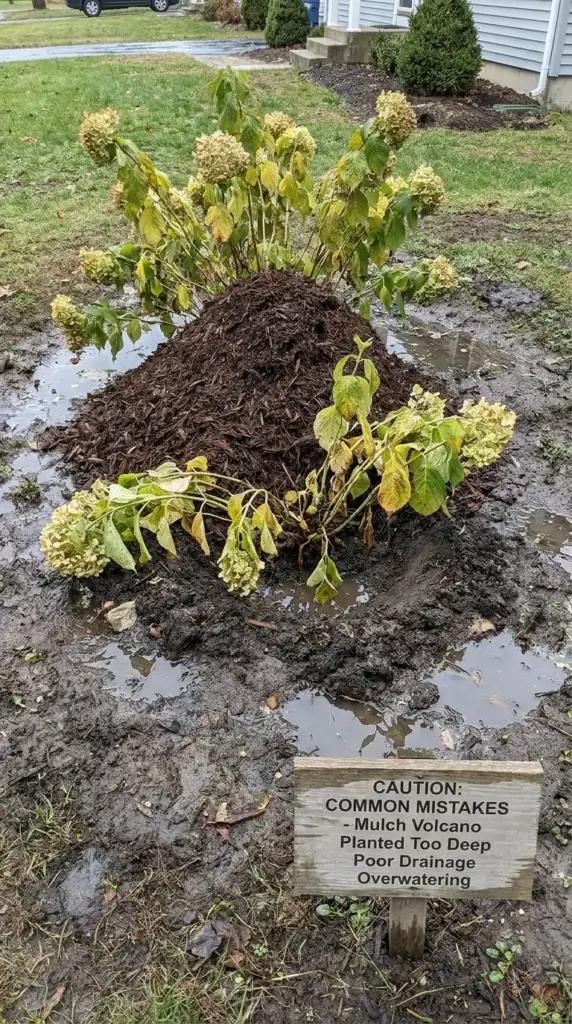
Planting Too Deep
This is the number one issue I see. If the crown sits below grade, water collects around the base and the shrub struggles almost immediately.
A hydrangea planted too low rarely thanks you for “extra protection.” It just sulks.
Mulching Against the Stems
A thick mulch volcano traps moisture where you do not want it. It also invites rot and pest issues around the stem base.
Keep the mulch ring flat and pulled back a few inches. Easy fix, big payoff.
Choosing the Lowest Spot in the Yard
People often plant shrubs where there’s empty space. Unfortunately, that empty space is often empty because it’s wet.
If it’s the natural low point, it may be better suited to rain garden plants than hydrangeas. That one realization saves so much hassle.
Watering by Habit Instead of Need
Automatic routines cause problems fast. A hydrangea in cool spring weather and one in July heat do not need the same schedule.
And if you want the timing advantage most gardeners overlook, hit the next button below, because planting season plays a bigger role than people think.

GIPHY App Key not set. Please check settings