

 The Home Growns
How to Plant a Hydrangea Using the Upside Down Rule
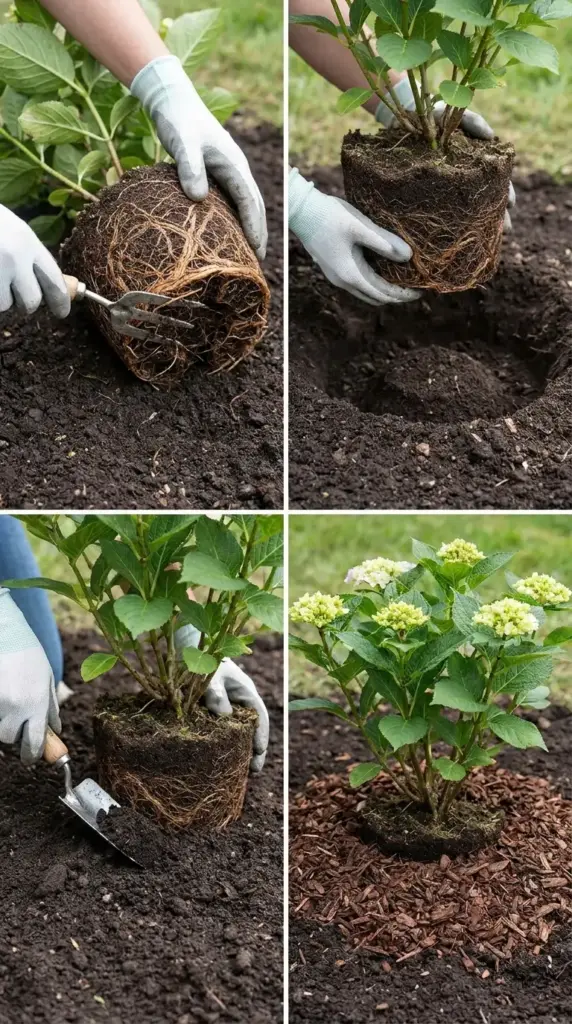
Dig Wider Than You Think
Start by digging a hole about two to three times wider than the nursery container, but not much deeper than the root ball. This is where people mess up.
If you dig too deep, the plant settles lower over time, and suddenly the crown sits in a wet pocket. I learned that one the hard way years ago.
Set the Root Ball Slightly Above Grade
Place the hydrangea so the top of the root ball sits about 1 to 2 inches above soil line. That’s the core of the upside down hydrangea rule.
Once you backfill, the root flare should still be visible. You want a gentle raised planting mound, not a buried bowl.
Loosen Circling Roots First
Slide the plant from the nursery pot and check for circling roots. If they’re wrapping tightly around the root ball, loosen them with your fingers or make a few shallow vertical cuts.
This part feels scary the first time. It’s okay, really. You’re helping roots grow outward instead of strangling themselves later.
Backfill, Mulch, and Water Smart
Backfill mostly with native soil, lightly amended if needed, and press gently to remove big air gaps. Add a mulch ring 2 to 3 inches deep, but keep mulch away from the stems.
Water deeply after planting to settle the soil, then let the top inch start drying before watering again. And yep, if you want this to actually work long term, hit the next button below because your soil mix matters a lot.



GIPHY App Key not set. Please check settings