

 The Home Growns
What the Cluster Method Actually Means
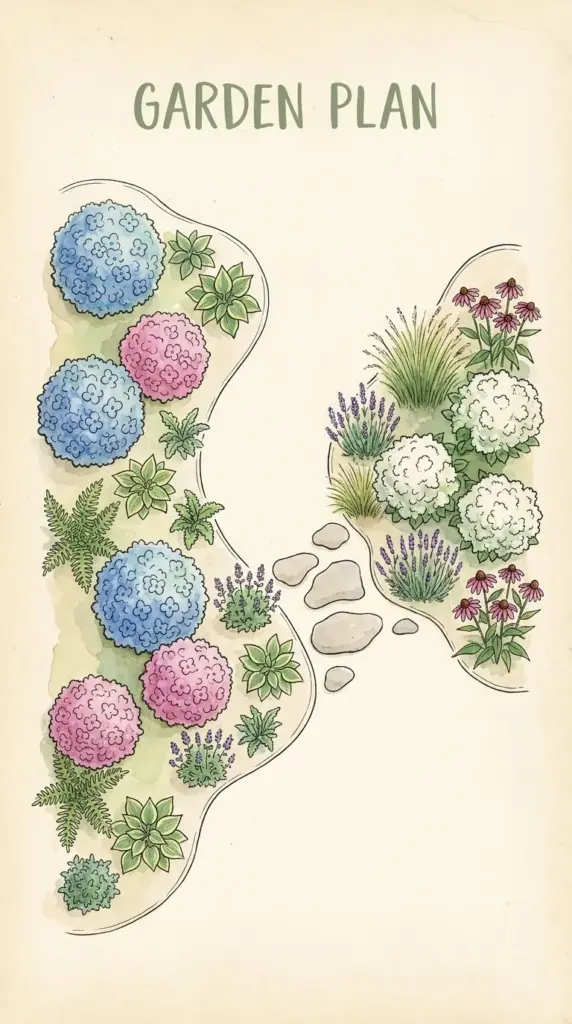
My simple definition of a cluster
A hydrangea cluster planting is a grouped arrangement of shrubs that feels connected, but not lined up in a ruler-straight row. I usually plant in groups of 3 or 5, with slight shifts in depth and spacing.
That tiny change makes the bed feel softer and fuller. It also helps the planting blend into the rest of the yard instead of sitting on top of it.
How clusters differ from straight-line planting
In a row, every shrub gets the same role. In a cluster, one plant can anchor the back, one can soften the front edge, and another can bridge the side.
That gives you a layered, more designer planting clusters look. It’s the difference between “I bought shrubs” and “I planned a garden.”
Why grouped shrubs look more natural
Nature rarely plants in ruler-straight lines. Grouping creates rhythm, visual movement, and that cozy cottage garden hydrangeas feel so many people want right now.
This works especially well in front yards where curb appeal matters. From the street, clusters read as intentional and lush instead of repetitive.
The design goal
My goal is not chaos. I want fullness, airflow, and softness all at once.
So yes, I still measure, map, and think about mature size. I’m just not forcing every hydrangea into the same exact position anymore.
And that brings up the big question: what do you actually gain by planting this way? Hit the next button below, because the benefits are where this method really wins.


GIPHY App Key not set. Please check settings