

 The Home Growns
How I Plan a Cluster Before I Dig
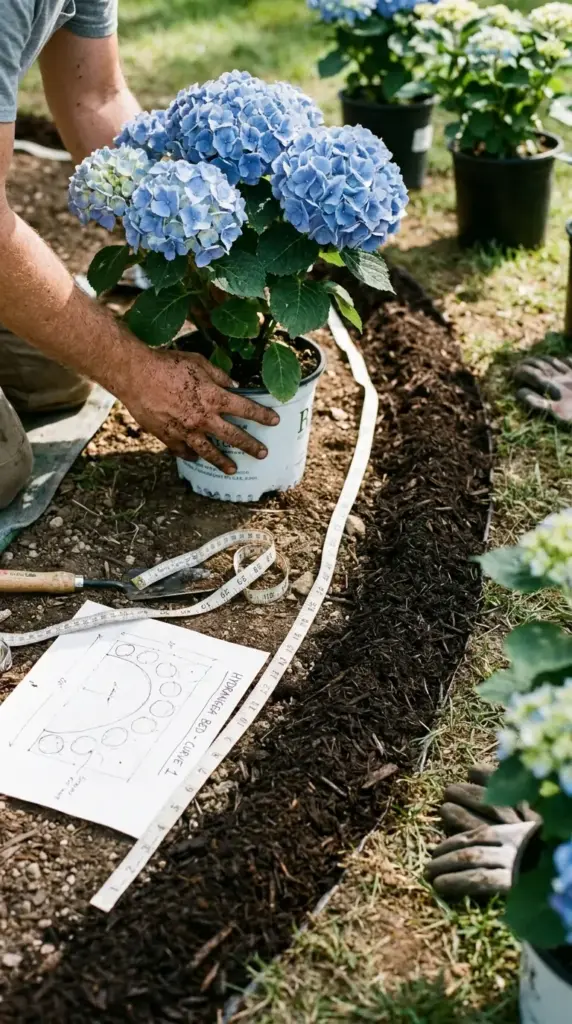
I measure mature width, not the pot
When I plan a hydrangea shrub spacing map, I start with the expected mature spread. That number tells me whether the plants will gently touch, overlap visually, or smother each other.
I never eyeball this anymore. Eyeballing is how I once planted three “compact” hydrangeas that turned into a leafy wrestling match.
I use odd-number groupings
Most of my clusters start with 3 shrubs. In larger areas, I’ll use 5 for a drift-style look.
Odd numbers usually feel less stiff than even numbers. That matters a lot when you’re aiming for asymmetrical garden design.
I sketch curved lines
I like gentle arcs and staggered placements instead of straight lines. Even a slight shift forward or back can create the illusion of a much more sophisticated softscape planting plan.
This works beautifully in curved garden bed design, around patios, and along front walks. It also helps the bed connect better to the house and lawn.
I leave room for companions and access
I always plan for mulch space, stepping room, and a few companion plants. A hydrangea bed with no breathing room is tough to weed, water, or clean up.
I also think about sightlines from windows. If a shrub blocks the porch light or swallows the walkway, it’s not a good layout no matter how pretty the bloom photo looked online.
Next comes the part most people rush: spacing. Hit the next button below, because a great cluster can still flop if the spacing is off.


GIPHY App Key not set. Please check settings