

 The Home Growns
Hack #3: Build Up Instead of Digging Down Everywhere
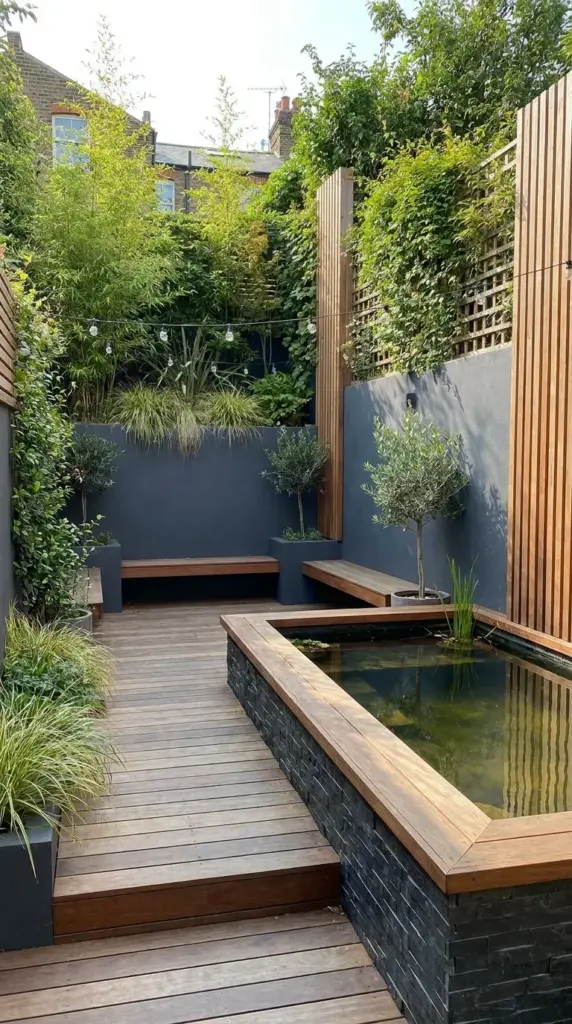
Why raised builds make sense in cities
A raised natural pool can be a lifesaver in dense neighborhoods with limited access. If machinery can’t get in easily, excavation and haul-away costs climb fast, and that’s before you hit old foundations or mystery rubble.
Building up can reduce disruption and keep the install cleaner. It also works surprisingly well in courtyards and narrow yard pool layouts.
Use walls, decks, and tiers
A raised edge can double as seating, safety boundary, or planting ledge. Pair it with decking and suddenly the pool feels built into the garden instead of dropped into it.
This layering creates depth, and depth is gold in a compact landscape. It’s one of those designer tricks that makes a small backyard retreat feel much bigger than it is.
Great for patios and awkward sites
If your garden is mostly hardscape, a raised or semi-raised basin may be the most realistic route. It can also work better over existing grade when drainage is messy or digging near utilities is risky.
I’ve even seen versions adapted for rooftop-style terraces, though that absolutely requires structural review. No freelancing on that one.
Make the vertical space work harder
The outer wall can support a bench, slim shelf, lighting ledge, or urban privacy screening. That’s extra function without stealing floor area.
And once you’ve got the structure figured out, the next thing that makes or breaks the pool is plant choice. Hit the next button below, because tiny natural pools need tiny-but-mighty plants, not a botanical takeover.

GIPHY App Key not set. Please check settings