

 The Home Growns
Hack #4: Choose Small-Scale Aquatic Plants That Actually Clean Water
Use the right plant categories
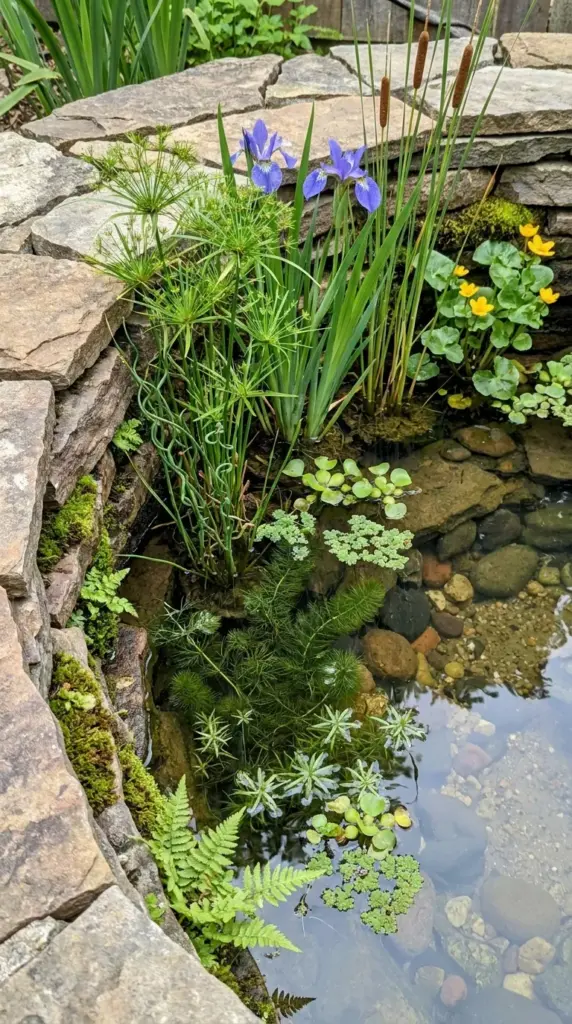
A healthy small natural pool usually relies on a mix of marginal plants, oxygenating plants, and sometimes floating aquatic plants. Each one plays a different role in shading water, taking up nutrients, and supporting balance.
But in a tiny basin, scale matters more than people think. One oversized plant can turn your serene plunge pool into a swampy mess by August.
Pick compact plants for your light conditions
For sun, smaller options like dwarf rushes, compact sedges, pickerel plant, and miniature iris can work well depending on your region. For part shade, some native water plants and moisture-loving marginals handle lower light better than sun-hungry bloomers.
The goal is clean water support, not a jungle explosion. Trust me, I have overplanted before, and it was… humbling.
Avoid heavy debris producers
Skip plants that drop a lot of petals, leaves, or seed mess into the water. In a compact backyard pond or plunge pool, debris loads build up fast and can stress filtration.
I’m also careful with aggressive spreaders. Cute at the nursery, chaos by midsummer.
Blend filtration plants with garden style
Pair your water plants with pollinator-friendly garden edging outside the pool. That softens the look and helps the whole space feel integrated instead of split between “wet zone” and “everything else.”
Now we’ve handled the inside biology, but the outside experience matters too. Hit the next button below, because the fifth hack is how you make a tiny pool feel twice as big without moving a single fence.

GIPHY App Key not set. Please check settings