

 The Home Growns
Start With the Real Limits of Your Space
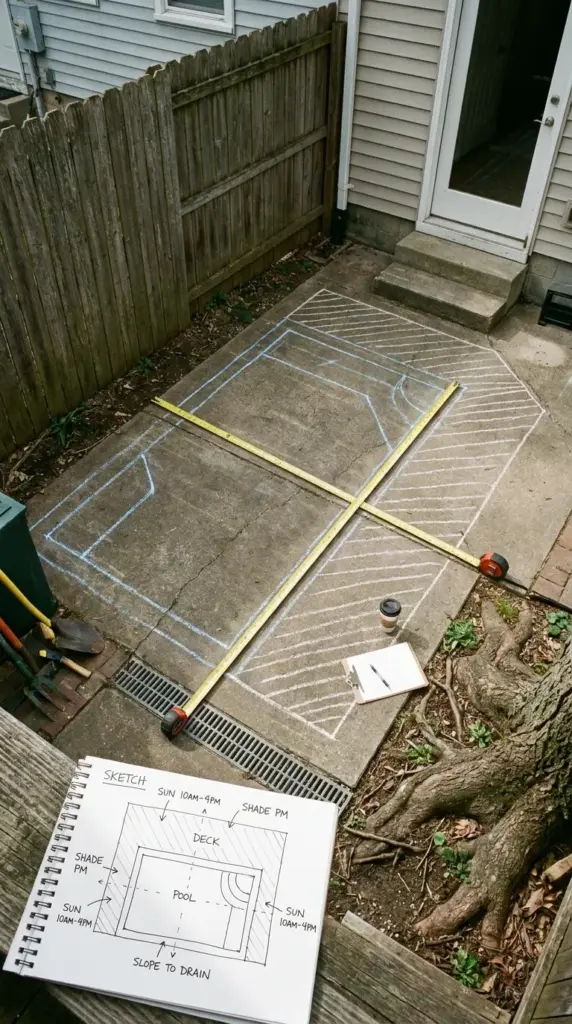
Measure the space you can actually use
Do not measure fence line to fence line and call it a day. You need to subtract walkways, access paths, door swings, utility clearances, and at least a little planting room.
I usually tell people to sketch the yard and mark out a comfort zone first. In a compact urban garden pool project, circulation space matters almost as much as the pool itself.
Watch sun, shade, and exposure
Most aquatic plants for pools want at least 4 to 6 hours of sun, though some shade-tolerant aquatic plants can handle less. If your yard sits in deep shade from buildings most of the day, that changes your plant list and your water temperature expectations.
Wind matters too, and I learned that the annoying way. A pretty reflective pool gets less dreamy real fast when city wind keeps blowing debris right into it.
Check slope, drainage, and roots
A slight slope isn’t a deal breaker, but poor drainage can be. You do not want runoff from the patio, dog area, or neighboring lot washing straight into your pool basin.
Also, big tree roots are sneaky little monsters. If you’re near mature maples or sycamores, factor in root pressure and leaf drop early.
Decide on sunken, raised, or hybrid
A raised natural pool often makes more sense in small city lots because excavation is expensive and messy. A hybrid build, where part is set below grade and part is wrapped with decking or seating, can save money and still look polished.
That one choice affects cost, engineering, and the whole vibe. Hit the next button below, because before you fall in love with a layout, we need to talk about the rules that can shut a project down fast.

GIPHY App Key not set. Please check settings